Twelve clients, three to six locations each. Review requests go out from one tool, replies get drafted in a shared spreadsheet, and by the third week someone is rebuilding the same monthly report by hand from six browser tabs. None of the individual tasks is hard. The switching is what costs you.
The failures show up at the seams. Someone logs into the wrong client's Google Business Profile. A request goes to the same customer twice. A one-star review sits unanswered from Friday to Tuesday. The report you send uses screenshots instead of data, and the client notices.
Demand for the work isn't in question. BrightLocal's 2025 Local Consumer Review Survey, based on a panel of 1,026 U.S. adults, found that only 4% of consumers never read online business reviews, and that 81% used Google to find local business reviews in 2025. Reading reviews is a habit, not a decision.
So the software question is an operations question. The platforms below are the ones agencies shortlist, judged on how fast you can move between client accounts, whether the report carries your logo or the vendor's, how permissions split per client, and what the bill looks like when a client adds four locations. Quote-only pricing is flagged, so you know what to ask before you commit.
1. EmbedMyReviews
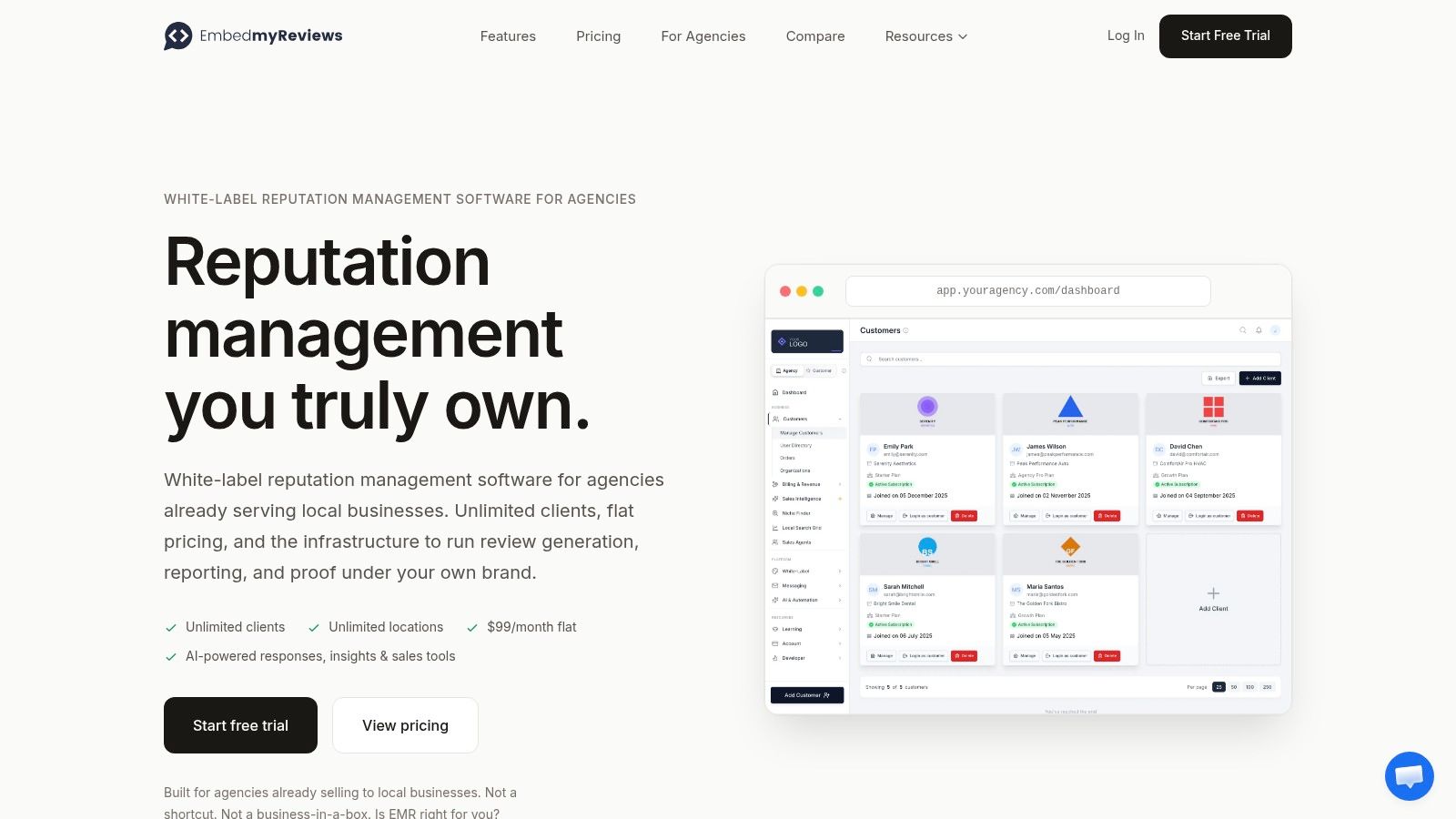
Most reputation tools let you put your logo on a report. EmbedMyReviews goes further: the platform runs on your domain with your SSL, your branding, your help center, your API docs, and your client logins. A client signing in sees your product, not a vendor sitting behind you.
Here's the dashboard view clients see once it's running on your domain.
What the platform actually covers
Review management across 67+ sources, with request campaigns sent through your own email, SMS, and WhatsApp keys (bring your own key), multi-step feedback funnels that route unhappy customers into private feedback, QR and NFC tracking for physical locations, and first-party testimonials you host yourself. AI responses run on your OpenAI key or through OpenRouter, with global prompt templates, tone matching, and a human approval step before anything publishes.
Google Business Profile posts sit in the same workflow, with client email approvals that don't require the client to log in. Updates, offers, and events are supported, autopilot drafting runs on the agency's AI key, and posts carry location geotags.
The agency-operations details
Account switching: location isolation and granular permissions, with separate client and team logins, so a client never sees another client's locations.
Reporting: scheduled delivery, multi-location dashboards, and white-label PDF exports, including the Local Search Grid that tracks geo-distributed rankings on scheduled keyword scans.
Sales side: AI audit reports, a Trust Score, competitor benchmarks, and AI visibility testing in major LLMs, all usable in a prospect conversation before anyone signs.
The pricing that changes the math
Flat $99 a month covers unlimited clients, locations, and users. No per-location line item, no seat count, no margin squeeze each time a franchise client opens a store. Add Stripe billing for custom client plans, credit limits, add-ons, and sales agents with territories and commission tracking, and the whole reseller motion lives in one system.
Compliance is where this earns its keep. The FTC's Consumer Reviews and Testimonials Rule took effect on October 21, 2024 and can apply to advertising agencies, PR firms, review brokers, and reputation-management companies, not only to brands. Approval steps, role-based access, and per-client records give you an exportable answer when a client asks how a review was requested or why a negative one stayed up.
The trade-off: a flat price and a wide feature set reward agencies that will actually run prospecting, posting, and rank tracking inside one tool. If all you need is a response queue, you're paying for capability you won't use.
It's the right pick when the agency brand has to front the entire service. The vendor frames the product as reputation management software for agencies, and the framing holds up: 27 interface languages, GDPR-ready and CCPA-aware controls, and integrations with Zapier, HubSpot, HighLevel, Shopify, WooCommerce, and Stripe, plus a REST API and webhooks.
2. BrightLocal
If BrightLocal already handles rank tracking and citations, adding Reputation Manager is cheaper than onboarding a second review platform. It monitors reviews across a broad set of sites, handles Google and Facebook responses inside the platform, and sends invitations by email or SMS.
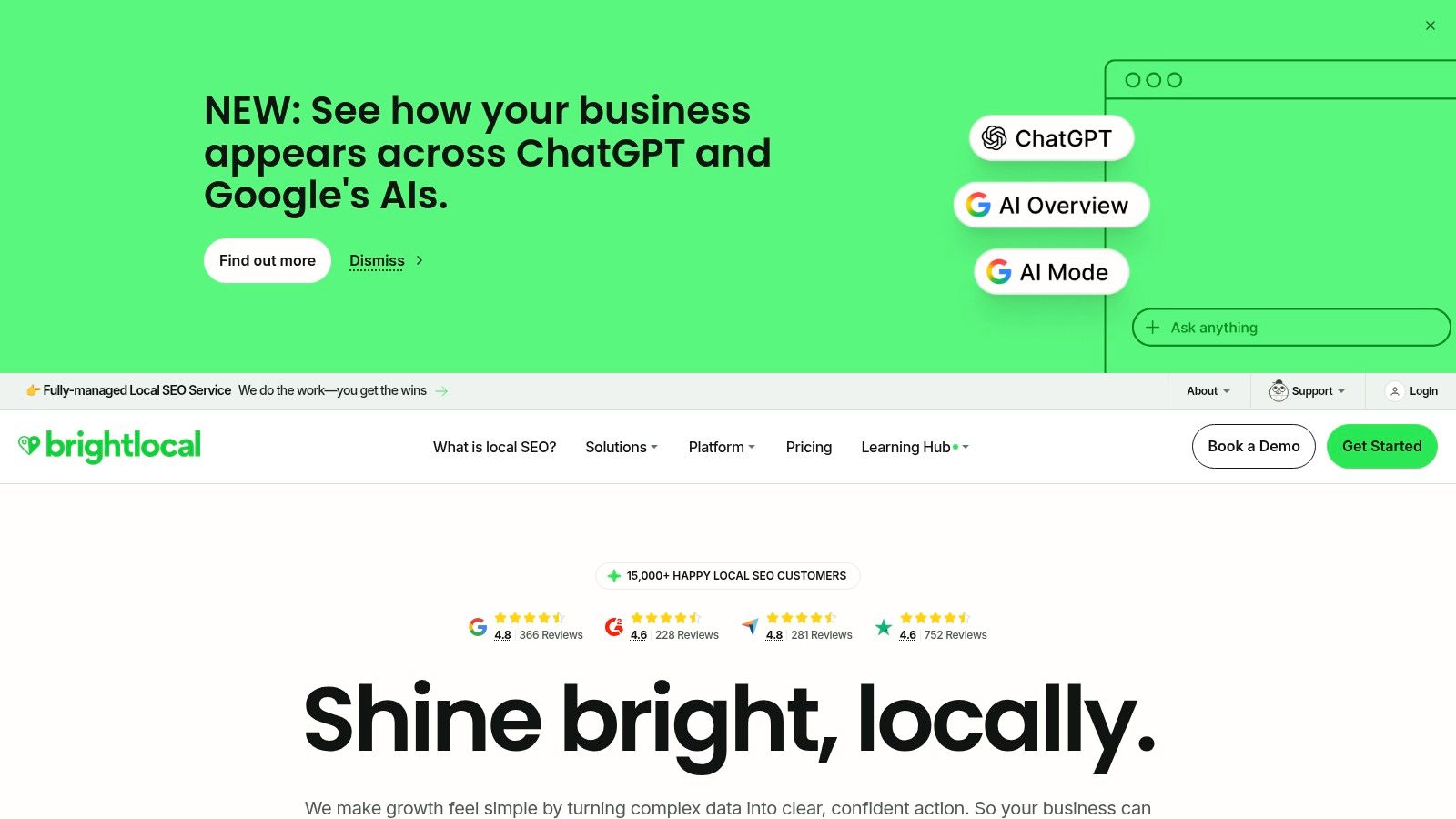
The agency case is the reporting. White-label branding applies to tools, emails, landing pages, and URLs, and review data sits beside local rank tracking and audits, so the monthly client PDF comes out of one system instead of two.
The reporting view agencies hand over under their own brand.
Where it fits: agencies whose retainer already includes local SEO work. Grow is sold per location, with annual billing and a free trial, so a single-location client can evaluate it without a sales call.
Where it falls short: reputation sits inside a wider SEO suite. Per-location pricing stays friendly for one site and becomes a line-item conversation when a franchise adds stores. Before rollout, decide who can respond, what each client can see, and whether the broader package earns its keep for accounts that only need a response queue.
3. Grade.us
Grade.us was built for agencies and resellers, and the product shape shows it: review funnels with custom URLs you brand per client, client-facing reports under your logo, and access controls that wall one account off from the next.
Review funnels deserve scrutiny under the FTC's final rule banning fake reviews and testimonials, announced on August 14, 2024. The rule bars buying positive or negative reviews, undisclosed insider reviews, and review-suppression practices, and the Commission said it can seek civil penalties against knowing violators. A funnel that routes unhappy customers to a private form while pushing happy ones toward Google is the configuration to redesign before a client's counsel asks about it.
Campaigns: email and SMS review requests with automated follow-ups.
Monitoring: major, local, and industry-specific review sites.
Plan structure: tiered pricing that starts with a single-location plan, moves to a per-location rate for multi-site accounts, and tops out at an agency tier sold around seat count. Get the per-location math for your actual portfolio in writing before you quote clients.
Review funnels and client reporting live in the same dashboard.
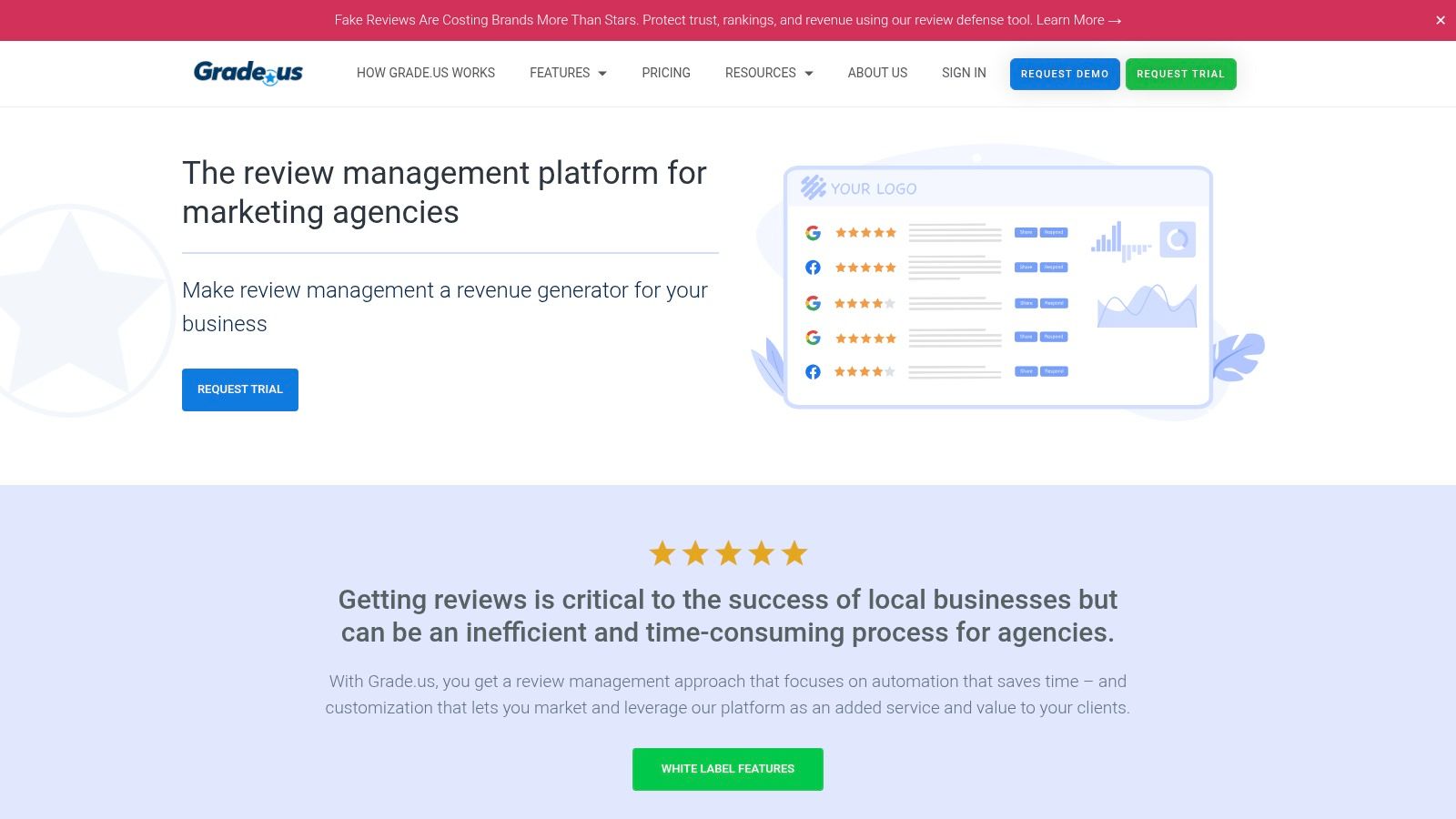
Full dashboard branding costs extra unless a higher-volume arrangement includes it, so confirm whether client logos and a custom domain survive on the tier you are quoted. Scope stops at reviews; brand mentions and PR monitoring need a different tool. The 14-day trial asks for no credit card, which is enough time to run a funnel end to end and check whether the white-label output is ready to hand to a client.
4. GatherUp
GatherUp's pitch is that public reviews are half the feedback picture. Review requests and AI-assisted replies sit alongside surveys and Net Promoter Score collection, so a client captures the customer who had a bad experience privately instead of reading about it in a one-star post.
Monitoring covers the major review sites plus smaller niche and industry sources, with AI-assisted replies to speed up responses. AI topic and keyword tagging surfaces recurring complaints across locations, which is the report you show a multi-site client when one branch keeps generating the same service complaint. White-label reporting and multi-location account support come with the agency offering, so confirm how client accounts are separated before you migrate a portfolio.
GatherUp sells single-location and multi-location plans on annual billing, while the agency plan is custom and sold through sales. Get the per-location rate for your actual portfolio in writing before you quote a client, because that number decides whether the account margins hold up.
Surveys and public reviews sit side by side in the same account.
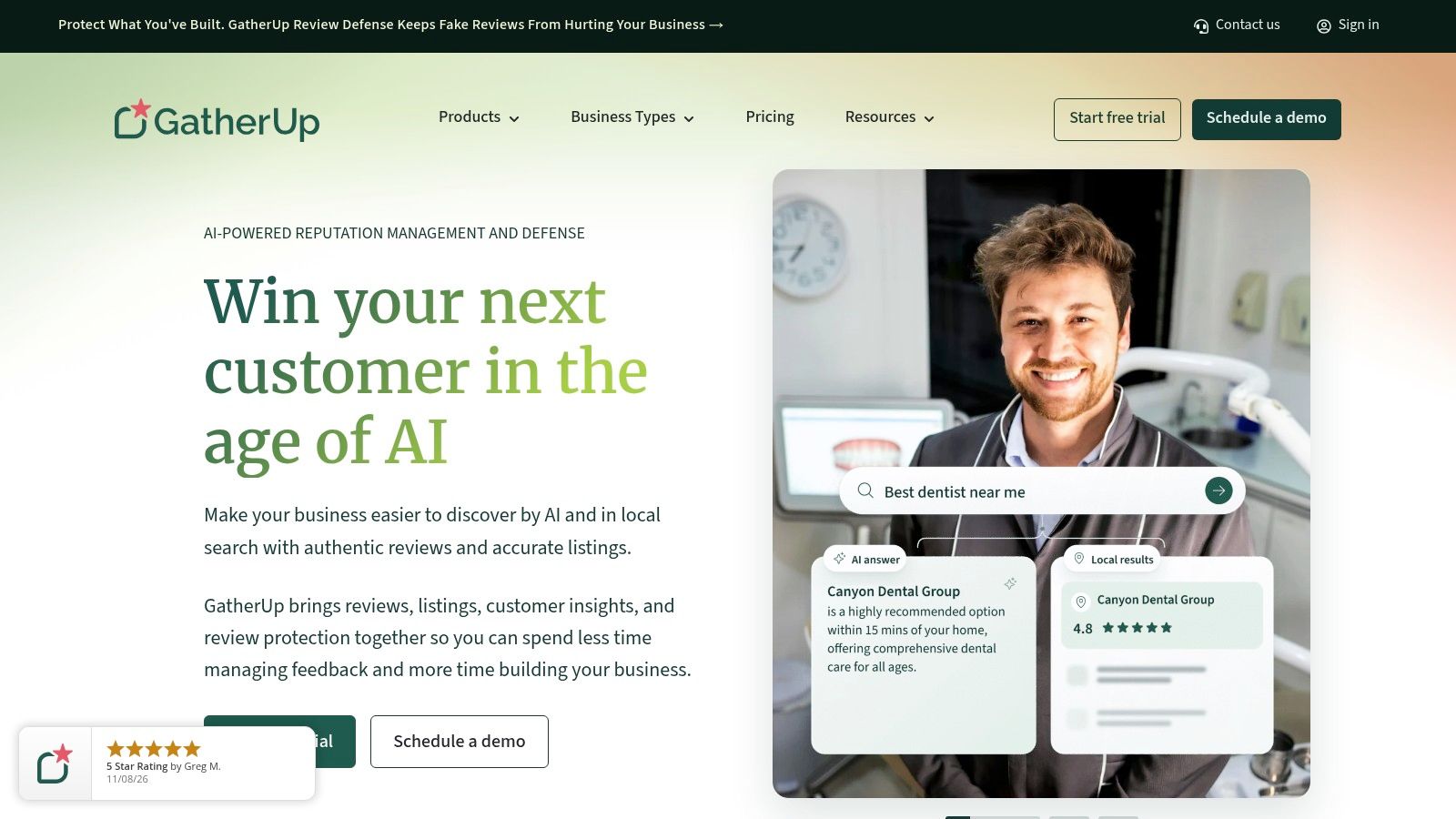
Listings Management and Review Defense are separate options, and dispute features can't guarantee a platform removes a review. Pair the review program with a local search acquisition plan so the reviews have somewhere to land.
Practical rule: track private feedback volume next to public review volume. A client whose public ratings climb while private complaints stay flat is being filtered, not fixed.
5. Synup
Synup bundles reviews with listings, local visibility, and local marketing workflows, which matters because of how agencies sell. A 2024 BrightLocal survey of nearly 400 local agency marketers, reported by Web Tonic, found that 68% of local agencies offer Google Business Profile management while 49% offer online review management. That gap is unbilled work you could be charging for.
Published pricing is Premium at $299 a month for up to 10 locations, Pro at $499 for up to 25, and Scale at $899 for up to 50. Reviews come from 30+ sites and filter by source, location, rating, and status. AI drafts responses for staff to approve, edit, or publish, and cross-location analytics and competitor comparisons export as PDF or CSV.
Cross-location views are the reason franchise accounts pick it.
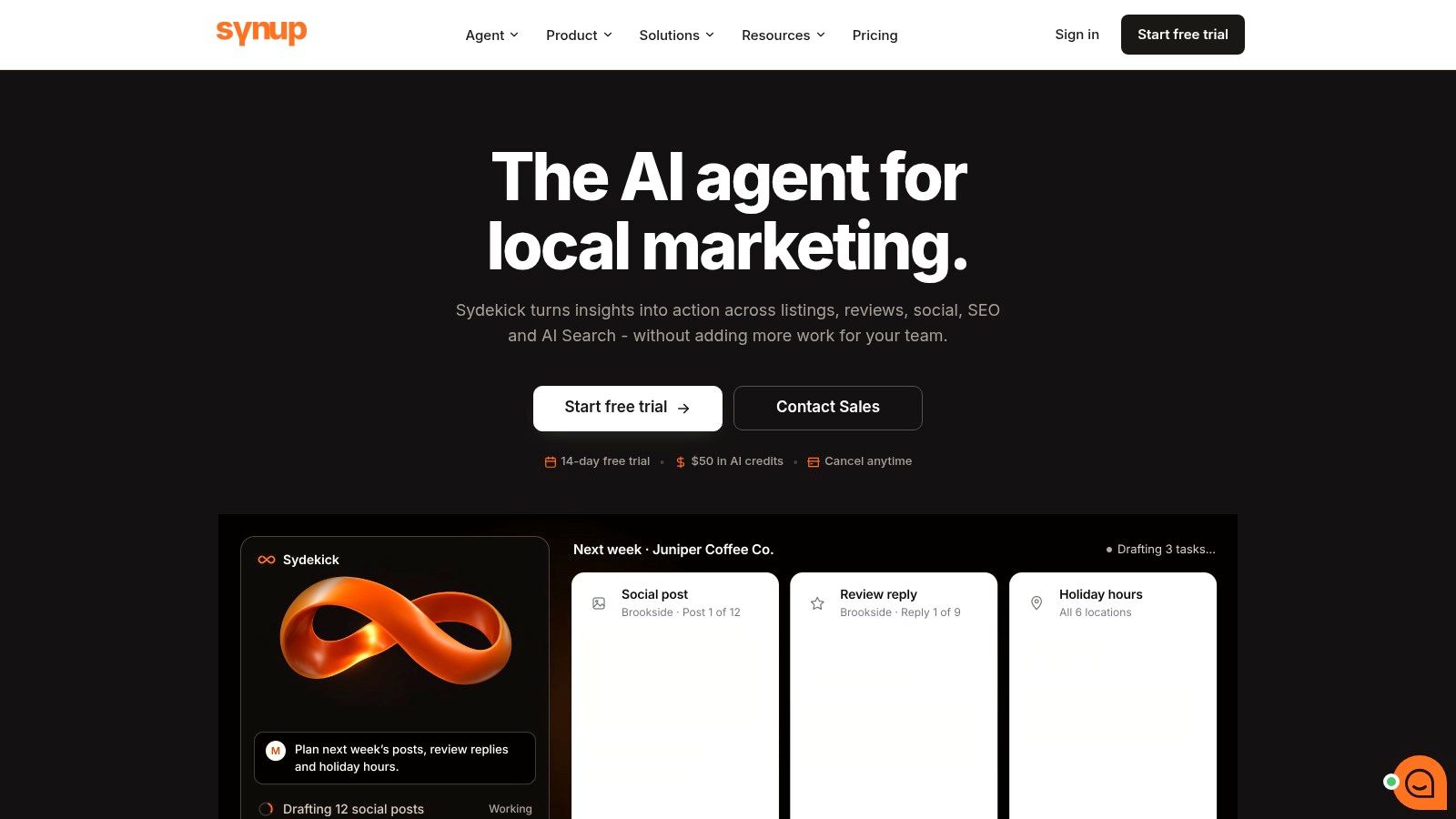
White-label client dashboards require a qualifying plan and aren't in the Solo tier, and usage-based AI credits belong in your cost forecast. If a client needs monitoring only, the broader suite is dead weight. Run it alongside the local listings playbook agencies use to keep profiles consistent.
6. Birdeye
Birdeye's pitch lands when a client's problem refuses to stay inside reviews. Messaging, surveys, listings, and social all sit under one contract, which is why agencies bring it to multi-location accounts that would otherwise juggle four vendor relationships.
Response speed is usually why the client asks. Search Engine Land's roundup of online review statistics reports that about 88% of consumers expect businesses to respond to reviews, that more than half expect a response within three days, and that over seven in ten are concerned about illegitimate reviews. Messaging and review workflows in one system help you hit that window without logging into three tabs.
The platform spans reviews, messaging, and listings work.
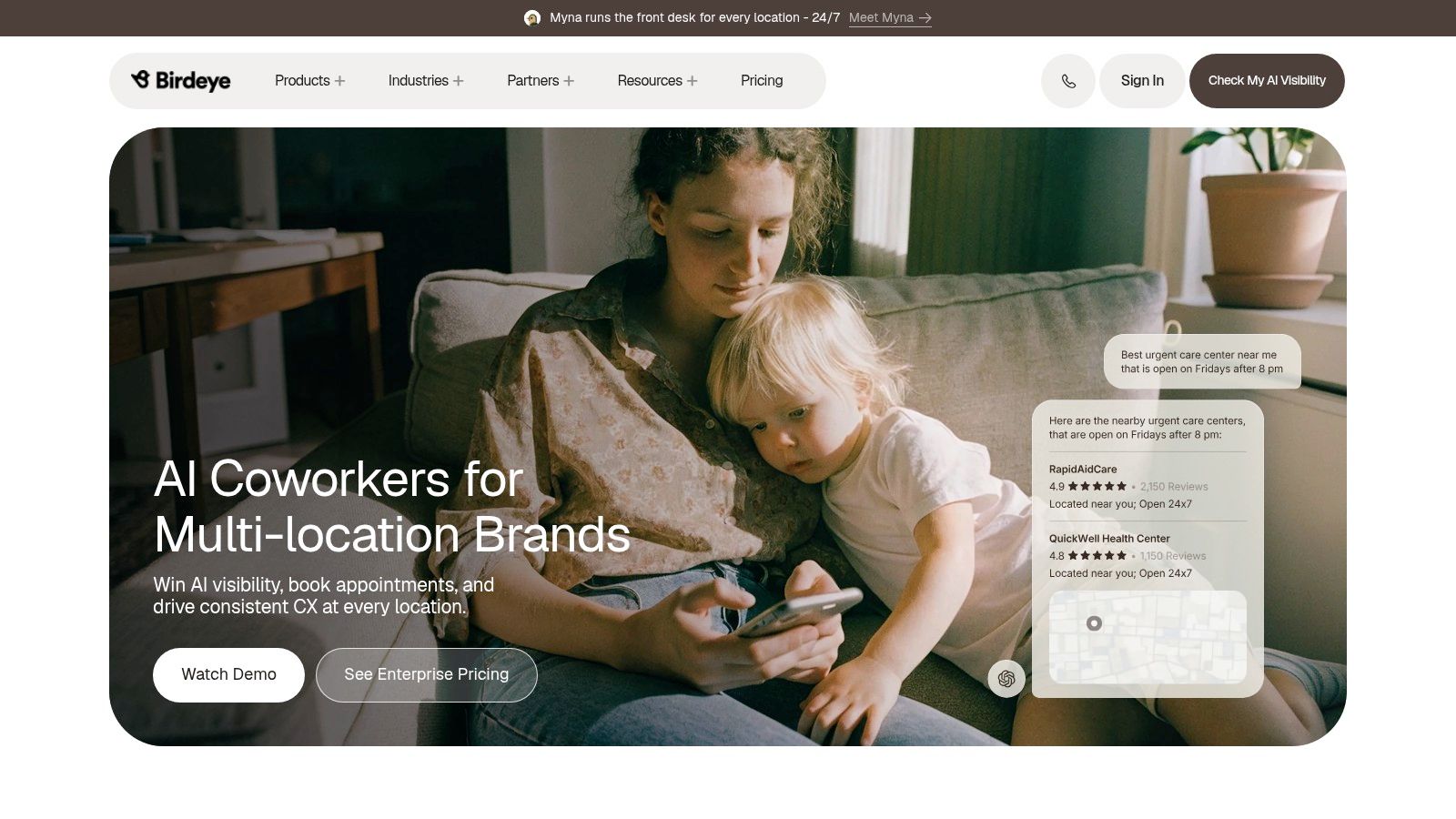
Pricing is quote-only, so before you commit, get reseller terms, per-client dashboard access, support tiers, and contract length in writing, and ask how the cost scales as you add locations. Two agencies can pay very different rates for the same footprint, which is exactly what makes the quote hard to forecast against a fixed retainer. And for a client who only needs review monitoring, the breadth of the suite is capability they pay for and never open.
On the search side, Keyword Kick's white-label SEO reports carry the client's own branding on an automated schedule, which is what clients usually want stapled to the review summary. Our SEO reporting playbook for agencies covers how to structure those reports.
7. LocalImpact
LocalImpact is built for the reseller model: the client sees your agency name, not the platform's. Pricing is banded by location rather than published as one flat agency rate, so confirm the current tier and per-location add-on on the vendor's site before you quote a client.
The white-label layer is the draw. Dashboard and reports can carry your logo, colors, favicon, and domain, while multiple clients and locations sit in one account. Role-based permissions let you separate client viewers from team members, and AI-assisted responses plus review generation reduce the manual work per location.
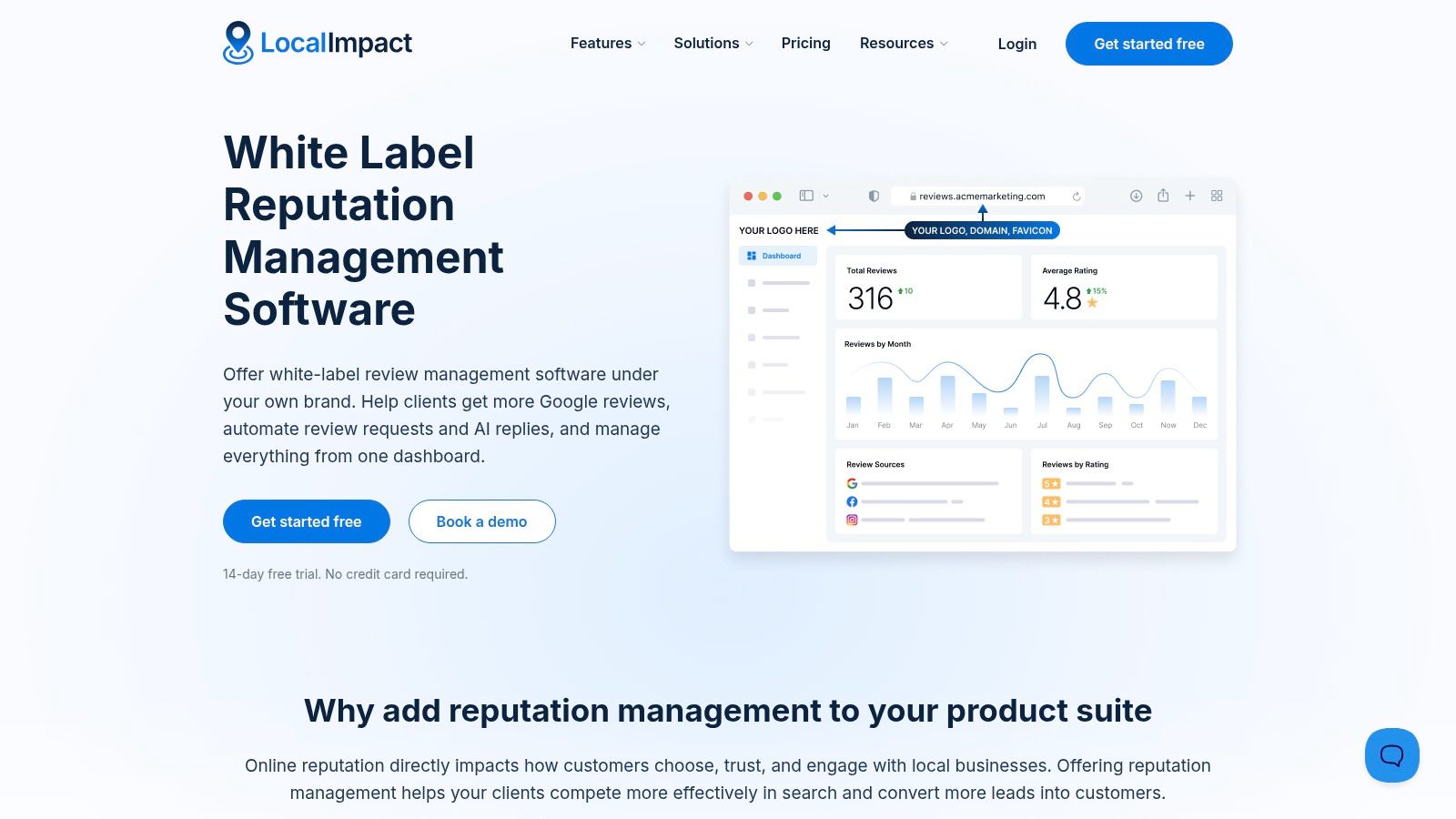
The cost question is the ceiling inside each band. A franchise or other multi-site account can push you into paid add-ons fast, so model the next tier before setting retainers. Check review-source coverage against each client's industry too; niche directories are where white-label tools split apart. LocalImpact is a specialist resellable review stack, not an enterprise customer-experience suite.
8. ReviewInc
ReviewInc sells through partners. The white-label program lets an agency set its own client pricing and bill customers directly, and the vendor describes onboarding, training, and sales materials for partners. Underneath sits review management, listings, local SEO, and social tools in a branded dashboard.
Per-location pricing starts under $100 a month, with volume discounts, and portfolio rates come as a quote. Partner accounts are managed from a single admin view.
Commander of the account is you, which is the point and the risk. When you set retail pricing and bill clients yourself, you also own every escalation, every missed renewal, and every response your team drafts.
No fixed agency plan is published, so the number you get depends on your book of business. Ask what happens at renewal once you've added locations, and whether you keep the client relationship if you leave the program. The feature set also exceeds a review-only service, which means a small agency pays for listings and social tooling it may never touch.
9. ReviewTrackers
ReviewTrackers leans analytical. Reviews from 100+ sources land in dashboards with alerts, competitor insights, and customer-experience analysis on qualifying plans, and the response tools include AI assistance. The agency partner program adds custom training and enablement, with white-labeling sold as an add-on.
The case for investing in the response workflow is documented. A 2020 global reputation-management study found that 47% of consumers said a company response had a major effect on their satisfaction, and that 46% said it substantially increased their likelihood to buy again. The same research found 45% of reputation leaders routinely report ratings and customer sentiment to management, against 24% of mainstream businesses, which is a reporting habit worth copying into your QBR template.
Reviews, alerts, and competitor tracking share one screen.
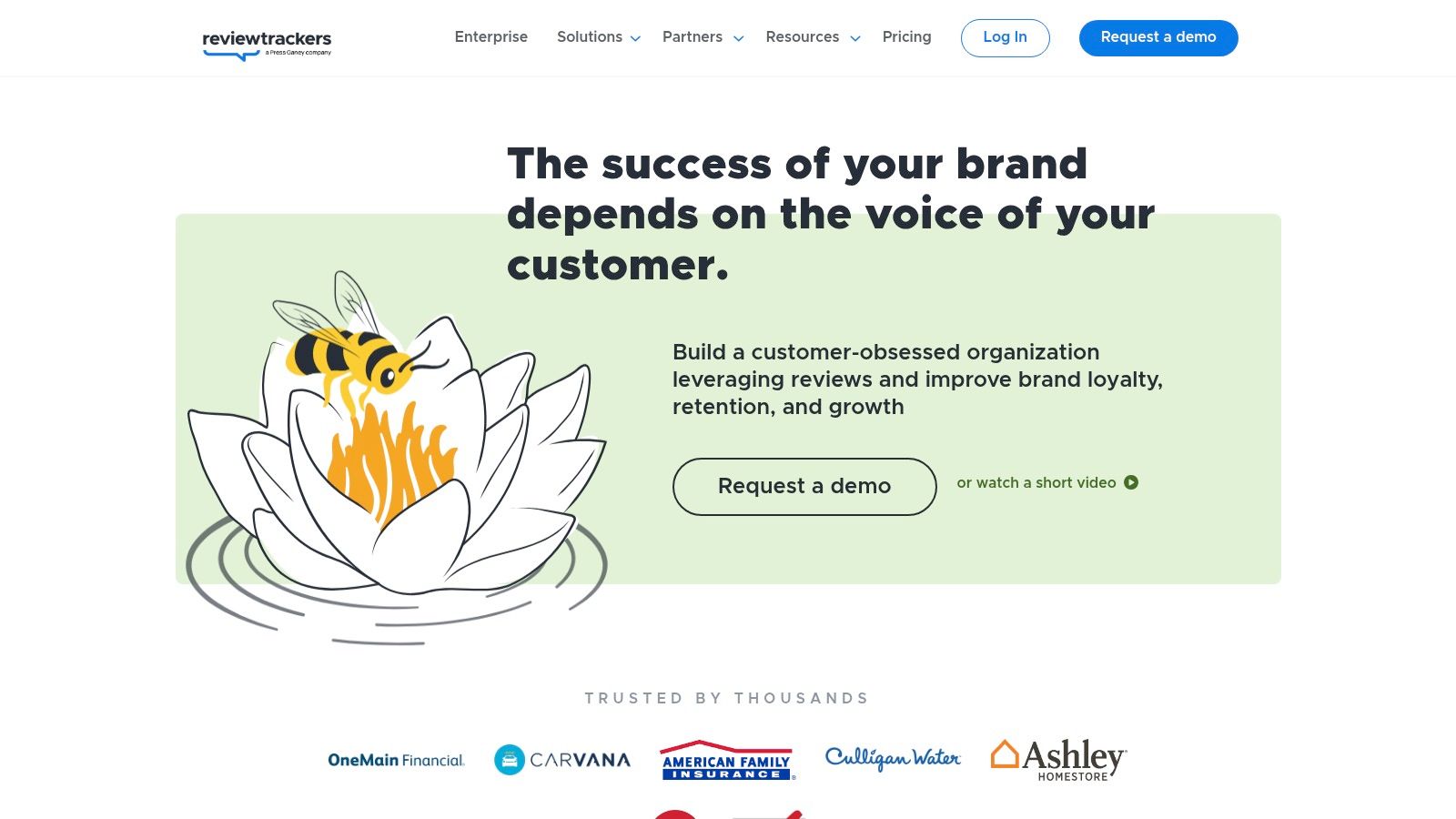
Pricing is custom and location-based, so partners should ask about special rates rather than accept the first quote. Unlimited users are included per its pricing page, white-labeling and some capabilities cost extra, and the analytical depth is overkill for agencies running simple solicitation.
10. Reputation
Reputation is the enterprise option on this list. Reviews, listings, surveys, social, insights, and feedback routing live in one platform aimed at brands with many locations, and certified-reseller and strategic-alliance partner routes exist for agencies that want to resell rather than refer.
Pricing is built per location, with the entry tier covering core reputation features and higher tiers adding Pulse or Surveys on top. Enterprise terms are custom and partner terms may differ from list, so confirm current rates directly with the vendor before building a client budget around them.
Enterprise review and survey data in one reporting layer.

Complexity and cost put it out of reach for small agencies and single-location accounts. Several capabilities sit in higher tiers or behind add-ons. Before signing, get two things in the written quote: which features are included, and what your partner rights look like, including whether you set your own retail price and how the reseller margin changes after year one.
11. Brand24
Brand24 is the odd one here, deliberately. It monitors mentions across social channels, news, blogs, forums, and review sources, with sentiment analysis, alerts, and PDF, PowerPoint, or Excel reporting. It answers "what are people saying about this brand" rather than "did this customer get a review request."
Agencies use it for PR, brand monitoring, and competitive listening, usually next to a review platform rather than instead of one. Plans start at $199 a month billed annually, with a 14-day trial.
Social and web mentions monitored in a single project.
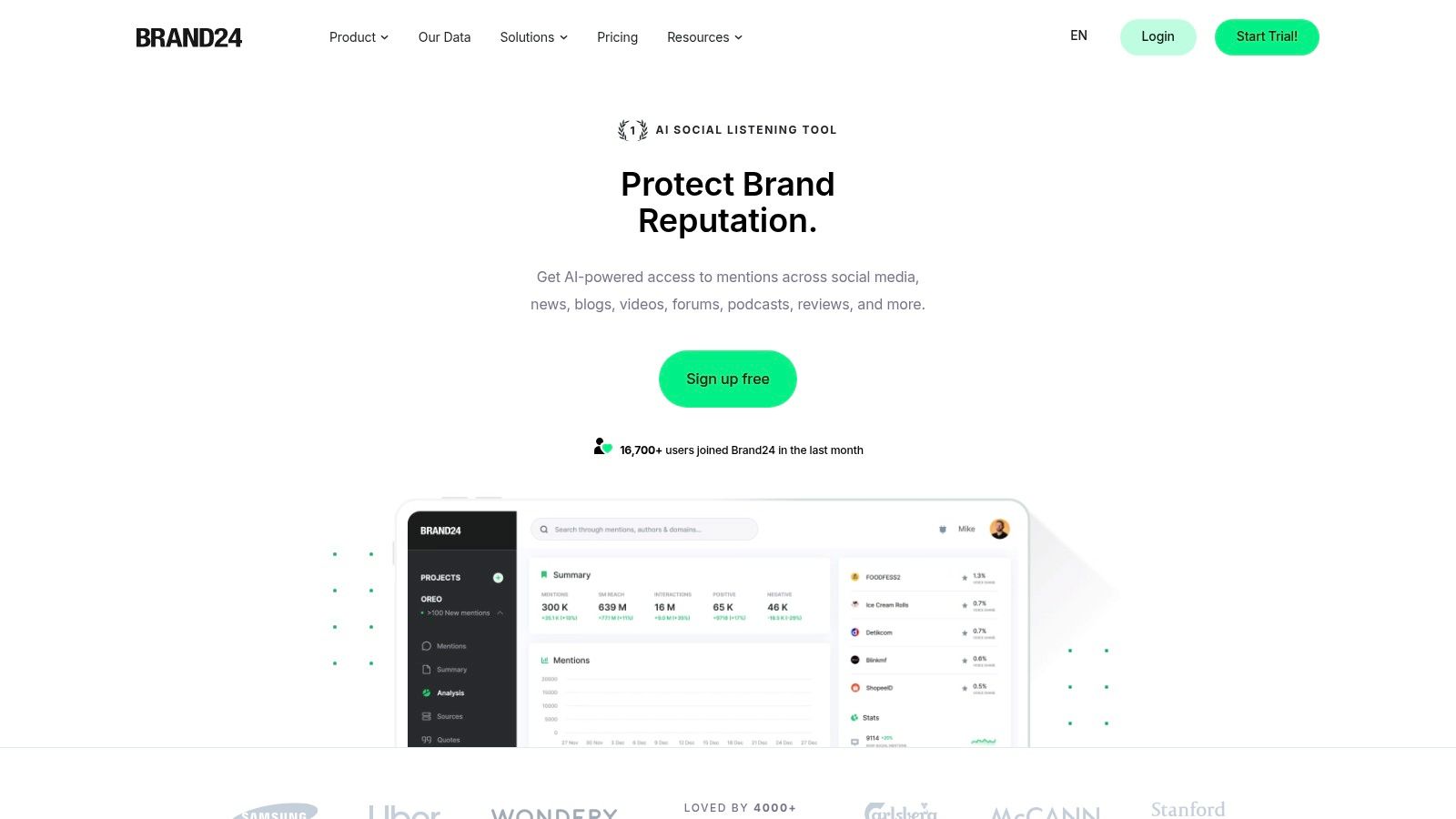
For review operations it falls short in specific ways. It doesn't run review-request campaigns or manage client locations at the profile level, keyword and mention-volume limits bind quickly across many small client projects, and higher tiers get expensive when every client needs its own project. Buy it for listening, budget it separately from review work, and don't let a sales demo convince you it replaces a review platform.
Published pricing, trials, and white-label support across the platforms
Item | Published starting price | Free trial | White-label reporting | Best for |
|---|---|---|---|---|
EmbedMyReviews | $99/month, unlimited clients, locations, and users | Not stated | Yes | Agencies seeking flat pricing and fully branded reputation workflows |
BrightLocal | $49/month for one location, billed annually | 14 days | Yes | Agencies combining reputation management with local SEO |
Grade.us | $99/month for one location | 14 days | Yes | Agencies focused on review campaigns and client reporting |
GatherUp | $99/month for one location, billed annually | Not stated | Available; agency pricing is custom | Agencies combining reviews with surveys and customer feedback |
Synup | $299/month for up to 10 locations | 14 days | Available on qualifying plans | Agencies managing multi-location local marketing |
Birdeye | Custom pricing | Not stated | Confirm with vendor | Agencies managing complex, multi-location customer experience |
LocalImpact | $149/month for up to five locations | 14 days | Yes | Resellers wanting branded dashboards and reports |
ReviewInc | Under $100/month per location; quote required | Not stated | Yes | Agencies reselling review, listings, and local SEO tools |
ReviewTrackers | Custom, location-based pricing | Not stated | Available as an add-on | Agencies needing review analytics and partner support |
Reputation | $80/month per location | Not stated | Not specified | Multi-location brands needing broad reputation and customer-experience tools |
Brand24 | $199/month, billed annually | 14 days | Not specified | Agencies monitoring brand mentions, PR, and online conversations |
Matching a Platform to Your Client Mix and Workflow
Start with your client profile, not the feature grid. The tool that fits a twelve-client book with three locations each is rarely the tool that fits one franchise account with ninety.
Single-location clients on tight retainers belong on published-price tools with straightforward requests and branded reports. BrightLocal, Grade.us, and GatherUp all let you model cost per location before you sign, and all three combine review work with adjacent local marketing you may already be billing for.
Multi-location and franchise accounts need cross-location dashboards, per-client permissions, and pricing that survives growth. Run the arithmetic at double your current location count, not today's number, and check whether AI credits, seats, or white-label dashboards sit behind a higher tier.
Resellers: test the white-label output end to end before signing, including the login page, the report, the billing document, and the help center. Ask who owns the client relationship if you leave the program.
Compliance owners: decide who owns drafted responses before the first campaign ships, and keep an exportable record per client, location, and campaign.
Reporting owners: check that the platform exports data rather than only screenshots, because the client's QBR will ask for both review outcomes and search outcomes.
SEO reporting tools sit alongside a reputation platform rather than replacing one. Keyword Kick tracks rankings, site health, and backlinks and generates white-label SEO reports, but it doesn't monitor or request reviews, so plan two layers: reputation for the review workflow, search reporting for the visibility story.
"Run the trial on your three messiest accounts, not your cleanest one. That's where the switching, permissions, and reporting problems show up."
Take the two platforms that fit your messiest accounts and run both against the same client for thirty days. Ask each vendor for a written per-location quote at double your current location count, confirm who owns the client relationship and the drafted responses, and check that your reporting layer can carry both review and search results into one branded document. When the review data is clean, pull rankings, site health, and backlinks into the same client report with Keyword Kick's Report Builder, a $19 a month add-on, and the white-label reports option at $10 a month so the client sees one story instead of four screenshots.