Your content team has already done the hard part. They've exported keyword lists, grouped a few obvious variations, and assigned terms across blog posts, product pages, and service pages. Then performance becomes difficult to explain. Two URLs rank for the same query, a page attracts impressions but few clicks, and a “content gap” turns out to be a page that targets the wrong search intent.
That's where keyword mapping SEO becomes an operating system rather than a spreadsheet exercise. A useful map gives every meaningful search theme a clear URL owner, then keeps testing whether that owner still matches the searcher's need.
The Keyword Mapping Foundation
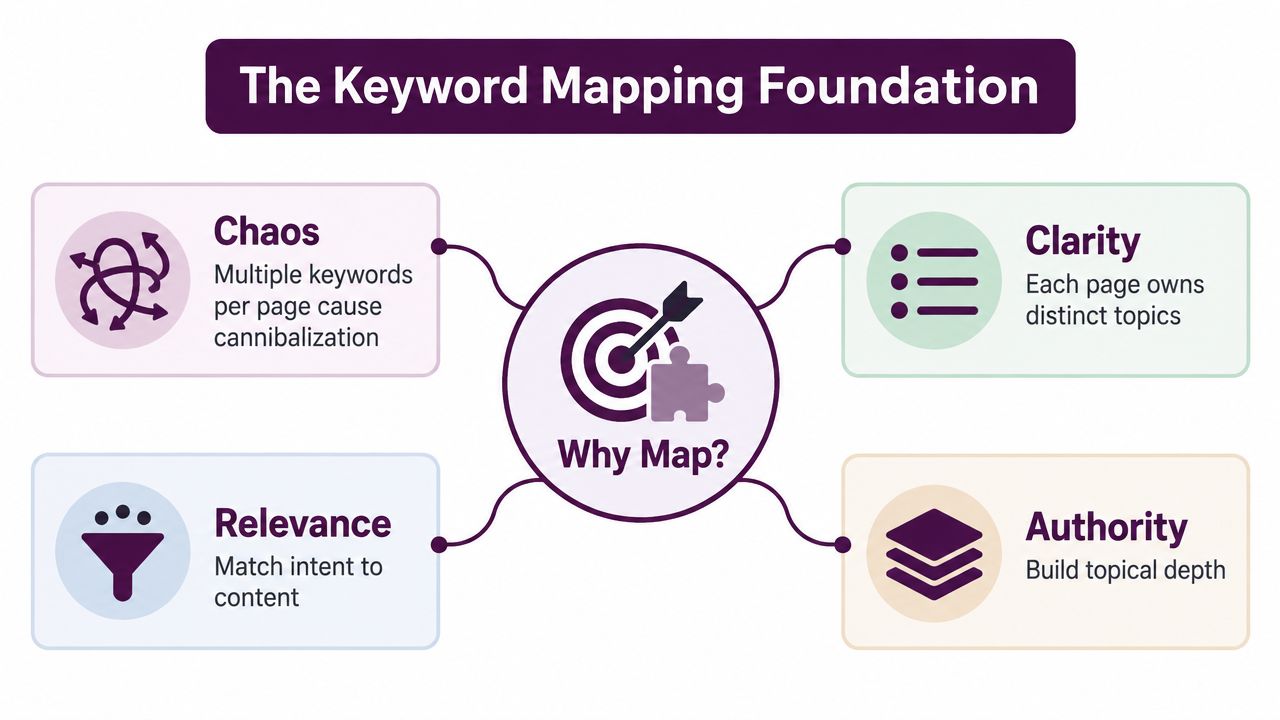
A large software site can publish separate pages for “project management software,” “project management tools,” and “best project management platform,” then watch all three compete for similar searches. Keyword mapping prevents that outcome by assigning each search theme to a specific URL and recording the decision in a shared map.
The work is more than filling spreadsheet cells. A useful map identifies the page that should own a cluster, then defines what happens to overlapping URLs. Some need consolidation or redirection. Others may remain live if they serve a different intent, audience, or page type. The decision should follow the SERP and the business goal, not the wording of the keyword alone.
Why the practice became necessary
Early SEO planning focused heavily on keywords, meta tags, and directory listings. Search systems now evaluate relationships, context, and user intent. The Semrush guide to keyword mapping links this shift to developments such as Hummingbird, which moved optimization away from exact-match stuffing and toward semantic search.
That shift changes how teams justify new pages. A phrase in a content calendar does not automatically deserve its own URL. The proposed page needs a distinct search need, an appropriate format, sufficient depth, and a clear conversion path. Mapping makes those requirements visible before production begins.
Practical rule: One search intent should have one obvious primary URL owner.
A maintained map should record the cluster, primary keyword, supporting terms, assigned URL, intent, page type, status, owner, and review date. Those fields give content, technical SEO, internal linking, and reporting teams one operating reference. They also make ownership changes explicit when rankings shift, products change, or a page starts attracting a neighboring intent.
Mapping is the starting decision, not the finished system. Agencies and large-site teams still need to check whether the assigned URL remains the right owner after publication, updates, and SERP changes. That maintenance is where otherwise tidy maps develop competing URLs, weak matches, stale assignments, or unowned topics.
Research Inputs and Data Collection
A large site can have strong rankings and still map keywords to the wrong pages. A product query may lead to a blog post, a support phrase may point to a sales page, or several URLs may collect impressions for the same need. Research must capture the evidence behind each assignment before the map becomes an operating document.
Build the raw keyword set
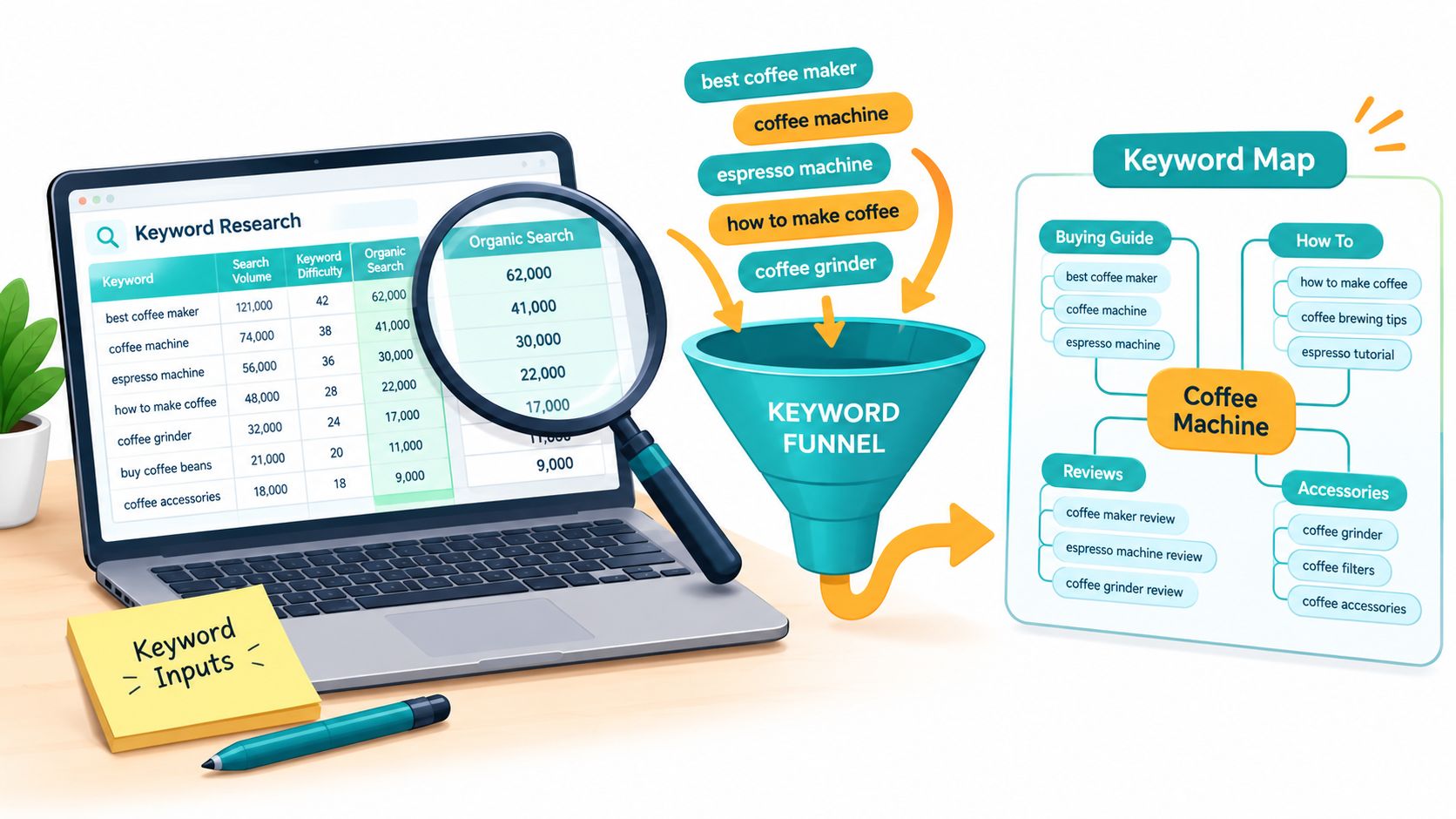
Collect inputs from multiple sources:
- Search Console queries: Export terms already generating impressions or clicks. Include queries for which the current ranking URL gains visibility but fails to support the intended business action.
- Analytics landing pages: Connect query themes with engagement and conversion behavior. A promising term may send visitors to a page that cannot support the next step.
- Competitor coverage: Review competitor URLs ranking for important themes. Record their page type, content angle, and SERP format, rather than copying only their keyword list.
- Customer language: Extract wording from sales calls, support tickets, site searches, product reviews, and briefs. These sources often expose problems that keyword databases describe differently.
- SERP inspection: Search terms manually and record whether results favor definitions, tutorials, category pages, comparisons, or product pages.
Use find keyword data for SEO to speed collection, but keep the export tied to decisions. Each row should include the query, current ranking URL, likely intent, business relevance, and result type. Add the source and date of the observation where the team needs to revisit the reasoning later.
Filter for usefulness, not volume
Search volume helps prioritize investigation, but it does not establish page ownership. A lower-demand query with clear product relevance may deserve a stronger page than a broad term that attracts the wrong audience. Difficulty also depends on the site's topical authority, existing assets, and ability to match the result format.
Before mapping, remove duplicate phrases, brand terms that belong to navigational pages, misspellings the site will not target, and needs the business cannot credibly answer. Preserve close variants when they reveal a different customer problem or SERP pattern. For writing teams, guidance on how to structure SEO articles can support a readable brief, but the research record should establish the article's purpose first.
The output is a research table, not a publishing queue. Every row needs enough context for another team member to understand why the query matters, which evidence supports it, and what kind of page could satisfy the searcher. That context makes later audits faster when rankings shift or the assigned URL stops matching the query.
Grouping Keywords by Intent and Funnel
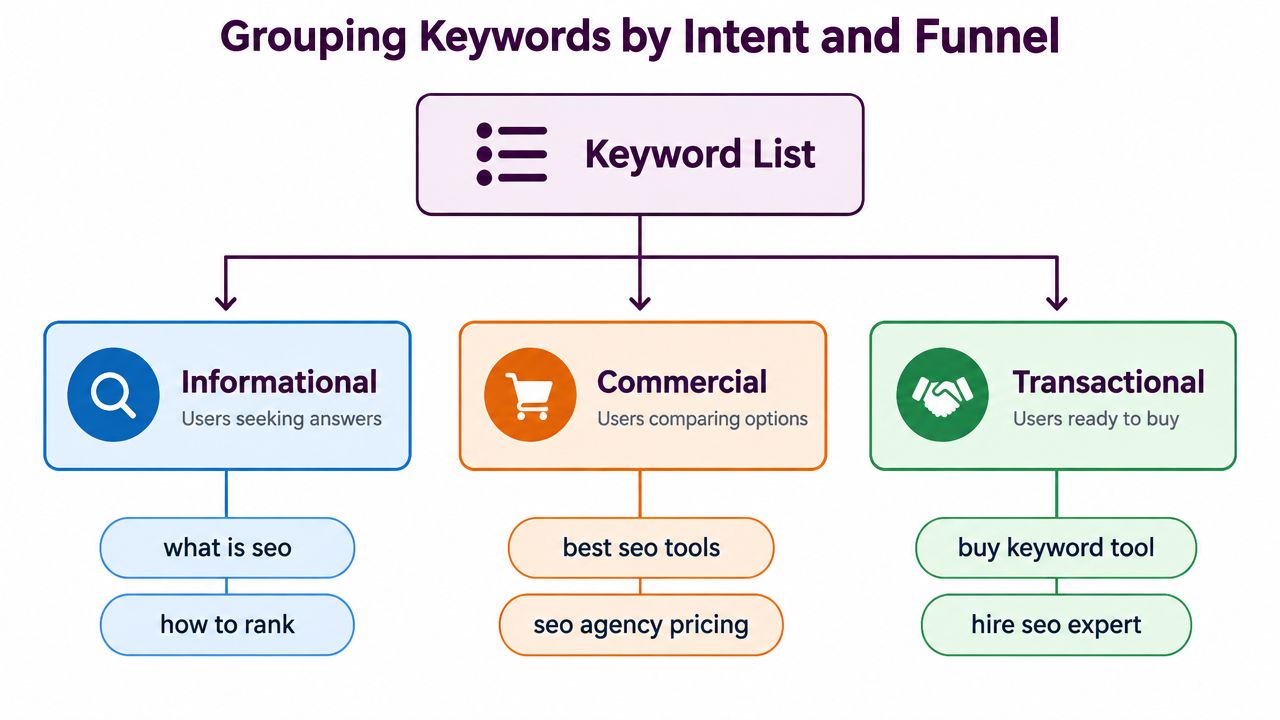
A keyword list can look organized and still produce the wrong pages. For example, “SEO audit checklist” suggests an instructional resource, while “SEO audit service” signals commercial evaluation. They share vocabulary, but their audiences, page formats, and desired actions differ. Mapping should expose those differences before content production begins.
Classify the dominant intent for each query:
- Informational queries seek explanations, definitions, processes, or troubleshooting. Guides, glossaries, tutorials, and other educational resources usually serve them.
- Navigational queries identify a known brand, product, login page, or destination. Give these terms clear branded ownership instead of creating an article for every wording variation.
- Commercial queries indicate comparison between options, providers, features, or approaches. Comparison pages, solution pages, and buying guides may fit.
- Transactional queries show readiness to purchase, book, subscribe, or contact a provider. Product, service, pricing, and conversion pages generally match this intent better than broad blog content.
Use SERP similarity to define clusters
Words alone do not establish a cluster. Compare the search results for each query. Record whether Google favors articles, category pages, tools, reviews, or service pages, then check whether the same audience is trying to complete the same task. Combine variants only when one page could answer them fully. Split them when the format, audience, or next action changes.
A workable process is:
- Normalize the list. Remove duplicates, separate branded terms, and retain the original query for reporting.
- Label the intent. Describe the task behind the search, not only its funnel category.
- Compare result types. Note the page formats that consistently appear in the SERP.
- Group by need. Combine variations that one page can satisfy without weakening its focus.
- Split conflicting needs. Create separate clusters when users require different answers or actions.
- Name each cluster clearly. Use labels such as “technical SEO audit checklist,” rather than a vague topic name.
Funnel stage helps after intent is clear. Someone researching a problem may later compare solutions, but one URL should not target every stage. An informational guide can explain the problem, a commercial page can compare approaches, and a transactional page can present the offer.
Post-mapping maintenance matters because clusters change. New SERP formats can expose a mistaken grouping, while a page may begin attracting queries with a different intent. Keep the evidence behind each decision, including the result type and reason for combining or separating terms. That record makes later corrections faster.
Keyword clustering should reduce page count where intent overlaps and increase page clarity where intent diverges.
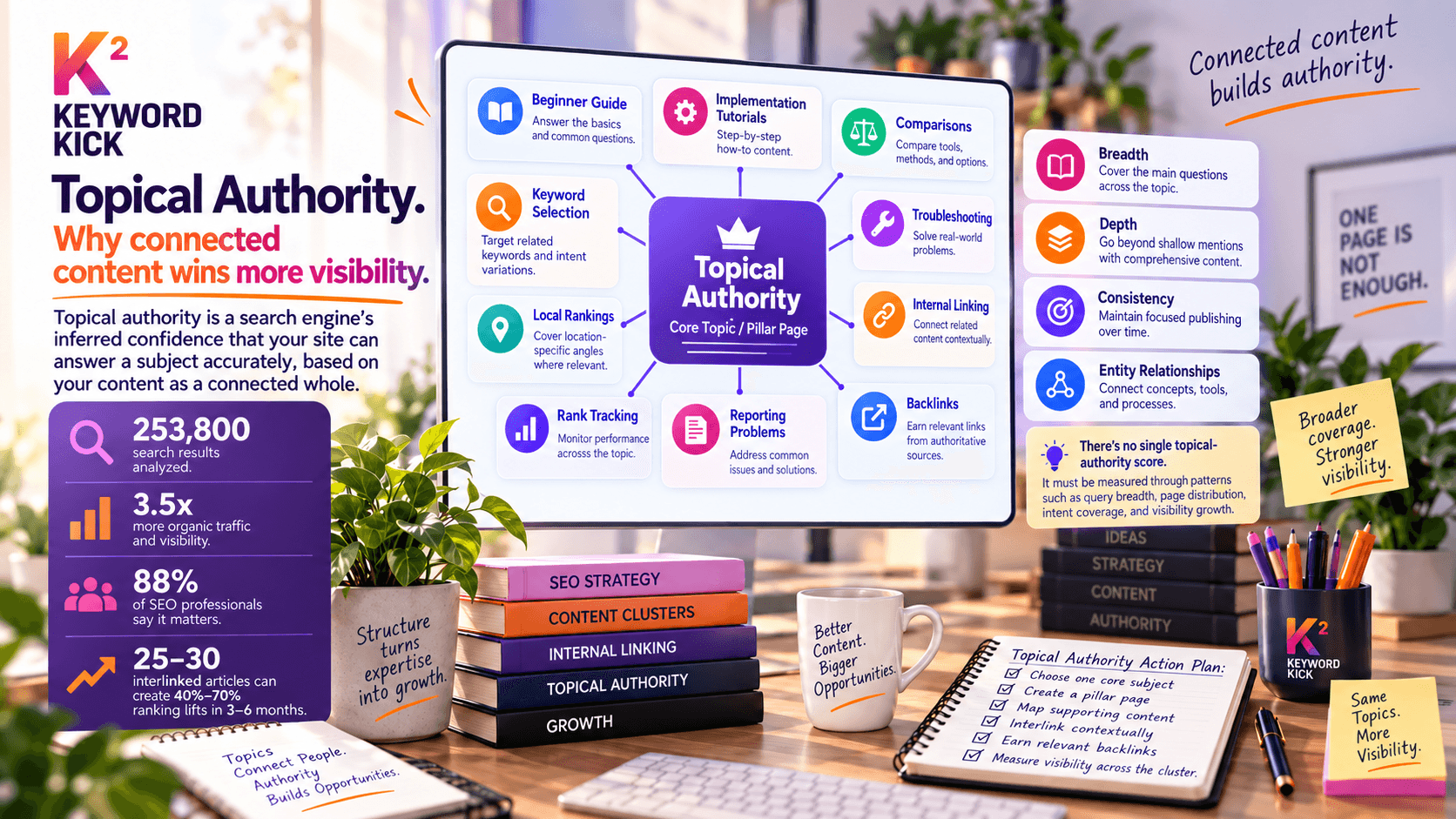
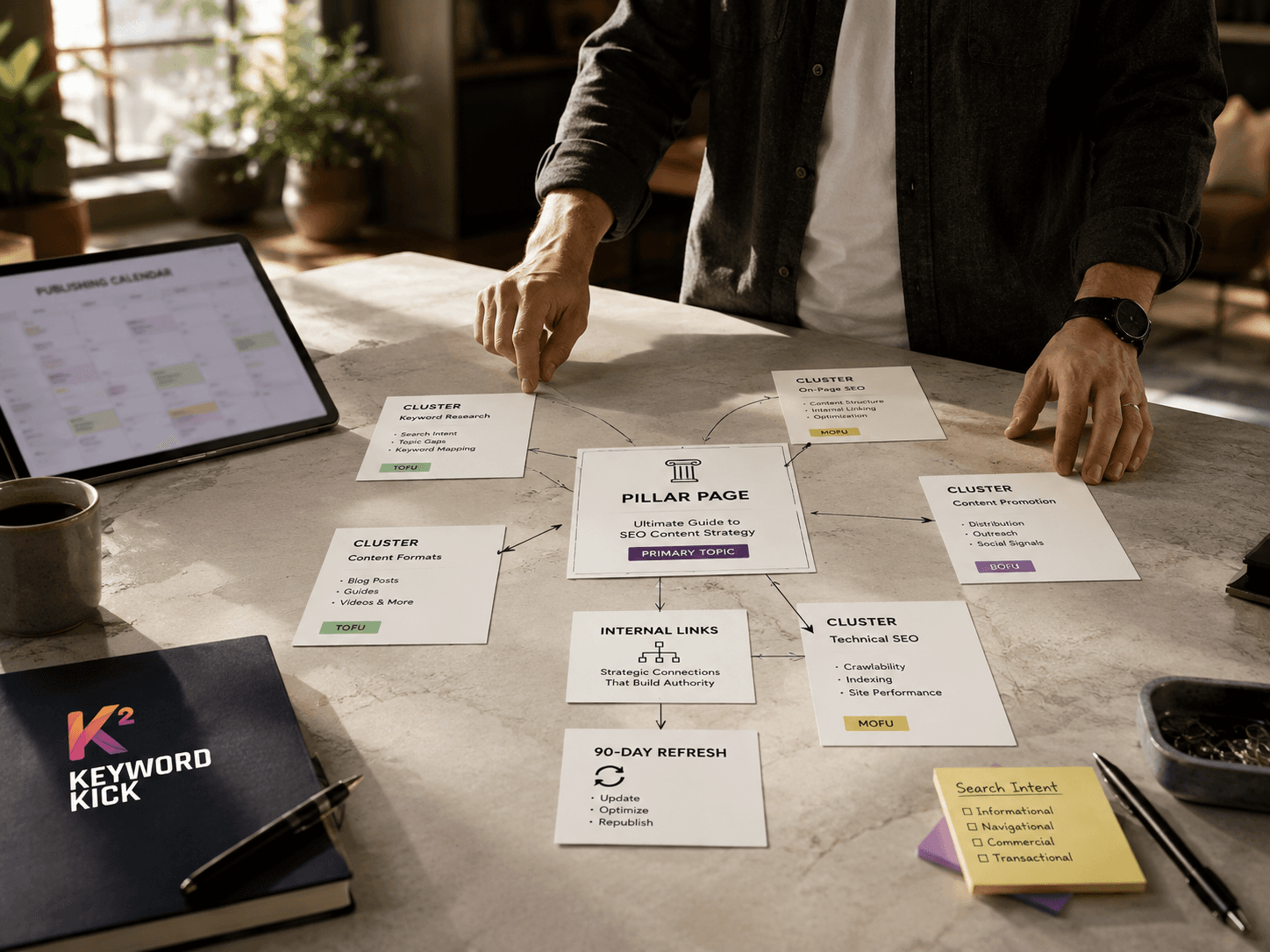
A cluster may support a pillar page and related supporting pages, but every supporting page needs a distinct job. Link those pages according to the user's next decision, rather than forcing one URL to rank for incompatible tasks.
Assigning Keywords to Existing and New Pages
A keyword map becomes useful only when each cluster leads to a clear page decision. Assign one canonical owner to each cluster, with one primary keyword to one canonical URL. Supporting terms can appear in headings, metadata, examples, FAQs, and body copy when they serve the same intent.
Start with the existing site, but assess pages against the search need rather than their current impressions. For every potentially relevant URL, check:
- Does it address the cluster's intent?
- Does its format match the page types appearing in search results?
- Does it answer the user's need fully?
- Does it have a logical role in the site architecture and useful internal links?
- Can its structure, authority, and content be improved efficiently?
- Would a new page give users a clearer answer?
A page that ranks for a loosely related phrase is not automatically the right owner. A blog post should not inherit a purchase-ready cluster because it receives impressions. A product page should not absorb an educational query when users first need a neutral explanation. Preserve the existing role when the intent differs, then assign the cluster to another URL or create a new one.
Decision Matrix: Optimize vs. Create New
| Current Page Performance | Search Intent Fit | Recommended Action |
|---|---|---|
| Receives relevant impressions or clicks | Strong fit | Optimize the existing page and assign it as the canonical owner |
| Receives visibility for related terms | Partial fit | Rework the angle, page type, and internal links before deciding |
| Performs weakly or has little relevant visibility | Strong fit | Improve the page if its structure and authority are salvageable |
| Performs well for a different intent | Poor fit | Keep its existing role and create or identify a separate page |
| Several URLs show overlapping relevance | Same intent across pages | Select one owner, consolidate weaker pages, and redirect where appropriate |
| No suitable URL exists | Clear unmet intent | Create a new page with a defined brief and internal-link plan |
Make the assignment operational
Record the primary keyword, supporting terms, canonical URL, page type, current status, proposed action, and rationale. Add the internal links that should point to the owner. A content map should guide production, consolidation, and internal-link decisions, not remain a keyword inventory. Teams building this process can review how to create a content map.
For a new page, define its job before writing: target cluster, intended reader, SERP format, required evidence, parent page, sibling pages, and internal links. For an existing page, document whether the work involves a new angle, revised headings, stronger coverage, consolidation, or a change in canonical ownership.
After optimization or publication, update titles, headings, metadata, structured content, copy, and internal links to match the assigned intent. Related terms do not all belong in prominent elements. Use them where they clarify the answer, and review assignments as rankings and query patterns change.
Diagnosing the Four Post-Mapping Problems
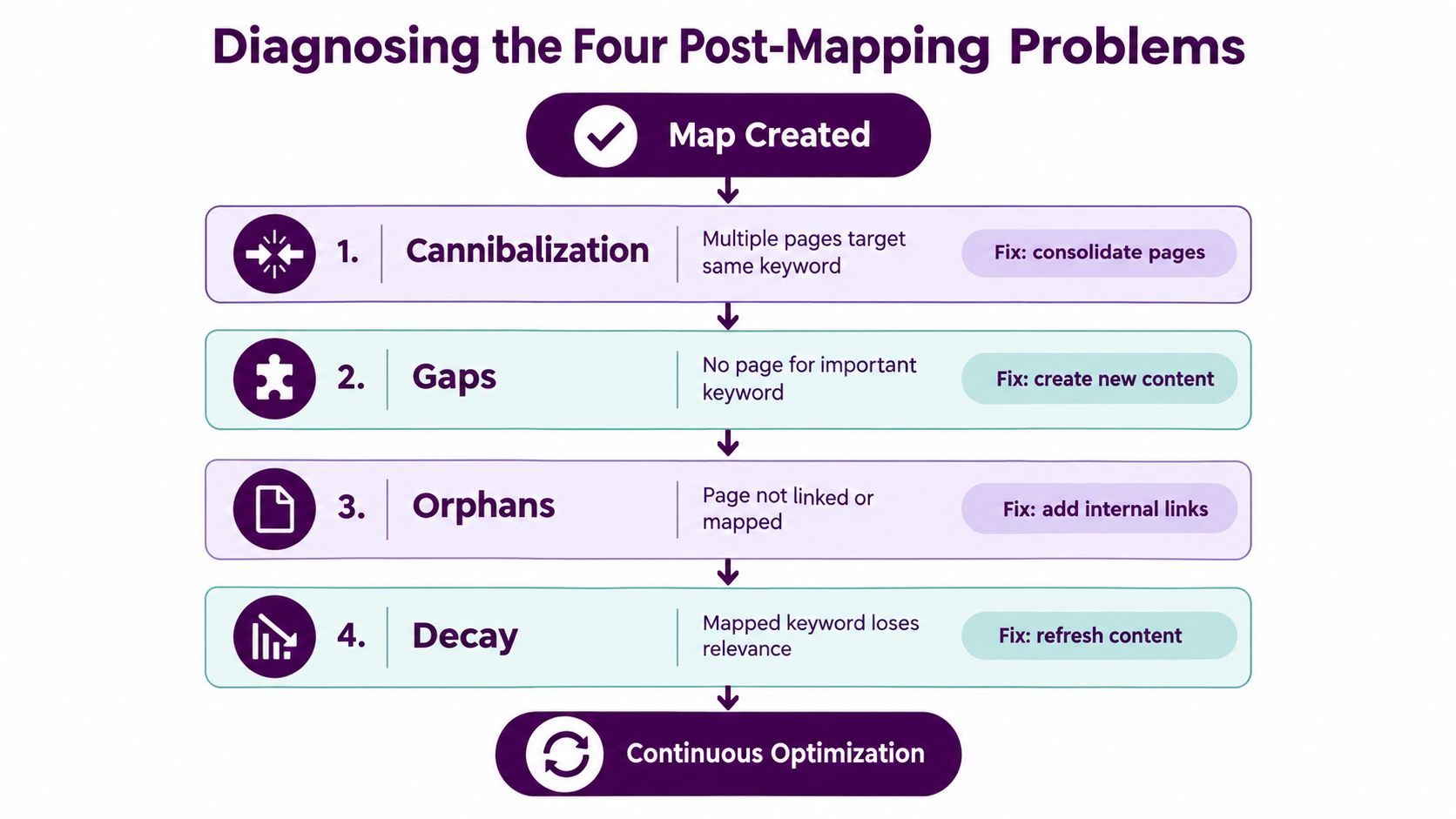
A finished map can look orderly while the site still loses rankings. After implementation, four failure states appear repeatedly: missing clusters, mismatches, underperformance, and overlap. Each requires a different operational response.
Missing cluster
A missing cluster means an important search need has no suitable page. Adding the term to an unrelated URL usually creates a weak compromise. Create a dedicated page when the intent supports one, then connect it to the relevant parent and sibling pages. If the need is too narrow for a standalone page, record it as supporting coverage instead of forcing a new URL.
Mismatch
A mismatch occurs when the assigned page does not fit the query's format, angle, or funnel stage. Compare the URL with the dominant SERP results. A comparison query needs a comparison-led page, while a definition query needs a clear explanatory page. More copy will not correct the wrong page role. Rework the existing URL when its authority and history are worth preserving, or assign the cluster to another URL and document the change.
Underperformance
An underperforming page has a reasonable assignment but fails to compete. Review the result promise, topical coverage, evidence, usability, internal links, title, and competing URLs against the target intent. Diagnose the specific constraint rather than adding words to meet an arbitrary length. Rising impressions with weak clicks usually calls for a review of the title and SERP positioning. A sustained click decline calls for checks on freshness, relevance, and newer competing content.
Overlap
Overlap is the operational form of cannibalization. A 2026 analysis of high-authority sites reported significant cannibalization on 68% of sites studied, defining it as five or more URLs ranking for one top keyword. 12% showed excellent control, with one to two URLs ranking for that keyword (analysis of SEO cannibalization). Treat these figures as a benchmark from that dataset, not as a universal health threshold.
Audit every ranking URL for the same intent. Select one primary owner, consolidate or redirect weaker duplicates where appropriate, and revise internal links so they consistently support that owner. Use this guide on how to fix keyword cannibalization for the troubleshooting steps.
Diagnostic principle: Coverage shows whether a topic appears somewhere. Ownership shows whether the site presents one strong answer.
Tools, Templates, and Maintenance Workflow
A spreadsheet works when it captures decisions, not just keywords. Include columns for cluster, primary term, supporting terms, intent, page type, canonical URL, competing URLs, action, owner, last change, review date, and notes. The change log is equally important. Record merges, redirects, new pages, title changes, intent reclassifications, and migrations so later performance shifts have a traceable cause.
A repeatable review cycle
Set a lightweight operating rhythm:
- After research: add new clusters and record why each deserves attention.
- Before publication: confirm that the proposed URL has no existing owner and that its page type matches the SERP.
- After launch: add the final URL, internal links, target terms, and publication status.
- During performance reviews: check for missing clusters, intent mismatches, underperformance, and overlap.
- After site changes: revisit assignments affected by migrations, templates, taxonomy, or product changes.
Review the map at least every three months because page priorities and performance change. Use a monthly check for pages with rising impressions but weak clicks, and for pages whose clicks have declined over 4–8 weeks. The practitioner guidance on keyword mapping provides a useful maintenance reference, but the cadence should follow the site's publishing and change volume.
Tools should support decisions. Search Console and analytics show user behavior, rank trackers expose URL ownership, crawlers identify internal-link and canonical problems, and competitor tools reveal uncovered themes. Keyword Kick connects keyword-to-page mapping with gap analysis, rank tracking, backlinks, technical SEO signals, and recommendations. For teams producing comparison content at scale, AI-powered listicle pages can speed drafting, but each page still needs a distinct mapped intent and canonical owner.
The workflow should surface four post-mapping failure states: missing coverage, intent mismatch, weak performance, and overlap. Assign an owner and action to each finding, then record the resolution.
The strongest map has fewer unexplained rows. Every important cluster has a defensible URL, every competing URL has a decision, and every change is documented.
Keyword Kick helps agencies and in-house teams connect mapping with gap analysis, rank tracking, content opportunities, and site diagnostics. Visit Keyword Kick to turn a static keyword list into prioritized actions.