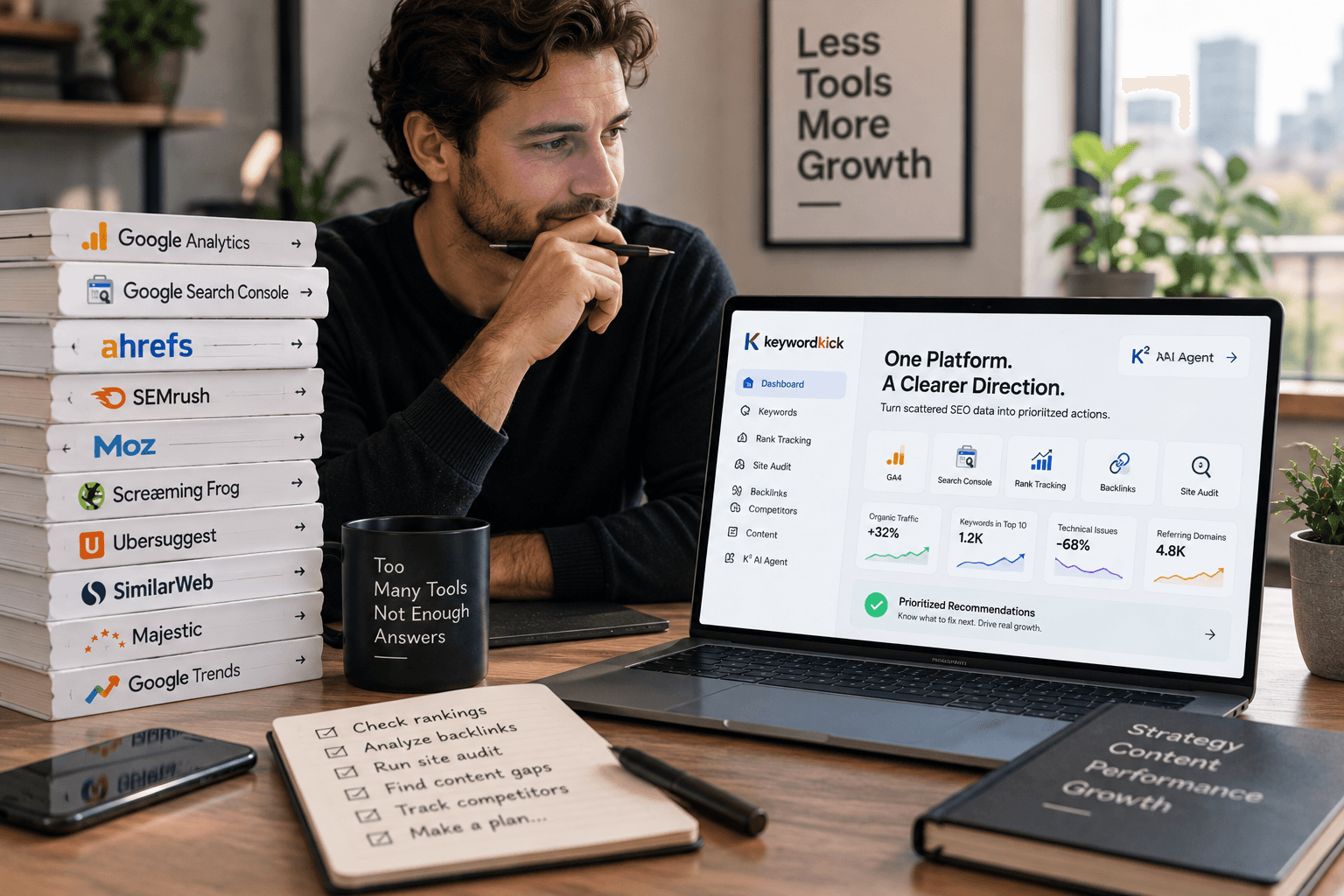
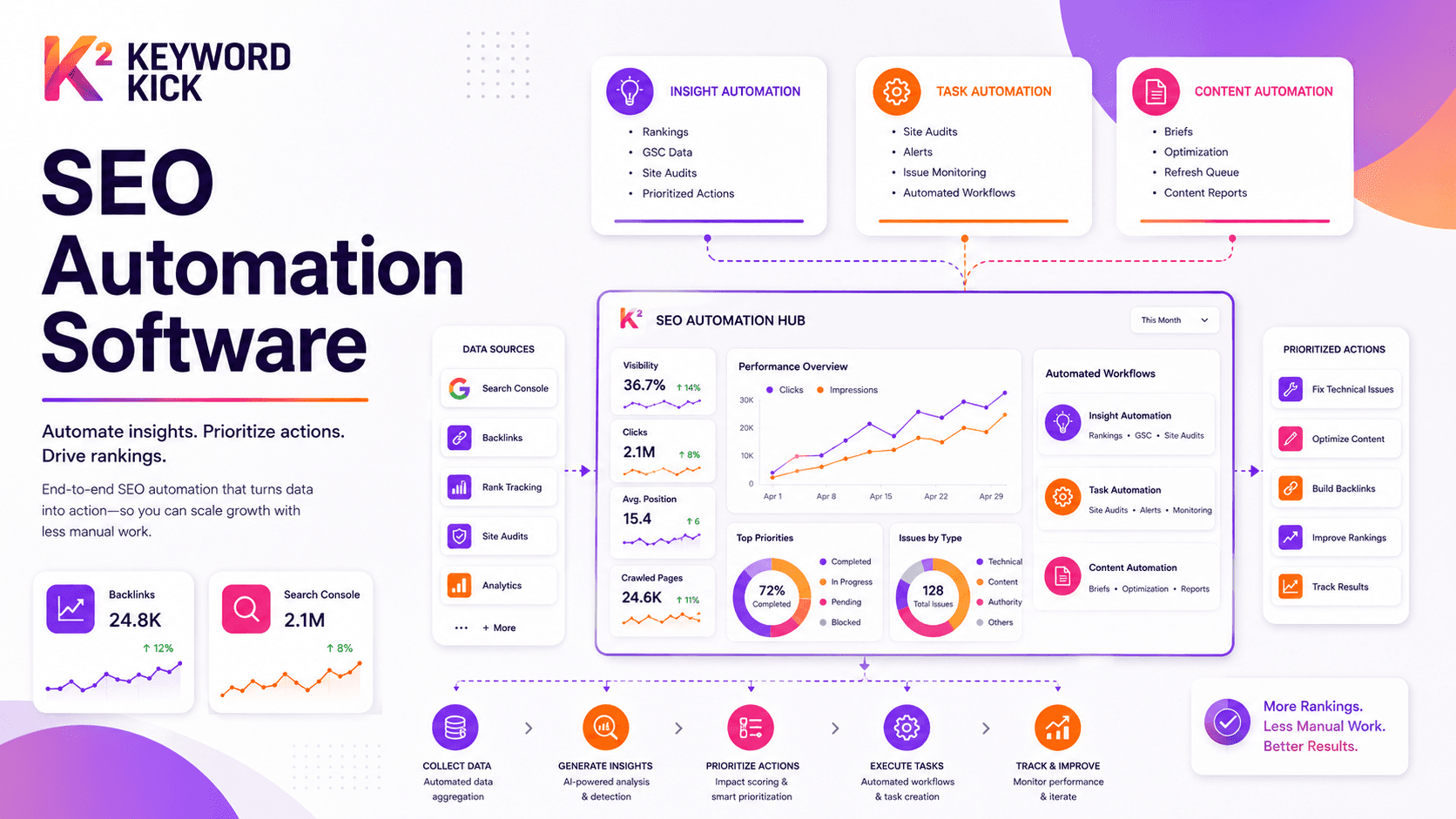
Monday starts with three tabs, two exports, and one ugly question from leadership: what changed? Rankings slipped, but the cause is split across crawl data, Search Console, analytics, and whatever lives in last week's spreadsheet. This is precisely why SEO automation software matters. It cuts recurring operational work so teams can spend time on diagnosis, prioritization, and execution instead of stitching systems together by hand.
Adoption has already moved past the experimental stage. According to Ascend2's marketing automation trends research, marketers continue to expand automation use across core channels and workflows. SEO fits that shift because a large share of the job is repeatable: rank tracking, technical monitoring, reporting, internal alerts, brief creation, and content refresh queues.
The buying mistake is treating all SEO automation platforms as the same category. They are not solving the same business problem. Some tools focus on insight automation, turning scattered signals into a prioritized next action. Others focus on task automation, catching technical issues and routing work before traffic is affected. Others focus on content automation, speeding up briefs, optimization, and refresh planning. If you need a framework for that distinction, this guide to smarter SEO automation workflows in 2026 is a useful starting point.
That lens matters in procurement.
A platform can be excellent at real-time technical monitoring and still be a poor fit for a content team trying to scale article updates. A strong content optimizer can help writers move faster and still leave your site diagnostics too thin for a large or complex domain. The right choice depends less on feature volume and more on where your workflow breaks today.
This list is organized around that reality. Instead of flattening every product into one generic “best SEO tool” bucket, it groups them by the kind of automation they provide and the operational bottleneck they help fix.
1. Keyword Kick
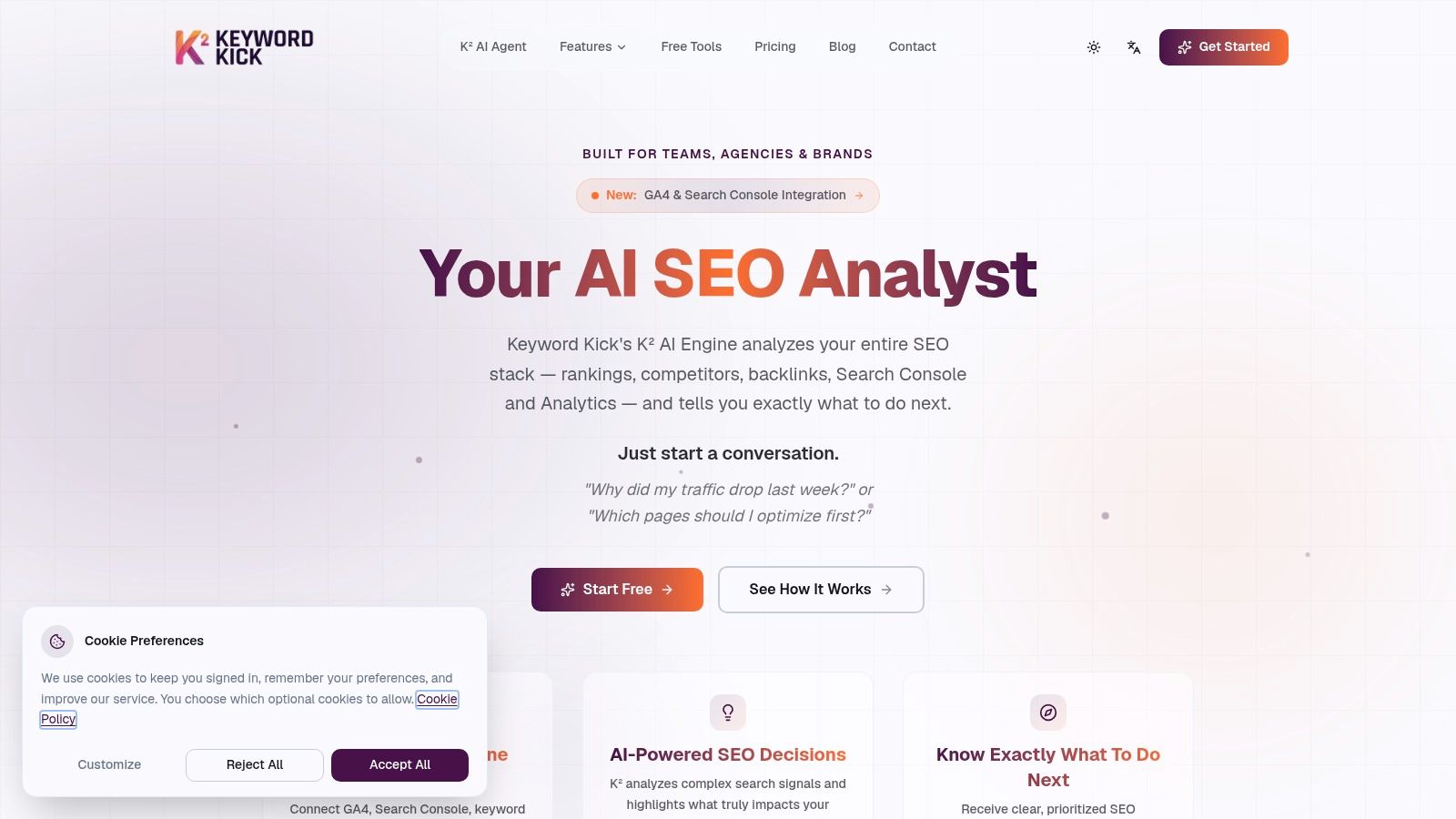
Keyword Kick is the clearest example here of insight automation done well. A lot of SEO platforms collect data. Fewer platforms take rankings, backlinks, audits, GA4, and GSC data, then turn that mix into a prioritized answer to “what should we do next?” That's the core value.
Its K² AI Agent is built around per-project analysis rather than generic chat output. That matters in practice because SEO teams don't need more dashboards. They need direction that ties traffic movement, page performance, keyword conflict, and technical issues together in one place. If your current workflow involves exporting from multiple tools and manually building a weekly action list, this is the kind of product that can shrink that mess.
Best for insight automation
Keyword Kick combines rank tracking, backlink analysis, site audits, keyword research, competitor intelligence, and SERP feature tracking in one workspace. It also connects with GA4, GSC, and Google Ads, so the recommendations are grounded in your actual site data, not just broad market datasets.
What stands out most is the automation of prioritization. Daily rank updates are useful. Historical trends are useful. Cannibalization detection is useful. But the main operational win is when those features stop acting like separate modules and start feeding one decision layer.
Practical rule: If your biggest SEO problem is “we have the data, but nobody knows what to fix first,” prioritize tools that automate interpretation, not just collection.
Keyword Kick also covers common hands-on workflows well. The platform includes automated site audits with JavaScript rendering on higher tiers, native keyword cannibalization detection across multiple conflict types, and a set of AI tools aimed at surfacing content gaps and ranking opportunities.
Where it fits, and where it doesn't
This is a strong fit for agencies, in-house growth teams, e-commerce brands, consultants, and solo SEOs who want one workspace instead of a stitched stack. The permanent free plan includes daily rank tracking, GA4 and GSC integrations, cannibalization detection, 20 K² messages per month, and 10 tracked keywords. Paid plans start at $49 per month, then move to Pro at $119, Business at $249, and Enterprise at $599. There's also a trial period on paid tiers, which is helpful because SEO automation can look great in a demo and still create tool overlap if the workflow fit is wrong.
That point matters. One 2026 guide to SEO automation tools warns that setups can fail when teams see no time savings or end up with duplicate functionality across tools. Keyword Kick makes the strongest case when it replaces fragmentation. It makes a weaker case if you already love your current crawler, rank tracker, and backlink system and only want one narrow add-on.
A few practical trade-offs:
Best advantage: It gives actionable next steps instead of just surfacing metrics.
Main limit: It doesn't implement changes on your site for you. Your team still needs to ship fixes.
Scaling note: Lower tiers are intentionally limited, so agencies and larger sites will likely need paid plans quickly.
Good buying step: Read Keyword Kick's own take on SEO automation workflows in 2026 before deciding how much automation you want.
For teams drowning in SEO data but short on prioritization, Keyword Kick is one of the few tools in this list that feels built around operational clarity rather than feature accumulation.
2. Semrush
Semrush is task automation inside a broad marketing suite. If your team wants one platform that can automate recurring SEO work while still supporting competitive research, PPC-adjacent workflows, and reporting, it's one of the most practical all-rounders.
Its strongest automation use cases are recurring site audits, rank tracking, backlink monitoring, on-page guidance, and scheduled reporting. That mix works especially well for in-house teams that don't want a specialist tool for every single function. Agencies also use it heavily because stakeholder reporting is already part of the platform instead of becoming a second workflow.
Best for broad recurring SEO operations
Semrush is useful when your operation runs on cadence. Weekly health checks, monthly competitor reviews, recurring rank summaries, issue prioritization, and client-facing exports all fit naturally. It's less elegant than a purpose-built specialist in any one lane, but it saves time by reducing stack sprawl.
If you're comparing broad all-in-one suites, this breakdown of all-in-one SEO tools is the right frame. The question isn't whether Semrush has enough features. It's whether you want depth in one function or competent automation across many.
A few real trade-offs show up fast:
What works: Mature automations for audits, alerts, and reporting.
What gets heavy: The interface can feel crowded for small teams with simple needs.
What costs more later: Add-ons and extra seats can push the price up faster than expected.
Semrush also makes sense for teams that need AI and LLM visibility monitoring alongside classic SEO workflows. That's increasingly relevant for brands that want search visibility data beyond the standard blue links.
Broad platforms save time when they replace three tools. They waste time when you only use one-fifth of what you're paying for.
If your SEO process touches multiple disciplines and you want one dashboarding layer, Semrush is still one of the safest choices. If your need is highly specific, such as technical monitoring or content planning, a more focused tool may fit better.
3. Ahrefs
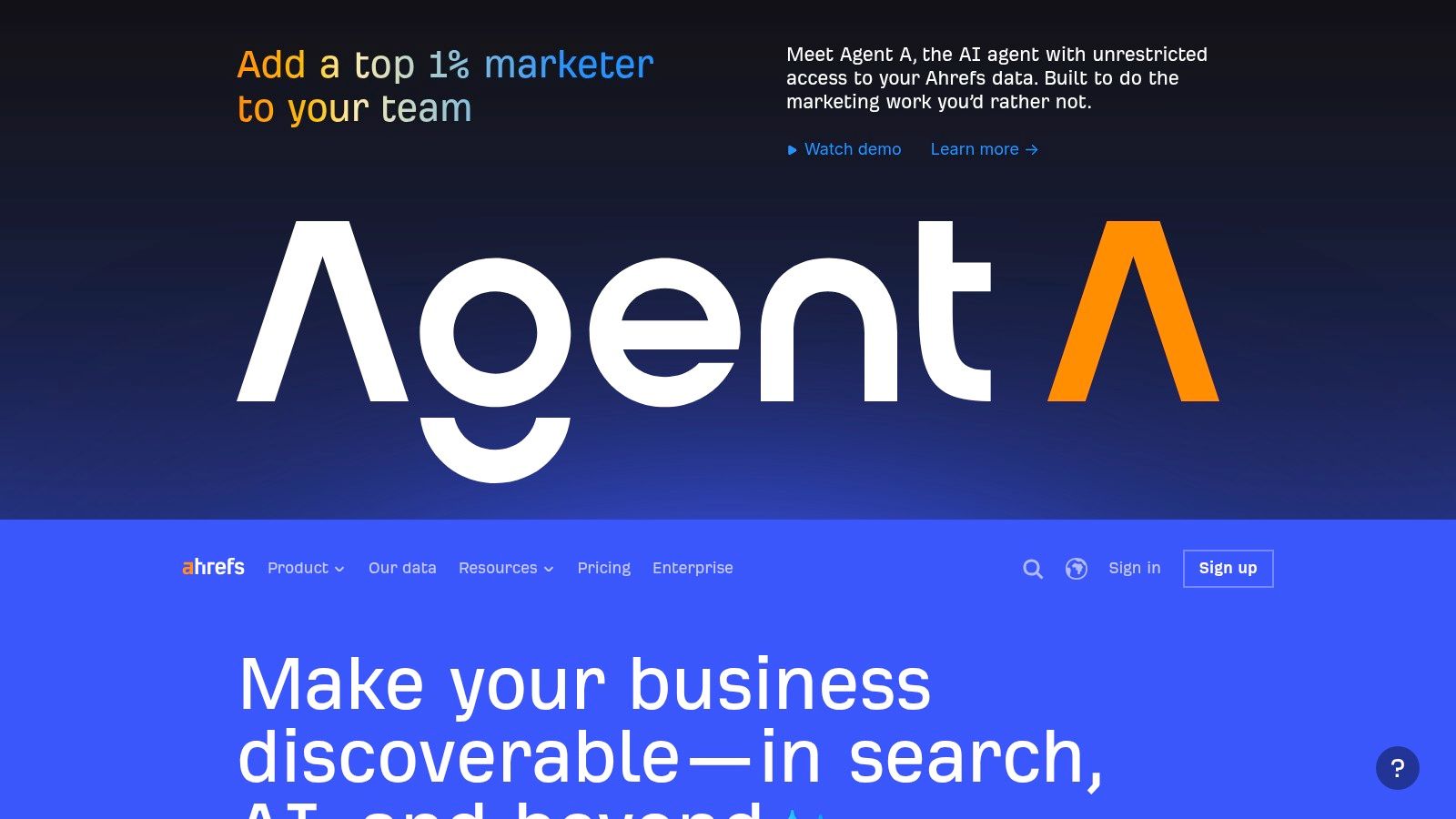
Ahrefs is best understood as monitoring automation with exceptional research depth. Teams buy it for the backlink index, keyword discovery, and competitive analysis, then stay because the audits, rank tracking, and opportunity finding are reliable enough to run continuously.
That matters if your workflow depends on staying close to competitor movements. Ahrefs is very good at surfacing what another site ranks for, where links are shifting, and where gaps exist across content and authority. Those are not “push button and forget it” automations, but they are recurring workflows that become much faster once the system is in place.
Best for monitoring and gap discovery
Ahrefs works well for SEOs who think in terms of deltas. What changed, who overtook us, where are we under-covered, which pages are decaying, and which competitor pages are getting traction. Its scheduled crawls and alerts help, but the bigger value is that it keeps your research environment live.
For a side-by-side decision between the two most common enterprise-midmarket picks, this Semrush vs Ahrefs comparison is the conversation many teams need to have. Semrush tends to feel broader. Ahrefs tends to feel sharper in research.
Practical pros and cons:
Strongest edge: Backlink and keyword research remain the reason many professionals trust it.
Good automation fit: Always-on audits and rank monitoring support ongoing site oversight.
Main drawback: Premium pricing gets harder to justify if you mainly need one function.
Common frustration: Power features are there, but newer users won't access them quickly.
Ahrefs has also expanded into AI-surface tracking, which is useful if your reporting needs are evolving with search behavior. Still, the platform is at its best when a strategist uses the data actively. It's not the strongest “tell me what to do next” system on this list.
If your team already has strong SEO judgment and mainly needs reliable, constantly updated research inputs, Ahrefs is still near the top of the market.
4. Moz Pro
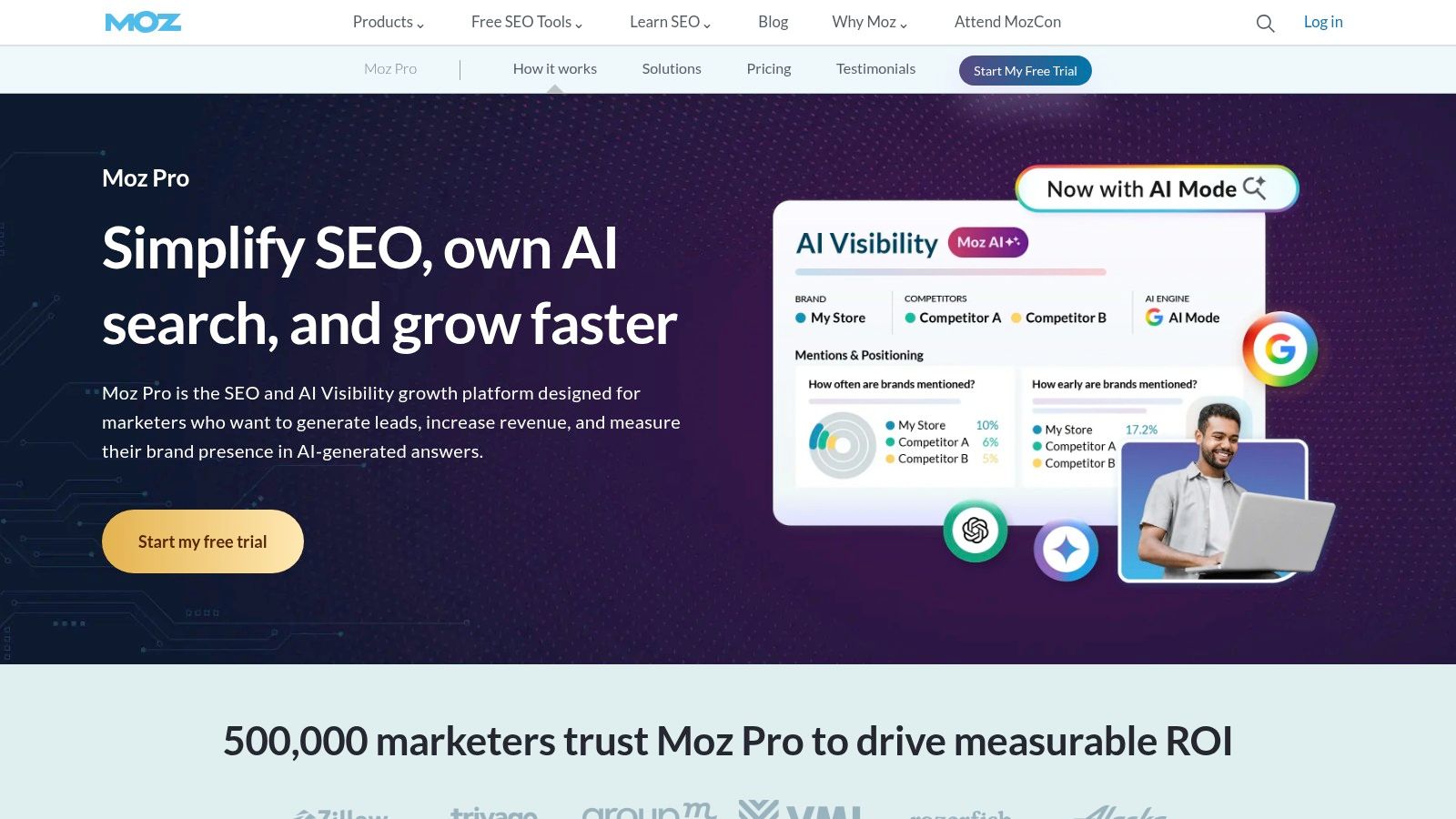
Moz Pro is workflow automation for teams that want clarity more than complexity. It doesn't try to win every feature war. Instead, it gives SMBs and in-house marketers a manageable way to automate crawling, rank tracking, keyword research, and reporting without needing a specialist to interpret the interface.
That makes Moz Pro easy to underestimate. Plenty of teams don't need a sprawling system. They need recurring checks, useful dashboards, clear issue prioritization, and metrics stakeholders already recognize.
Best for approachable SEO automation
Moz Pro is strongest when the team using it is small or cross-functional. Marketing managers, content leads, and generalist growth teams can usually grasp it quickly. Site Crawl, rank tracking, keyword research, and reporting live inside a structure that feels less intimidating than some larger suites.
Its Domain Authority and Page Authority metrics are also part of why Moz still holds a place in many workflows. Whether or not you treat those metrics as directional rather than definitive, they're familiar shorthand in many organizations.
A straightforward buying lens:
Good fit: SMBs, in-house teams, and marketers who want a tool they'll actively use every week.
Less ideal: Deep competitive intelligence projects or highly technical enterprise sites.
What works well: Reporting and prioritization are easy to explain internally.
What doesn't: The research depth and advanced automation breadth aren't as strong as top-tier rivals.
Moz Pro is not the tool I'd choose for a huge multi-market operation with heavy technical requirements. I would choose it for a team that needs automation to become more consistent, not more complicated.
5. SE Ranking
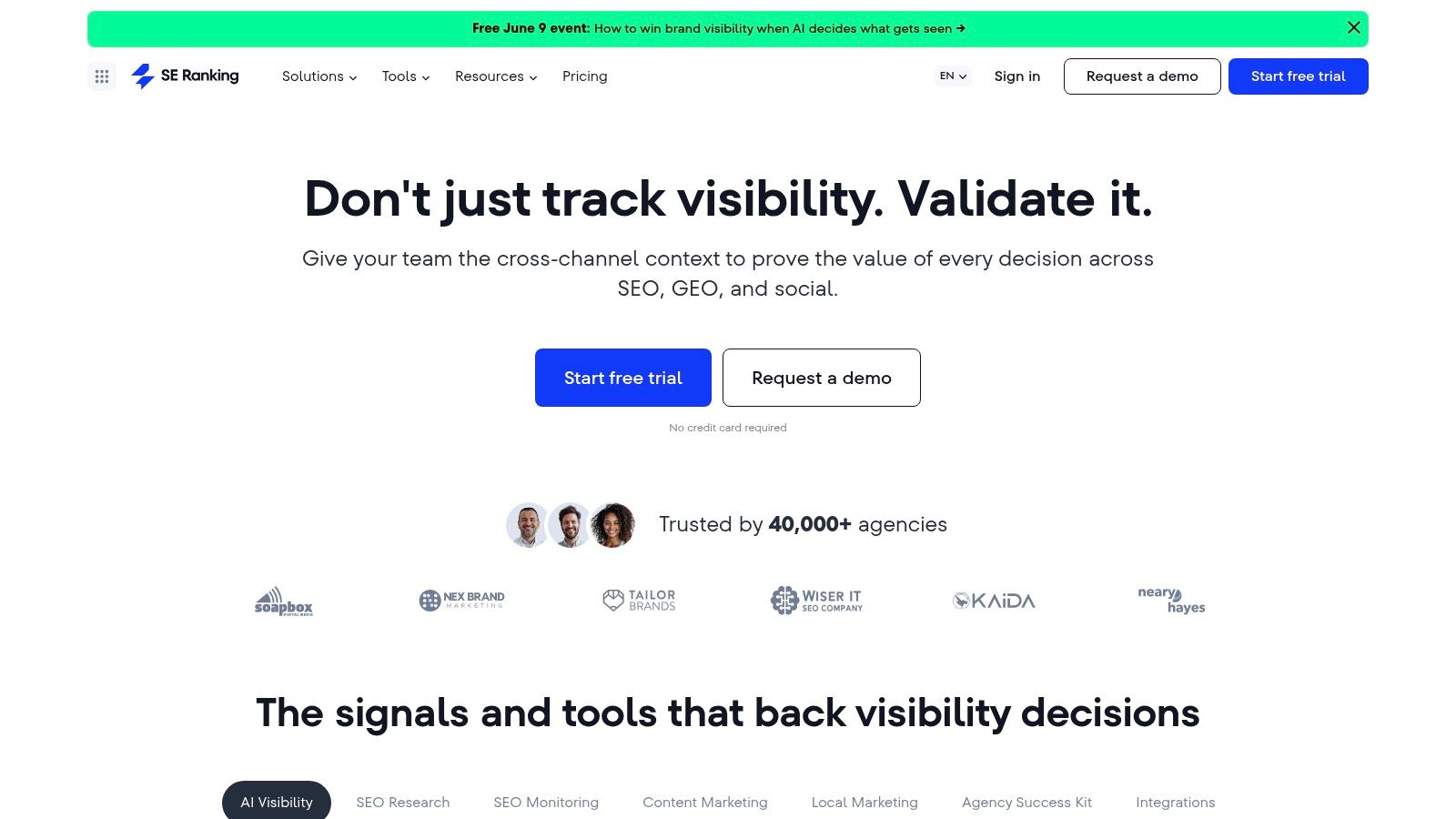
SE Ranking sits in a useful middle ground. It offers day-to-day task automation across rank tracking, audits, research, backlink monitoring, and reporting, but usually at a cost structure that feels more approachable for agencies and growing in-house teams than some larger suites.
That matters because a lot of SEO teams don't need elite specialization. They need dependable recurring workflows at a price that doesn't force immediate stack consolidation elsewhere.
Best for value-driven task automation
SE Ranking is especially practical for agencies managing multiple sites. Daily rank tracking, location and device-based monitoring, scheduled website audits, competitor research, and reporting can cover most recurring client work without much friction. For in-house teams, it handles the routine rhythm of SEO well.
It's the kind of platform that earns trust by being useful every day instead of flashy in a demo.
Why teams buy it: Strong feature breadth for the price category.
Where it helps most: Ongoing audits, rank checks, and recurring reports.
Where it falls short: Backlink analysis isn't as deep as the strongest dedicated link tools.
What to watch: The interface gets more complex as you start using advanced modules.
SE Ranking is a good example of SEO automation software that saves time through consistency. It won't replace specialist products in every lane, but it often reduces how many specialist products you need.
6. BrightEdge (S3 + Autopilot)
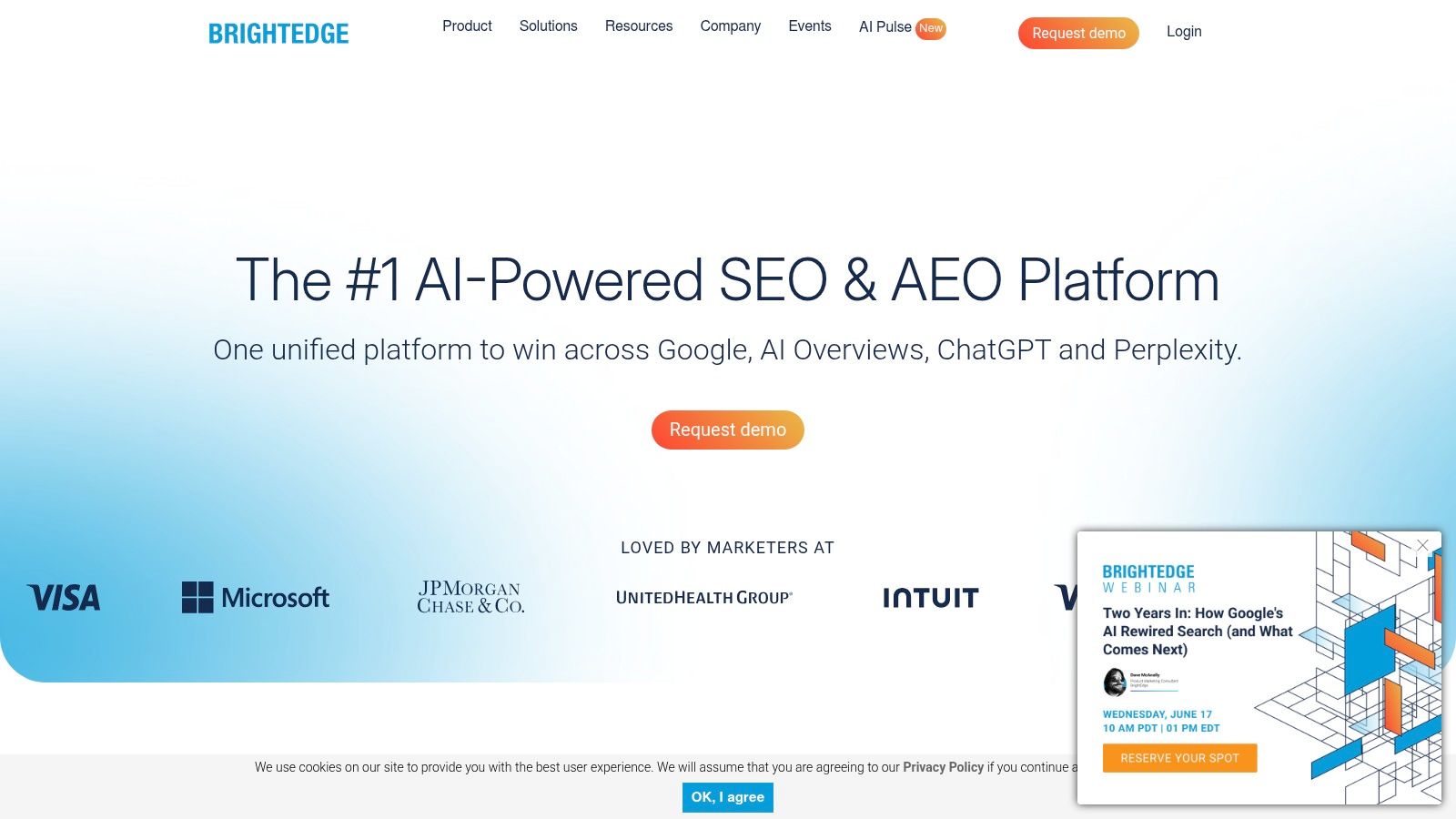
BrightEdge is execution automation under enterprise guardrails. That's the key distinction. Most SEO tools surface issues and recommend changes. BrightEdge, particularly with Autopilot, is built for organizations that want parts of optimization handled at scale within an approved framework.
That's a different buying case from “we need better reporting.” It's for large brands with governance needs, approval paths, multiple stakeholders, and websites big enough that manual remediation becomes a bottleneck.
Best for controlled enterprise execution
BrightEdge's value is tied to scale and process discipline. Autopilot can automate certain on-site SEO tasks such as metadata, image, and schema optimizations. For large organizations, that can reduce the lag between identifying a repeatable issue and applying a controlled fix pattern.
The trade-off is obvious. Enterprise execution platforms aren't light. They usually require sales conversations, onboarding, stakeholder buy-in, and change management.
The more a platform can execute for you, the more your governance model matters.
That's why BrightEdge tends to fit mature organizations better than fast-moving small teams.
Best use case: Enterprise sites that need automation with approval controls.
Big win: Strong governance and support for large organizations.
Big cost: Heavier onboarding and quote-based pricing.
Common mistake: Buying it for feature prestige when the actual need is simpler audit and reporting automation.
BrightEdge is powerful when your SEO operation already behaves like an enterprise function. If it doesn't, much of that power goes underused.
7. Conductor + Website Monitoring (ContentKing)
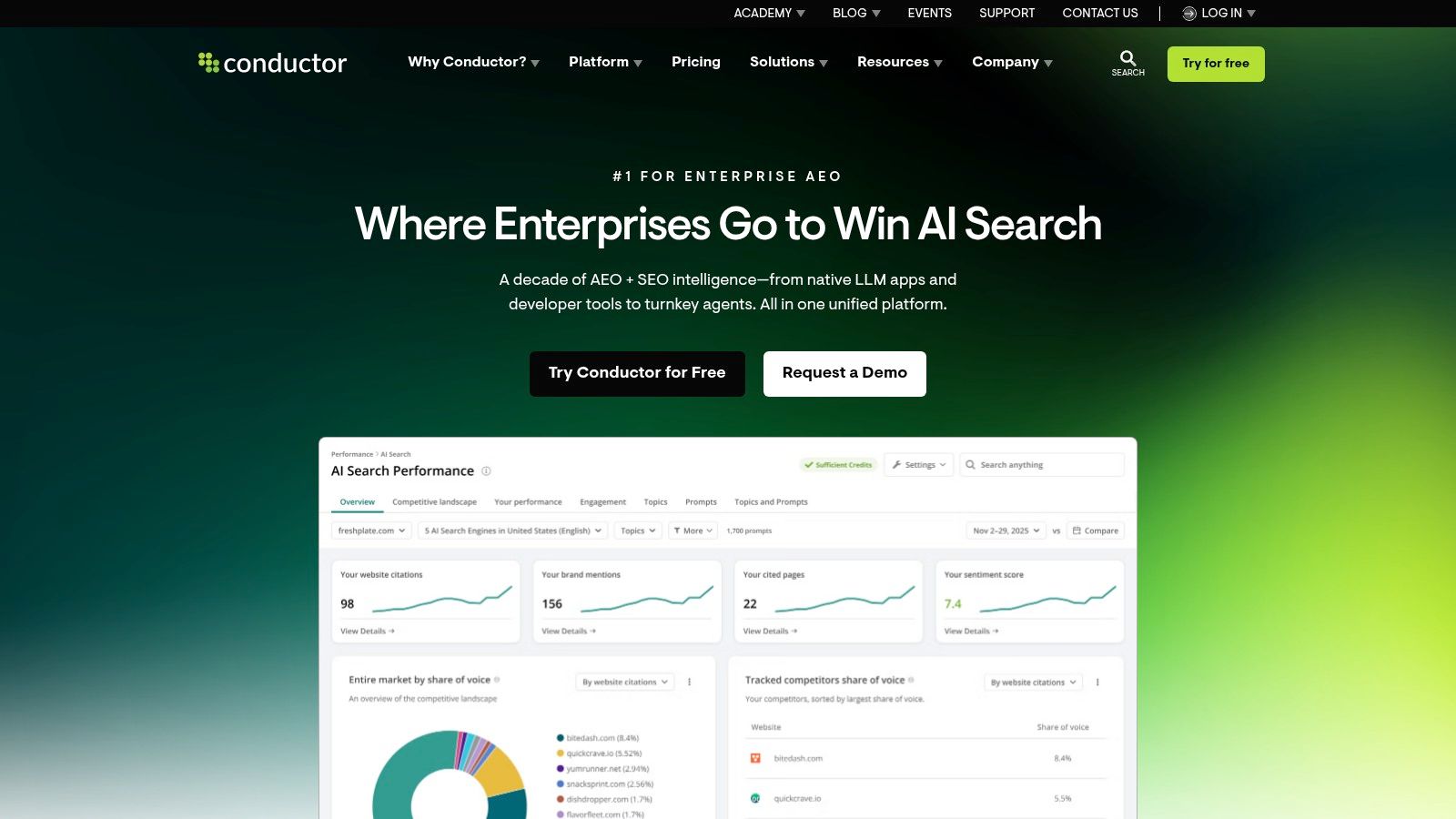
Conductor paired with Website Monitoring, formerly ContentKing, is issue-detection automation. If your main SEO problem is that important pages change, break, deindex, or degrade before anyone notices, this setup is compelling.
Periodic crawls are useful. Real-time monitoring is different. News publishers, e-commerce teams, and enterprise sites with frequent releases often need alerts as changes happen, not at the next scheduled crawl.
Best for real-time SEO monitoring
The strength here is always-on awareness. Website Monitoring tracks changes continuously, supports alerting, and keeps issue timelines that help teams diagnose what changed and when. That reduces the delay between problem creation and problem response.
For organizations with large editorial teams, multiple CMS users, or deployment-heavy environments, that's a major practical benefit. A title rewrite, canonical issue, robots mistake, or accidental noindex can do damage quickly if nobody catches it.
A realistic view of the fit:
Where it shines: Real-time change detection and alerting.
Why teams like it: Clear audit trails make collaboration easier across SEO, dev, and content teams.
Main drawback: Enterprise scoping adds complexity.
Another drawback: Monitoring-first products still need companion workflows for research and planning.
This kind of automation doesn't replace strategy. It protects strategy from operational mistakes.
8. Surfer
Surfer is content optimization automation. If your team publishes often and needs a repeatable process for SERP analysis, briefs, and on-page refinement, Surfer can speed up production in a very tangible way.
Many teams misuse automation, though. They expect a content tool to replace editorial judgment. It won't. It can standardize research and give writers a clearer target, but it doesn't remove the need for intent matching, originality, and final review.
Best for content production workflows
Surfer's practical strength is operational consistency. It automates SERP analysis, extracts common term patterns, builds optimization guidance, and helps content teams turn a blank brief into a structured draft faster. Agencies and content teams like it because writers can follow a system without becoming technical SEOs.
That said, automation in content has a quality ceiling. Independent guidance on SEO automation repeatedly notes that technical audits, reporting, and issue monitoring are strong automation candidates, while strategy, editorial writing, and final optimization still need human review to preserve originality and avoid over-optimization, as discussed in this overview of where SEO automation works best.
Don't automate your final judgment. Automate the repetitive analysis that helps people make better judgments.
A few trade-offs matter:
Best advantage: Faster brief creation and on-page optimization.
Main limit: It's a content-first tool, not a full SEO platform.
Buying caution: Pricing models and usage inclusions can change, so verify before committing.
Surfer is worth it when content throughput is your bottleneck. It's not enough if your real problem is technical SEO or link intelligence.
9. MarketMuse
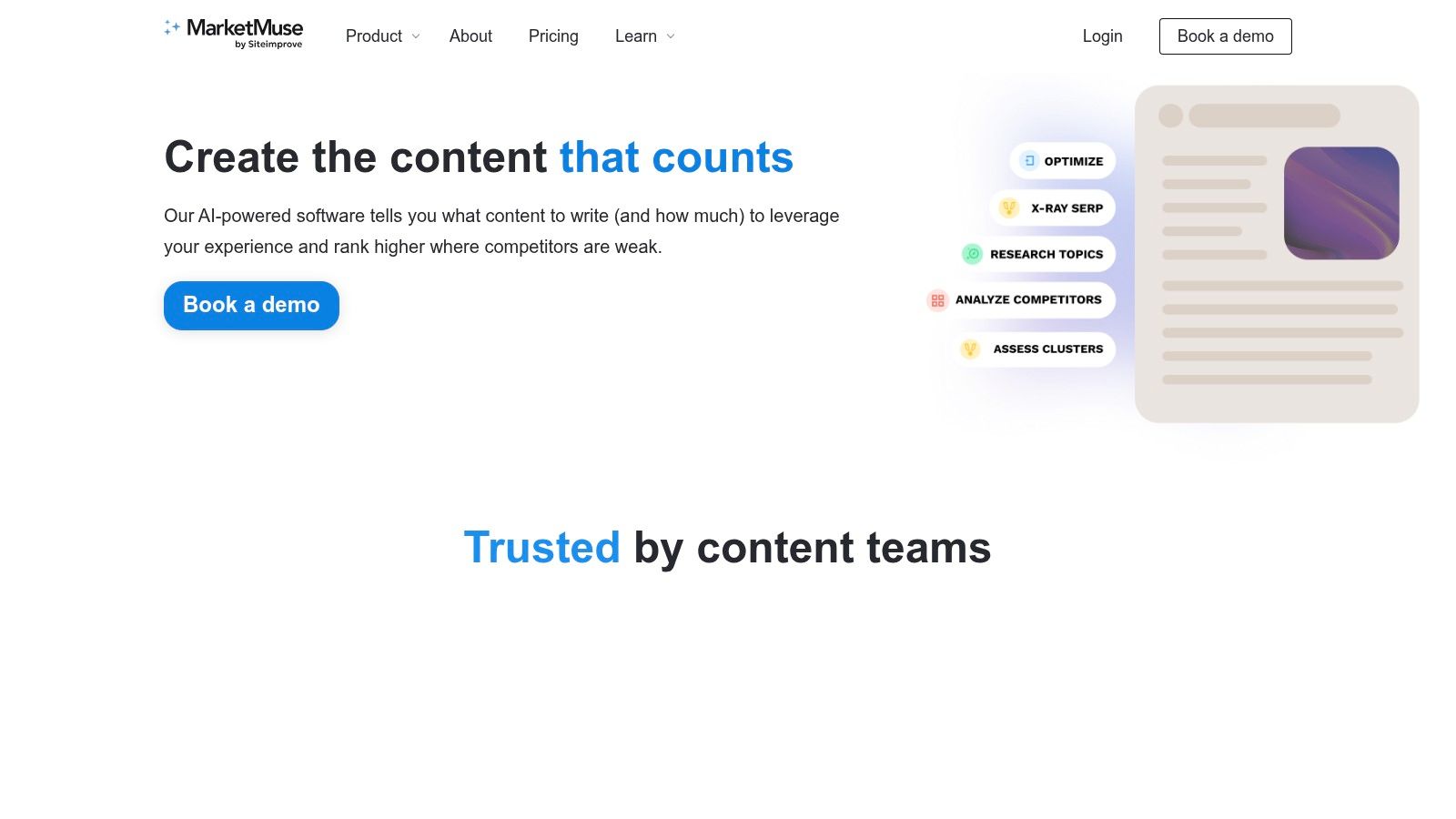
MarketMuse is planning automation rather than just writing automation. That distinction matters. Many content teams don't struggle with drafting. They struggle with deciding what to publish next, what to refresh, what to consolidate, and where authority gaps sit.
MarketMuse is built for that layer. It helps teams analyze content inventory, model topics, generate briefs, and prioritize opportunities across a wider editorial roadmap.
Best for content strategy automation
If your SEO process breaks down before the writing stage, MarketMuse is often a better fit than a pure on-page optimization tool. It supports decisions around topic coverage, authority building, and refresh prioritization, which is where many larger content programs waste time.
This is strategic automation, not just output automation. It helps answer which pages deserve effort and why.
A practical summary:
Best fit: Editorial teams managing content programs at scale.
Big strength: Prioritization and topic modeling.
Big limit: Less coverage for technical SEO and backlink workflows.
Commercial note: Paid-tier pricing generally requires a sales conversation.
MarketMuse won't replace your crawler or your rank tracker. It can, however, make your content roadmap a lot less reactive.
10. JetOctopus
A technical SEO team spots traffic loss in category pages, but the pages are still live, still linked, and still indexed in the CMS. The problem usually sits lower in the stack. Crawl budget is drifting toward faceted URLs, important templates are loading slowly for bots, or Googlebot is spending less time on money pages than the team assumed.
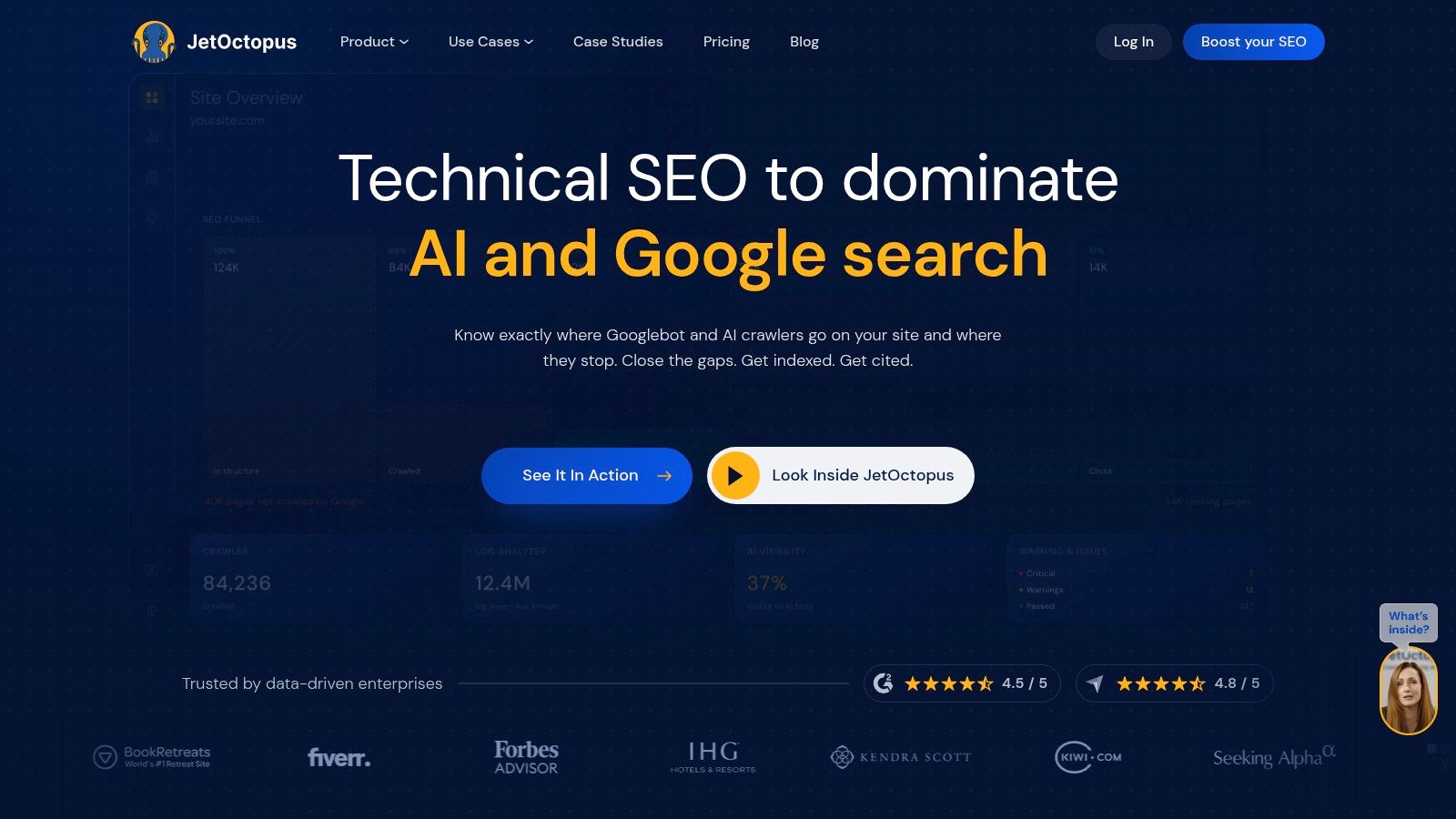
JetOctopus is built for that kind of workflow. In the automation buckets used across this list, it fits squarely into technical task automation and diagnostic insight automation. Its crawler and log analyzer help teams monitor how search engines move through a site, then surface patterns around wasted crawl activity, orphaned pages, broken internal links, and indexation risk.
That matters most on large sites.
For e-commerce, publishers, marketplaces, and enterprise properties, small technical inefficiencies can affect thousands of URLs at once. A content optimizer will not catch that. A rank tracker will show the symptom after the fact. JetOctopus is useful earlier in the process, when the job is to find structural problems before they spread into lost visibility and missed revenue.
Best for technical and log-based automation
JetOctopus works best when the business problem is operational: too many URLs, unclear bot behavior, recurring technical regressions, or slow QA after releases. Scheduled crawls give teams a repeatable way to catch changes. Log analysis adds the missing layer by showing whether search bots are hitting the pages that matter.
I have seen log data settle arguments quickly. Teams often assume internal linking or indexing is the issue. Bot activity shows whether Google is reaching priority sections, skipping them, or wasting requests on low-value parameters.
A practical summary:
Strongest use case: Large sites that need recurring crawl and log visibility.
What works well: Fast technical diagnostics, segmentation, and change monitoring.
What it won't do: It is not designed to run your content planning, backlink research, or broad competitor workflow.
Adoption note: The value is highest when someone on the team can interpret crawl and log patterns and turn them into development tickets.
As noted earlier, SEO teams are using automation heavily to reduce manual work. JetOctopus applies that shift to the technical side. It does not try to automate the whole SEO program. It automates the part that breaks unnoticed on complex sites and gets expensive if no one catches it early.
Top 10 SEO Automation Tools, Feature Comparison
Product | Core features | UX & Quality ★ | Price & Value 💰 | Target 👥 | Unique strengths ✨ |
|---|---|---|---|---|---|
🏆 Keyword Kick | Unified workspace: rank tracking, backlinks, audits, keyword research, SERP features; GA4 + GSC integration | Daily updates, historical trends, actionable tasks ★★★★★ | Free Forever; Starter $49/mo; Pro $119; Business $249; Enterprise $599 (7‑day trial) 💰 | Agencies, in-house growth teams, e‑comm, solo SEOs 👥 | K² AI agent for step‑by‑step recommendations; cannibalization detection; JS rendering ✨ |
Semrush | Site audits, rank tracking, backlink monitoring, competitor research, scheduled reporting | Deep data coverage, mature automations ★★★★★ | Tiered pricing; add‑ons & seats increase cost 💰 | Agencies, marketing teams, competitive researchers 👥 | Massive data set & reporting, broad marketing integrations ✨ |
Ahrefs | Backlink index, Site/Keywords Explorer, rank tracker, audits | Industry‑trusted link data & monitoring ★★★★★ | Premium pricing; add‑ons may apply 💰 | SEO teams, link researchers, competitive analysts 👥 | Best‑in‑class backlink index & gap discovery ✨ |
Moz Pro | Automated crawls, rank tracking, keyword research, DA/PA metrics | Beginner‑friendly UX, clear reports ★★★★☆ | Transparent, scalable plans; SMB friendly 💰 | SMBs, in‑house teams, beginners 👥 | Clear prioritization and authority metrics for reporting ✨ |
SE Ranking | Daily rank tracking, technical audits, backlink monitoring, reporting | Practical automations for day‑to‑day SEO ★★★★☆ | Competitive pricing; good value for agencies 💰 | Agencies and in‑house teams seeking affordability 👥 | Strong agency features and optional AI add‑ons ✨ |
BrightEdge (S3 + Autopilot) | Autopilot zero‑touch optimizations, enterprise dashboards, collaboration workflows | Enterprise governance and scale ★★★★☆ | Enterprise‑level, quote‑based pricing 💰 | Large brands, governance & scale needs 👥 | Autopilot at scale (image/meta/schema) and enterprise controls ✨ |
Conductor + Website Monitoring (ContentKing) | Always‑on crawling, change tracking, real‑time alerts, collaboration | Real‑time detection and audit trails ★★★★☆ | Enterprise focus; usage‑aligned pricing 💰 | Enterprises needing 24/7 monitoring & fast rollback 👥 | True real‑time monitoring + change timelines for rapid fixes ✨ |
Surfer | Content editor, SERP analysis, content scoring, brief generation | Fast content workflows for writers ★★★★☆ | Content/credit pricing models; verify inclusions 💰 | Content teams, writers, agencies focused on on‑page SEO 👥 | NLP‑driven scoring & automated content briefs ✨ |
MarketMuse | Site inventory, topic modeling, AI briefs, prioritized opportunities | Strategic content planning & scoring ★★★★☆ | Sales‑tier pricing for advanced plans 💰 | Editorial teams, content strategists, agencies 👥 | Topic authority, Personalized Difficulty & editorial prioritization ✨ |
JetOctopus | High‑speed cloud crawler, log analysis, issue rules, alerts | Scales to millions of URLs; fast diagnostics ★★★★☆ | Flexible pricing; scalable crawl/log allowances 💰 | Large sites, e‑commerce, technical SEOs 👥 | Log file analysis at scale and high‑frequency crawl automation ✨ |
Automation Unlocks Strategy, It Doesn't Replace It
A common failure pattern looks like this. The team has rank tracking, crawl alerts, content briefs, dashboards, and weekly reports, but nobody is more decisive on Friday than they were on Monday. More software did not create more progress. It created more inputs.
Good SEO automation software reduces operational drag so teams can spend time on decisions that affect revenue, margin, and growth. The useful split is simple. Software should handle repeated work such as monitoring, recurring analysis, issue detection, and workflow routing. People should still own prioritization, trade-offs, and final execution.
That is why it helps to evaluate platforms by the kind of automation they provide, not by broad claims like all-in-one or AI-powered. Those labels hide the key question: what bottleneck are you trying to remove?
Insight automation fits teams that already have data but need faster prioritization. Keyword Kick is strongest in this lane.
Task automation fits teams that want recurring audits, rank tracking, research, and reporting in one operating layer. Semrush and SE Ranking are practical fits.
Research and monitoring automation fits workflows driven by competitor changes, link intelligence, and gap analysis. Ahrefs remains a dependable choice here.
Enterprise execution and monitoring automation fits organizations where governance, approval paths, and real-time alerts matter as much as speed. BrightEdge and Conductor's Website Monitoring are better suited to that environment.
Content automation fits teams constrained by brief creation, refresh workflows, and on-page optimization. Surfer and MarketMuse solve different parts of that process.
Technical automation fits large sites where crawl health, internal linking, rendering issues, and log analysis affect visibility. JetOctopus is built for that job.
The buying mistake I see most often is mismatch. Teams buy a platform because the category sounds right, then discover the automation is pointed at the wrong problem. An all-in-one suite can add overlap if the underlying issue is prioritization. An AI writing tool can produce more drafts if the underlying issue is weak topic selection or poor editorial review.
The better test is operational. A good tool should shorten weekly reporting, reduce time spent finding issues, and make handoffs cleaner between SEO, content, and development. If those things do not improve within the first few months, the automation is probably solving the wrong problem.
Some work should stay human. Site monitoring, rank checks, issue detection, report generation, and brief scaffolding are strong candidates for automation because the process repeats and speed matters. Content positioning, information architecture decisions, final editorial judgment, and business prioritization still require context that software does not have.
That hybrid model holds up better as search keeps shifting toward AI-generated answers, mixed SERP features, and visibility across more than ten blue links. Teams that automate the repeatable layer can respond faster without handing strategy over to a tool.
The right platform will not replace an SEO team. It gives that team more time, fewer manual steps, and a clearer path from signal to action.
If you want one platform that turns rankings, Search Console data, analytics, backlinks, and audits into clear next-step SEO actions, Keyword Kick is a strong place to start. It is especially useful for agencies, in-house teams, and consultants who are tired of stitching together multiple tools just to decide what deserves attention first.