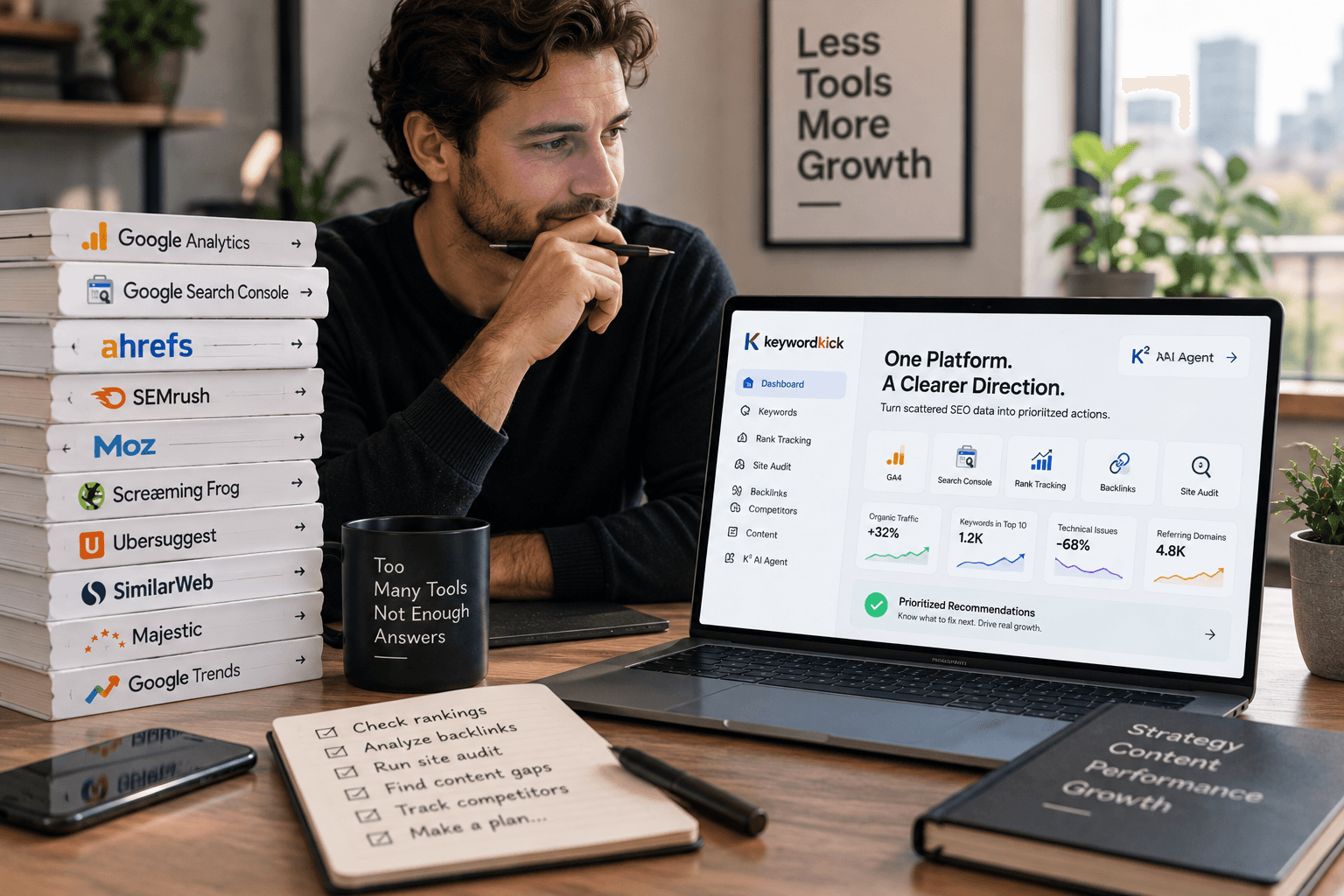
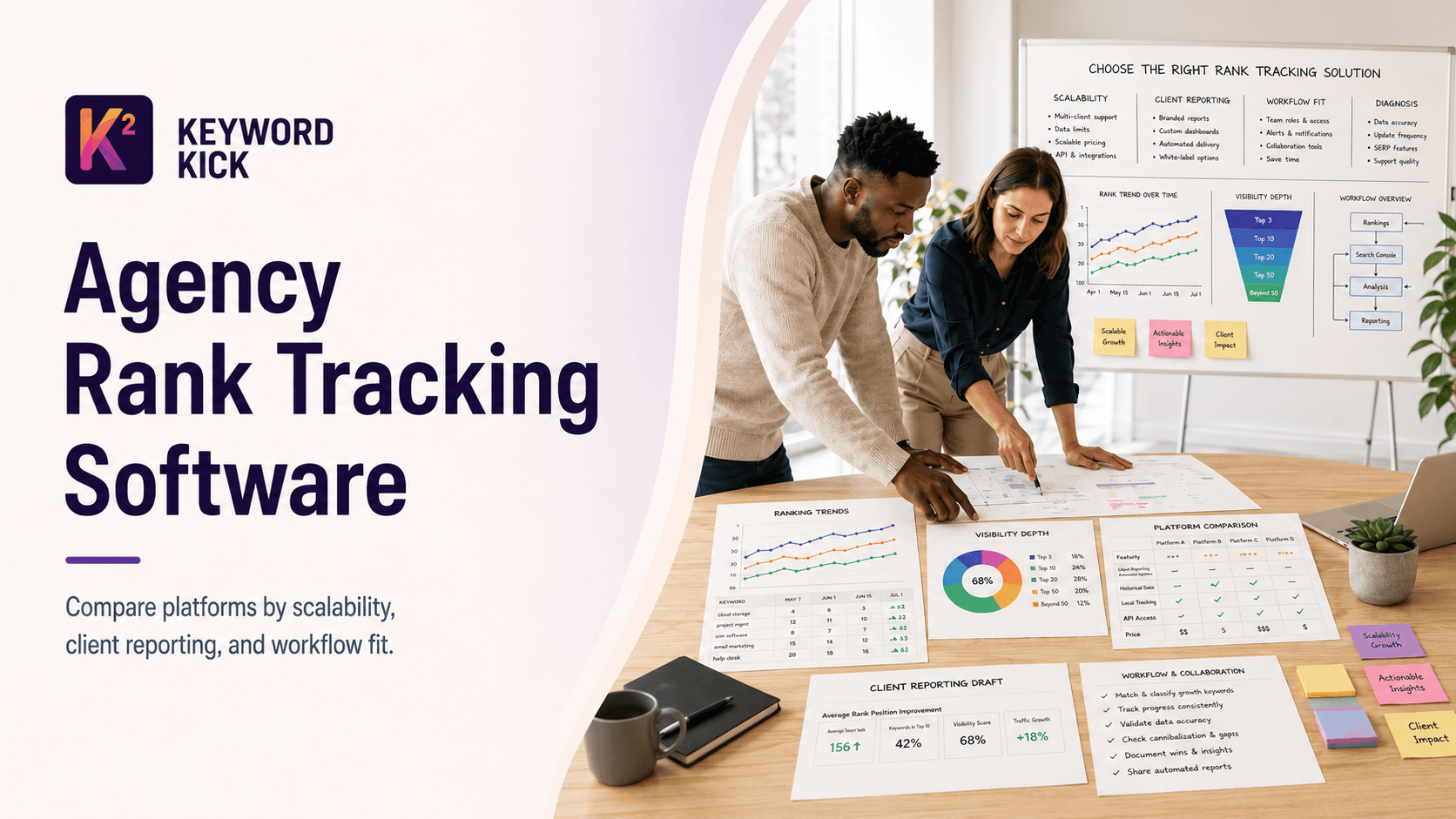
You're probably in one of two situations right now. Either your agency has outgrown a basic tracker and client reporting has turned into a weekly cleanup job, or you're paying for a big SEO suite and still stitching together rankings, Search Console, analytics, and slide decks by hand. Both are common. Both waste time.
Agency rank tracking software matters because rankings still shape how clients judge SEO progress, but the old habit of watching a static position report isn't enough anymore. Search results are less stable, layouts change fast, and the meaning of “ranked first” can be misleading when ads and AI Overviews push organic listings lower on the page. Independent industry coverage has argued that a result at Rank 1 can still sit far below the top of the visible page, which is why pixel tracking and visibility depth deserve more attention in agency reporting than they usually get in tool roundups, as noted in Yotpo's discussion of modern keyword tracking.
This market is also getting bigger, which tracks with what most agency leads already feel operationally. The global SEO software market was estimated at USD 74.6 billion in 2024 and is projected to reach USD 154.6 billion by 2030, a 13.5% CAGR, according to Grand View Research's SEO software market report. Rank tracking sits inside that broader category, so demand pressure isn't slowing down.
The harder question isn't which tool has the longest feature list. It's which one fits the way your agency works. You need software that scales across clients, produces reports clients understand, and plugs into the rest of your workflow without creating another spreadsheet problem.
1. Keyword Kick
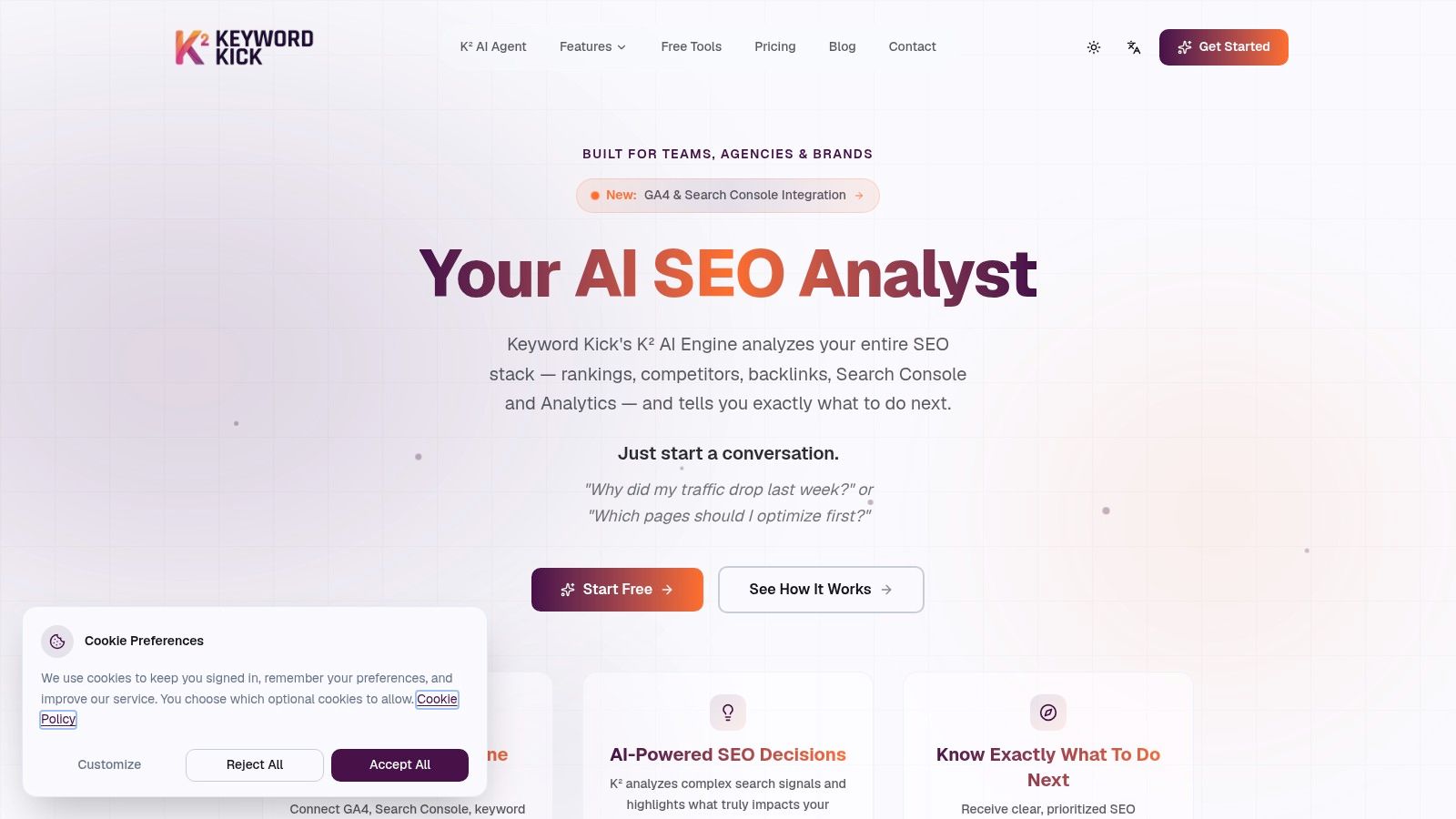
A common agency problem looks like this: rankings slip, traffic softens, the client asks for answers by noon, and the team is stuck pulling data from three dashboards before anyone can decide what changed. Keyword Kick is built for that situation. It combines rank tracking with GA4, Google Search Console, backlink data, audits, and technical monitoring in one workspace, then uses its K² AI Agent to point the team toward the issues most likely to matter first.
That changes how an agency works day to day. Instead of treating rank tracking as a standalone report, Keyword Kick connects ranking movement to cannibalization, technical problems, and competitor shifts. For agencies, that matters more than another graph. The primary bottleneck is usually diagnosis.
Where It Fits Best
Keyword Kick fits agencies that want one system to cover the reporting layer and the investigation layer. If account managers need a cleaner story for clients, SEO leads need more context behind ranking drops, and operations teams want fewer tools to manage, this setup makes sense.
It also scores well against the three buying criteria that matter most for agencies:
Scalability: Strong fit for teams managing multiple sites and recurring monitoring, especially when technical SEO is part of the retainer.
Client reporting: Better when the agency needs to explain why performance changed, not just show position movement.
Workflow integration: Strong fit for teams trying to reduce handoffs between trackers, analytics, and audit tools.
Pricing is straightforward for this category. There's a free plan, and paid plans start at $49/month, with larger tiers for broader monitoring and bigger teams. That lowers the cost of a pilot, which is useful if you're testing whether an all-in-one platform can replace part of your current stack.
Practical rule: If your team spends too much time reconciling reports before making a recommendation, a unified workspace will usually outperform a standalone tracker.
What Works and What Doesn't
What works:
Action-oriented prioritization: K² AI Agent focuses the team on what to fix, not only what moved.
Broader SEO coverage: Rank tracking sits alongside backlink monitoring, audits, keyword research, and competitor tracking.
Useful agency workflows: Daily updates, historical trends, and cannibalization detection support ongoing client management.
Technical depth: JavaScript rendering and multi-site audits make it more useful for complex sites than lightweight trackers.
What doesn't:
Lower tiers cap out quickly: Smaller plans are fine for testing, but growing agencies will likely outgrow them and need to move up.
Breadth can be unnecessary: If your agency already has fixed tools for audits, links, and reporting, some of the platform may overlap with what you already pay for.
Execution still sits with your team: The platform can surface the issue and the likely priority, but it will not write the content, implement the fix, or manage stakeholder approval.
If your agency is comparing vendors and planning a switch, review Keyword Kick's guide to what rank tracking means in 2026 before migrating. It's a useful framing document for deciding what your next platform should handle, what can stay in your stack, and where reporting usually breaks.
2. Semrush
Semrush Position Tracking is the default choice for a lot of agencies because it lives inside a larger suite. That's the pitch and the trade-off. You're not only buying rankings. You're buying a system that can also support research, competitive analysis, site audits, and client-facing reporting.
For agencies that want one vendor across multiple SEO workflows, Semrush is practical. You can track by location, device, and page scope, benchmark competitors, and tie rank reporting into a broader workflow that includes GA4, GSC, and Looker Studio. That reduces handoffs between tools, which is often more valuable than any single tracking feature.
Best Use Case
Semrush makes the most sense for agencies that want operational consistency. New hires usually recognize the platform. Clients often recognize the brand. That lowers friction in onboarding and reporting.
The downside is predictable. As your client roster, users, and projects grow, the cost usually rises faster than teams expect. If your agency mainly needs rank tracking and not the wider suite, Semrush can become expensive overhead.
Good fit: Agencies standardizing on one broad SEO stack.
Less ideal: Shops that already have separate tools for audits, links, and reporting.
Watch for: Whether your team uses the surrounding suite enough to justify the spend.
Semrush is a safer buy than a surgical one. It's rarely the wrong answer, but it's not always the most efficient answer. You can review the platform directly on Semrush.
3. Ahrefs
Ahrefs is usually chosen for everything around rank tracking as much as rank tracking itself. Agencies that rely heavily on backlink analysis, competitive research, and content gap work often tolerate a less specialized tracking experience because the surrounding data is strong and familiar.
That creates a clear trade-off. If rankings are one input into a bigger SEO diagnosis workflow, Ahrefs works well. If rank freshness is the center of the job, there are sharper tools.
Why Agencies Keep It
Ahrefs is useful when a client asks, “We dropped. Why?” and your team wants to move straight from ranking history into link profile changes, competitor comparisons, and keyword opportunity analysis. That kind of context saves time.
Its portfolio and project views also help agencies managing multiple properties. You're not just looking at isolated campaigns. You're comparing site groups and client sets more easily than in some standalone trackers.
The agency question with Ahrefs isn't “Is it good?” It's “Do we need the surrounding intelligence enough to accept a less rank-first experience?”
Main Trade-Offs
Strength: Strong backlink and keyword intelligence in the same environment.
Strength: Useful for diagnosis when rankings move for reasons beyond on-page changes.
Weakness: Premium pricing can be hard to justify if rank tracking is your core requirement.
Weakness: Weekly update cadence by default won't suit teams that report on volatile campaigns.
That weekly rhythm is the biggest practical limitation for many agencies. If you're running local campaigns, active recovery work, or fast-moving competitive accounts, weekly checks can feel slow. For agencies with slower reporting cycles and stronger research needs, it's less of a problem.
Ahrefs is still one of the best choices when rank tracking is part of a research-heavy SEO operation. The product site is Ahrefs.
4. AccuRanker
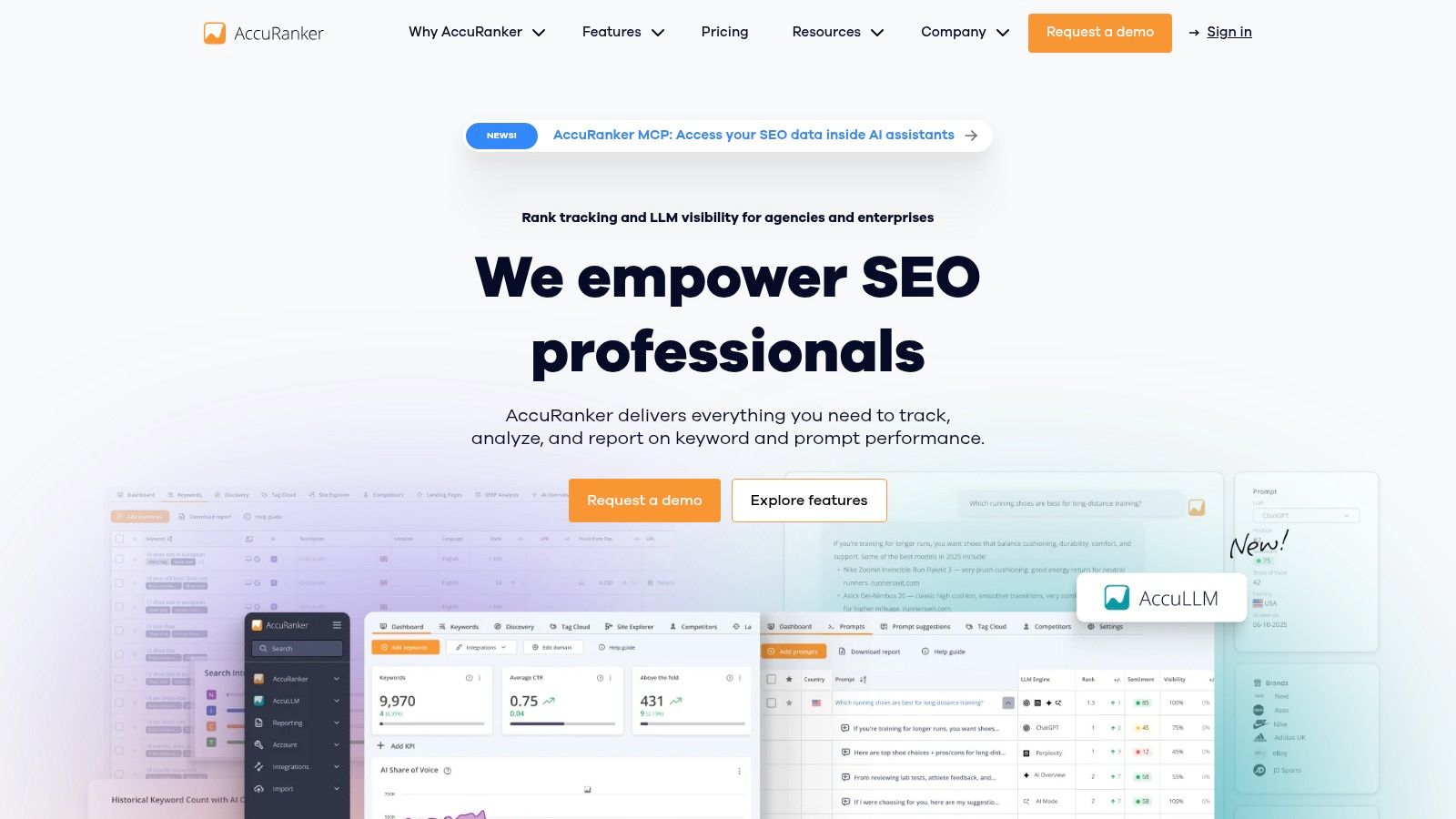
AccuRanker is the tool I'd shortlist first for agencies that care about speed and volume. Independent agency-focused reviews note that AccuRanker refreshes domains in about two hours, supports unlimited on-demand updates, and offers entry-tier agency plans starting around 2,000 keywords tracked daily at roughly $103.20/month on annual billing, according to UpRankd's agency rank tracker review. That's one of the clearest examples of refresh speed changing reporting quality.
When rankings swing during an update, a migration, or a competitive push, stale data creates bad client conversations. Fast refreshes reduce that problem. Agencies don't need to wait around and explain away old data.
Where AccuRanker Wins
AccuRanker is built for rank tracking first. You feel that in the tagging, segmentation, exports, and workflow options. It's a specialist tool, and that's exactly why many agencies like it.
If your team runs large keyword sets and wants reliable pulls into dashboards or internal reporting systems, AccuRanker is one of the better operational fits. API access, BigQuery exports, and dynamic tagging all support scale better than many broader suites.
For teams comparing specialist trackers, this breakdown of agency rank tracking options is also useful as a framing lens.
Where It Falls Short
Best for: Agencies managing large volumes and fast-moving campaigns.
Best for: Teams that need clean exports and automation hooks.
Not best for: Agencies looking for a full SEO suite in the same product.
Watch for: Whether paying for a premium tracker plus other SEO tools creates duplicate cost.
AccuRanker works best when your agency already knows rank tracking is a serious operational discipline, not a side feature.
5. STAT Search Analytics (by Moz)
STAT is what you choose when the phrase “agency rank tracking software” really means enterprise-scale SERP monitoring. It's designed for very large keyword sets, multi-market tracking, and organizations that need structured reporting and API access more than a lightweight interface.
This isn't the friendliest option on the list, and that's fine. A lot of enterprise software becomes more useful as it becomes less beginner-oriented. STAT falls into that category.
The Right Buyer for STAT
STAT suits enterprise agencies with complex account structures. If you're tracking across multiple locations, devices, and competitors at serious scale, you need flexibility more than simplicity.
Its strength is depth. Daily tracking, local granularity, competitor context, and strong SERP feature visibility make it a serious platform for teams that build data pipelines and custom reporting on top of the raw feed.
Field note: Teams buying STAT should already know how they'll operationalize the data. If you just want nicer ranking charts, this is more platform than you need.
Real Trade-Offs
The challenge with STAT is adoption inside mixed-skill teams. Senior SEO strategists and analysts can get a lot from it. Junior account staff may find it harder to use fluidly without process support.
Strong fit: Enterprise agencies and large brands with internal analytics capability.
Weak fit: Smaller agencies that need a simpler reporting workflow.
What to expect: More onboarding, more setup, and more value if your team is disciplined.
If your agency has outgrown standard dashboards and needs scale over polish, review STAT Search Analytics.
6. Rank Ranger (by Similarweb)
Rank Ranger works best for agencies that want rankings connected to market context. Since it sits inside Similarweb's search marketing ecosystem, it can be useful when your team wants more than movement data and needs broader competitive signals around demand and traffic trends.
That's the practical appeal. Some agencies don't just want to report “you moved from here to there.” They want to explain whether the market shifted, whether competitors gained broader visibility, and whether search opportunity changed.
Why It Can Be a Smart Agency Pick
Rank Ranger gives agencies daily tracking, tagging, and API access, but the differentiator is the Similarweb context around it. If you build custom dashboards or warehouse reporting, that combination can be useful for larger client programs.
It also suits agencies with strategy-heavy retainers. When rankings are part of a bigger market narrative, Rank Ranger becomes more compelling than a pure point solution.
Where to Be Careful
The main issue is buying clarity. Pricing and packaging are less transparent than tools with cleaner self-serve plans, so evaluation usually takes more time. That isn't a deal-breaker, but it does matter for lean teams that want a quick yes-or-no decision.
Good fit: Agencies wanting rank tracking plus broader competitive context.
Less ideal: Small teams comparing straightforward monthly plans.
Important question: Will you use the Similarweb layer, or are you just paying for complexity?
You can evaluate the product at Rank Ranger.
7. SE Ranking
SE Ranking has a loyal agency following because it usually lands in the sweet spot between price, feature breadth, and usability. It's broad enough to reduce tool sprawl, but it doesn't feel as heavy as some enterprise suites.
That makes it attractive for small to mid-size agencies. You get daily rank tracking, site audits, backlink monitoring, keyword research, and client-facing reporting options in one platform. For many agencies, that's enough coverage without overbuying.
Why Agencies Like It
SE Ranking is practical. It supports the work agencies repeat every month, especially when clients expect rankings, technical checks, and simple white-label reporting from one source.
The agency add-on and collaboration options also help if clients need direct visibility without full product access. That's not flashy, but it matters. Smooth reporting workflows often do more for retention than advanced analytics.
Limits to Keep in Mind
SE Ranking is broad, not deepest-in-class across every feature. That's fine if you know what you're buying.
Best for: Small and mid-size agencies wanting one affordable-ish stack.
Best for: Teams that prioritize day-to-day usability.
Less ideal: Agencies that need a backlink-first intelligence tool.
Watch for: Whether you'll eventually outgrow the depth on larger or more competitive accounts.
If your agency wants balanced coverage instead of a specialist tool, SE Ranking is worth a look at SE Ranking.
8. Nightwatch
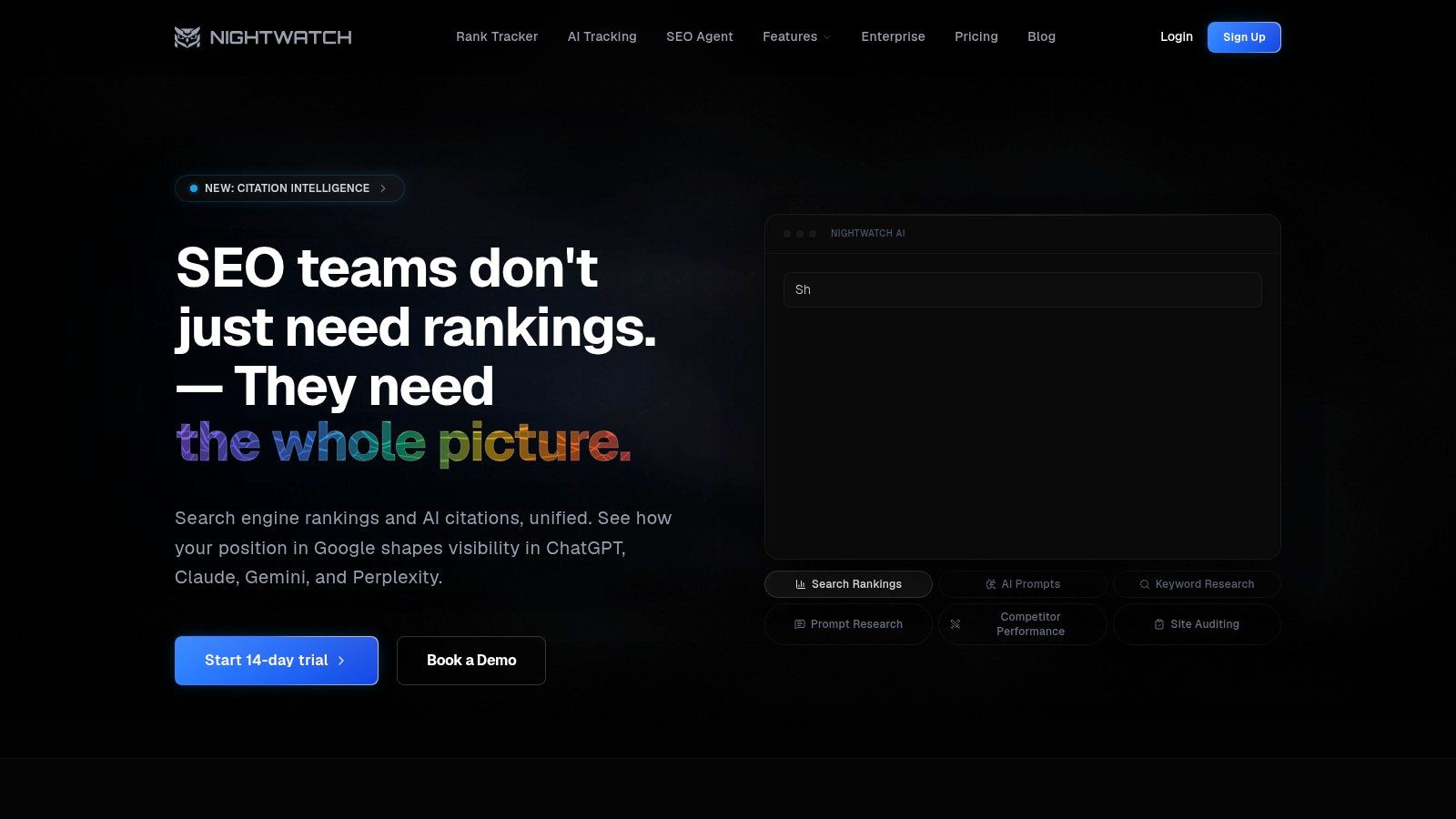
Nightwatch is one of the more interesting tools for agencies productizing visibility beyond classic blue-link rankings. It supports multiple search engines, white-label reporting, API and Looker Studio integrations, and unlimited team seats, which is a practical benefit for agencies with lots of internal users and client stakeholders.
What makes it stand out is how it reflects the wider coverage problem in modern rank tracking. Independent reviews have pointed out that agencies increasingly need data beyond Google, and that Google Search Console only reports average positions for queries where a site appeared, which can leave visibility gaps in real reporting. That broader data-source issue is discussed well in The Digital Project Manager's agency rank tracking software review.
Why Nightwatch Deserves Attention
Nightwatch is a good fit if your agency reports across Google, YouTube, Bing, Yahoo, or DuckDuckGo and wants AI visibility tracking in the mix. That wider surface coverage can be more useful than another generic “top 10 tools” dashboard.
It also avoids one annoying pricing issue common in agency software. Unlimited user seats simplify access. You don't have to ration logins between strategists, account managers, and client viewers.
For teams comparing modern trackers, this roundup of best rank trackers is a useful companion read.
The Trade-Off
Strong fit: Agencies needing broad search surface coverage and many seats.
Strong fit: Teams building white-label reporting products.
Potential drawback: Pricing appears in EUR, so US agencies should confirm billing and plan details.
Potential drawback: Advanced needs may push you toward higher tiers.
Nightwatch is especially strong when agency reporting needs to evolve past standard Google rank snapshots. The platform is at Nightwatch.
9. ProRankTracker
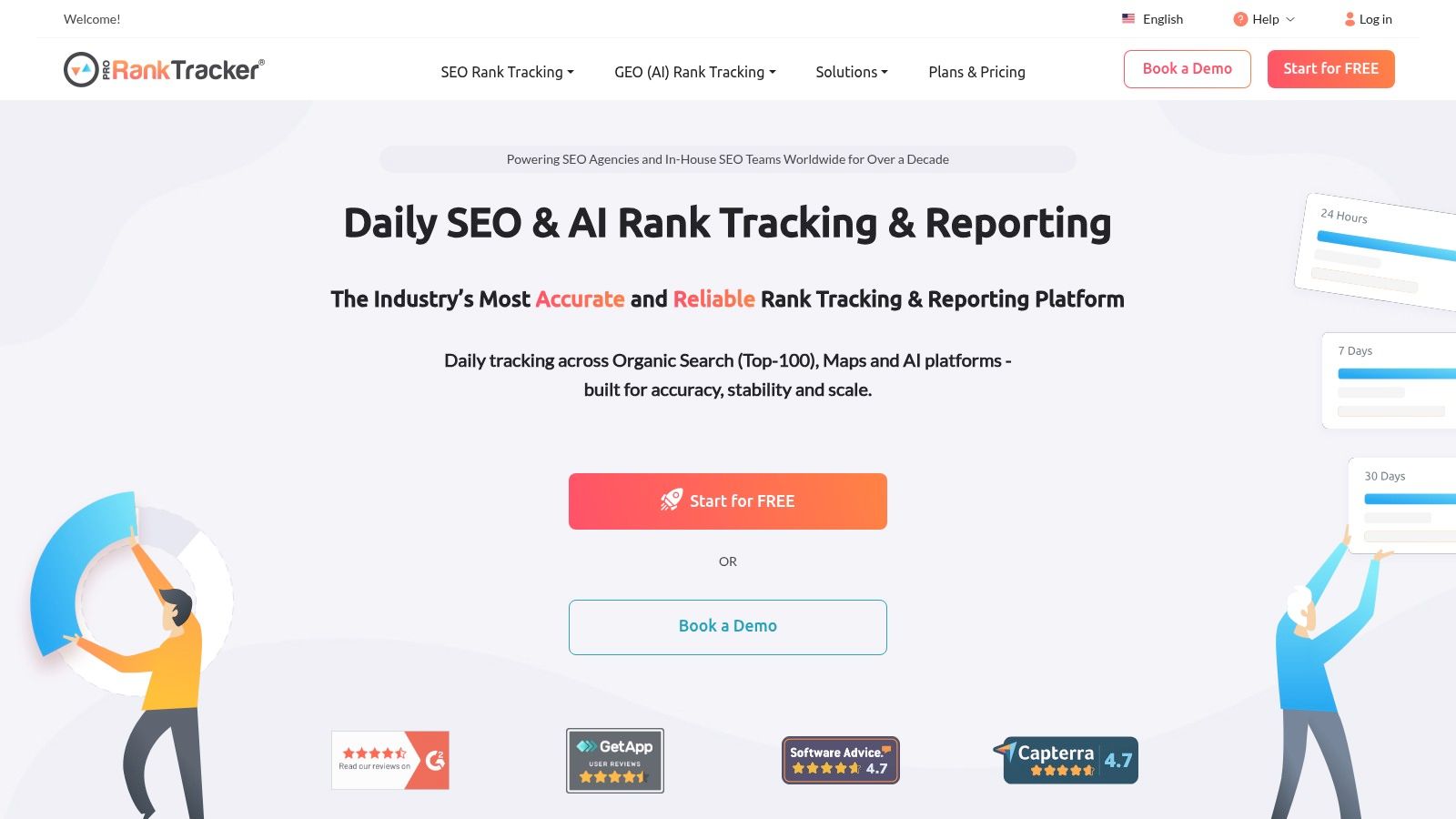
ProRankTracker knows what it is. It's a focused rank tracker built for agencies that care about keyword volume, white-label reporting, and client access more than a full SEO suite.
That focus is a selling point, not a limitation, for the right buyer. If your agency already handles audits, links, and research elsewhere, then a dedicated ranking product can be cleaner than an all-in-one stack that duplicates features you don't need.
Where It Delivers
ProRankTracker works well for agencies managing large client sets and recurring reports. Daily updates, maps and video coverage, client portals, and white-label features all support a service model where rankings remain a visible deliverable.
Its MyRanks client app and report flexibility are especially useful if your agency wants clients to self-serve basic visibility checks instead of asking your team for every update.
“If clients care most about rankings, give them a reporting experience built around rankings. Don't force a giant SEO suite into the job.”
Where It Stops
This isn't the platform for deep technical or strategic analysis. That's the trade-off with focused tools.
Best for: Agencies that want lots of rank tracking and polished client delivery.
Less ideal: Teams wanting backlinks, audits, and content research in the same product.
Important check: Make sure your surrounding stack is already strong enough to handle diagnosis outside the tracker.
If your agency values reporting simplicity and scale, check ProRankTracker.
10. Advanced Web Ranking (AWR)
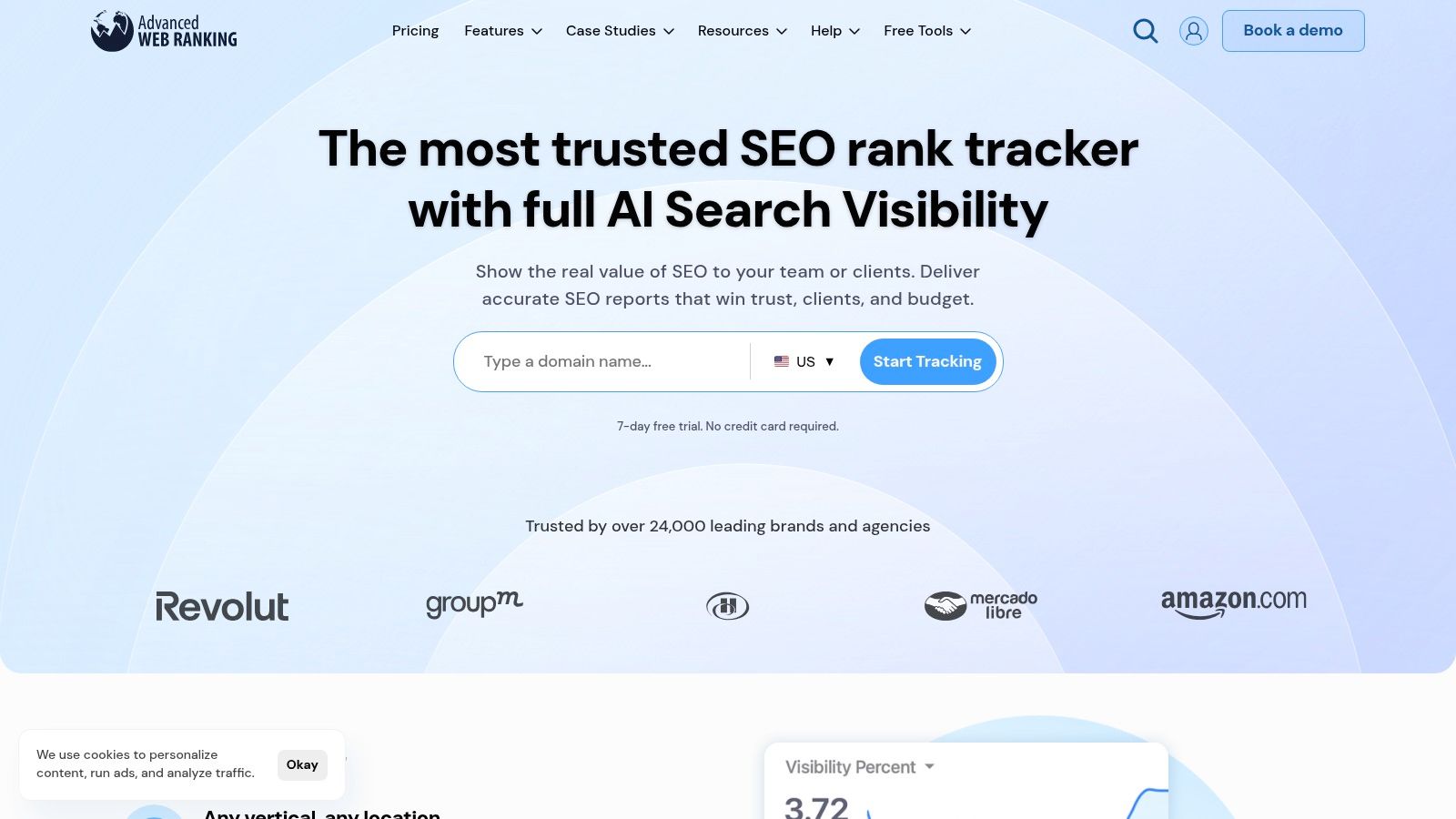
Advanced Web Ranking has been around long enough that many agency operators treat it as a reporting workhorse. That reputation still holds. AWR is strong when localization, scheduling control, and white-label reporting depth matter more than broad SEO functionality.
It's not trying to be your entire SEO stack. In many cases, that's a benefit. The platform is designed for teams that want clean rank monitoring, segmentation, historical views, and flexible delivery to clients.
Best Agency Fit
AWR makes the most sense for agencies with reporting-heavy workflows. If your team sends recurring client reports across lots of geographies and devices, the scheduling and localization controls are useful.
It also suits agencies with established data processes. API access and integrations help if you're pushing ranking data into custom dashboards or a wider reporting environment.
The Honest Downside
AWR can become expensive and more configuration-heavy as requirements grow. And because it's narrower than a broad SEO suite, you'll still need other tools for deeper backlink, content, or technical work.
Choose AWR if: Reporting depth and location tracking are your main priorities.
Skip AWR if: You want a single platform for the whole SEO workflow.
Ask before buying: Do we need more reporting control, or do we need better strategic diagnosis?
For agencies that still treat ranking reports as a core client deliverable, Advanced Web Ranking remains a serious option.
Top 10 Agency Rank Tracking Tools Comparison
Product | Core features (✨) | Quality & UX (★) | Pricing / Value (💰) | Target audience (👥) |
|---|---|---|---|---|
Keyword Kick 🏆 | ✨ Unified GA4/GSC, rank/backlinks, audits, JS rendering, K² AI actionable next‑steps | ★★★★☆ Daily updates, guided fixes, intuitive workspace | 💰 Free Forever; paid from $49/mo; 7‑day trial | 👥 Agencies, in‑house teams, freelancers, e‑commerce, solo owners |
Semrush (Position Tracking) | ✨ Daily local/mobile rank tracking, SERP features, Share of Voice, GA4/GSC integrations | ★★★★☆ Mature reporting, broad toolset | 💰 Feature‑rich but scales costly with users/projects | 👥 Agencies needing consolidated SEO & reporting |
Ahrefs (Rank Tracker) | ✨ Large backlink index, rank tracker, SERP history, API/report builder | ★★★★☆ Strong data quality, diagnostic depth | 💰 Premium pricing; clear plan limits | 👥 Agencies needing backlink + keyword intelligence |
AccuRanker | ✨ Fast daily & on‑demand checks, granular tagging, BigQuery/API exports, AI metrics | ★★★★☆ High accuracy at scale, speed‑focused UX | 💰 Transparent keyword‑based pricing; higher entry for small users | 👥 Large agencies with high keyword volumes |
STAT Search Analytics (Moz) | ✨ Enterprise daily tracking, SERP feature detail, competitor context, API | ★★★★☆ Enterprise scale, power‑user interface | 💰 Enterprise contracts & onboarding | 👥 Large brands & enterprise agencies (multi‑market) |
Rank Ranger (Similarweb) | ✨ Daily rank tracking, API, integrated market/traffic insights via Similarweb | ★★★★☆ Good market context, custom reporting | 💰 Typically enterprise/opaque pricing | 👥 Agencies building custom data pipelines |
SE Ranking | ✨ Daily tracking, site audit, backlink monitoring, white‑label reporting | ★★★★☆ Good UX; strong value for features | 💰 Competitive, lower cost for small/mid agencies | 👥 Small to mid‑size agencies and SMBs |
Nightwatch | ✨ Daily + on‑demand across engines, AI visibility (LLMs), unlimited seats, white‑label | ★★★★☆ Modern AI metrics, unlimited team seats | 💰 Simple keyword pricing (site shows EUR); confirm USD | 👥 Agencies productizing AI visibility; large teams |
ProRankTracker | ✨ Daily Top‑100, GBP/Maps/YouTube, white‑label client portal (MyRanks), API | ★★★★☆ Cost‑effective for high volumes, client‑facing tools | 💰 Competitive for large keyword quotas | 👥 Agencies prioritizing client portals & volume tracking |
Advanced Web Ranking (AWR) | ✨ Granular local/mobile tracking, scheduling, deep white‑label reporting, API | ★★★★☆ Reporting‑centric, highly configurable | 💰 Can be costly for enterprise/big data plans | 👥 Agencies needing deep localization & reporting |
Final Thoughts
A rank tracker choice usually becomes urgent in the same week an agency adds new clients, misses a reporting deadline, and realizes the current setup cannot keep up. That is the true buying moment. Not feature envy. Operational strain.
The right agency rank tracking software should fit how your team works across three pressure points: scale, client reporting, and workflow fit. That decision framework matters more than headline feature counts.
Agencies running strategy-led SEO retainers often get more value from Semrush or Ahrefs because rankings sit alongside keyword research, backlinks, and competitor data. Agencies managing very large keyword sets or fast-moving reporting cycles tend to prefer AccuRanker. STAT still makes sense for enterprise programs that need serious SERP detail across large markets. ProRankTracker and AWR suit agencies where reporting depth and client-facing delivery carry more weight than broad SEO functionality. SE Ranking is a sensible middle option for smaller and mid-size teams that want solid coverage without enterprise pricing. Nightwatch stands out for agencies that now report across search engines and AI visibility surfaces, not just standard rankings.
The common mistake is buying the tool with the longest feature list instead of the one that creates the least delivery friction.
Use these checks before you switch:
Scalability: Can it handle your keyword volume, client mix, user permissions, and reporting cadence without turning pricing or admin overhead into a problem?
Client reporting: Can account managers explain the output quickly, and can clients read it without needing a call to decode every chart?
Workflow integration: Does it fit your reporting stack, dashboards, exports, alerts, and handoff process, or will the team patch gaps with spreadsheets?
A migration also needs a plan. Agencies get into trouble when they treat switching tools as a simple import job.
Audit the current setup: Export active keywords, tags, locations, devices, competitors, and report groups before changing anything.
Document reporting rules: List the exact metrics and views each client receives so the new setup reflects the service, not just the software.
Run both tools briefly: Parallel tracking helps catch location mismatches, naming issues, and missing segments before clients see them.
Rebuild templates early: Dashboards, white-label PDFs, alerts, and scheduled reports usually take longer than expected.
Train account managers too: A migration fails fast when only the SEO team understands the new platform.
Reset client expectations: If reports are shifting from raw rank checks to broader visibility reporting, explain the change clearly.
One more trade-off matters now. Rank position on its own is a weak KPI in crowded SERPs. Better agency reporting pairs movement with context, feature presence, and visibility trends across the surfaces that affect clicks.
If your agency is also improving the content side of execution, these top AI content optimization tools are worth exploring alongside your tracking stack.
If you want agency rank tracking software that helps the team decide what to do next, Keyword Kick is the strongest all-in-one option on this list. It brings rank tracking, GA4, Google Search Console, backlink data, audits, and technical signals into one workspace, then turns that data into prioritized actions through the K² AI Agent. For agencies trying to cut tool sprawl and ship client work faster, that is a practical advantage.