You search for backlink building sites, open ten tabs, and quickly run into three very different products pretending to solve the same problem. One sells fully managed outreach. One sells placements. One gives you software and expects your team to do the work.
That distinction matters more than any ranked list.
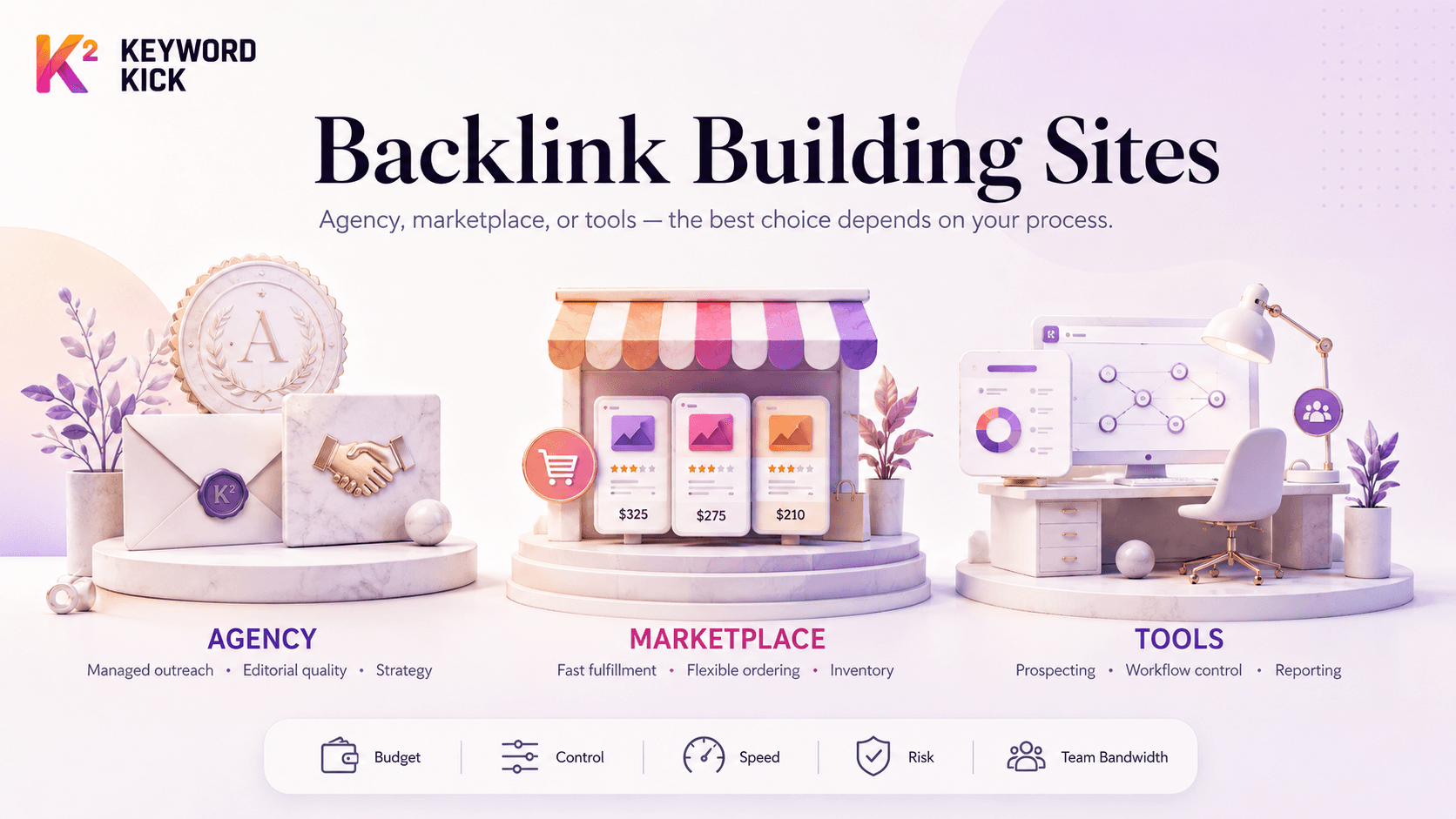
The right pick depends on what is broken in your process. If your team lacks time and outreach experience, an agency is usually the safest option. If you already know your target pages, anchor strategy, and acceptable link criteria, a marketplace can speed up fulfillment. If you want to build repeatable link acquisition in-house, tools help you manage prospecting, pitching, follow-up, and reporting.
This article is built around that practical split: agencies, marketplaces, and tools. It is a better way to evaluate backlink building sites because budget, risk tolerance, and internal bandwidth all change what "best" means.
A lot of teams also blur the line between buying placements and building authority. Those are related, but they are not identical. Editorial links, digital PR, reactive media opportunities, and brand mentions all play a role in a durable profile. If you want that wider perspective, this primer on understanding earned media and PR is a useful complement.
Guest posting still drives a large share of link acquisition activity across the industry. So do link swaps, niche edits, and other scalable tactics. The challenge is choosing the type of provider that fits your goals without filling your backlink profile with links you will need to explain, replace, or disavow later.
1. uSERP
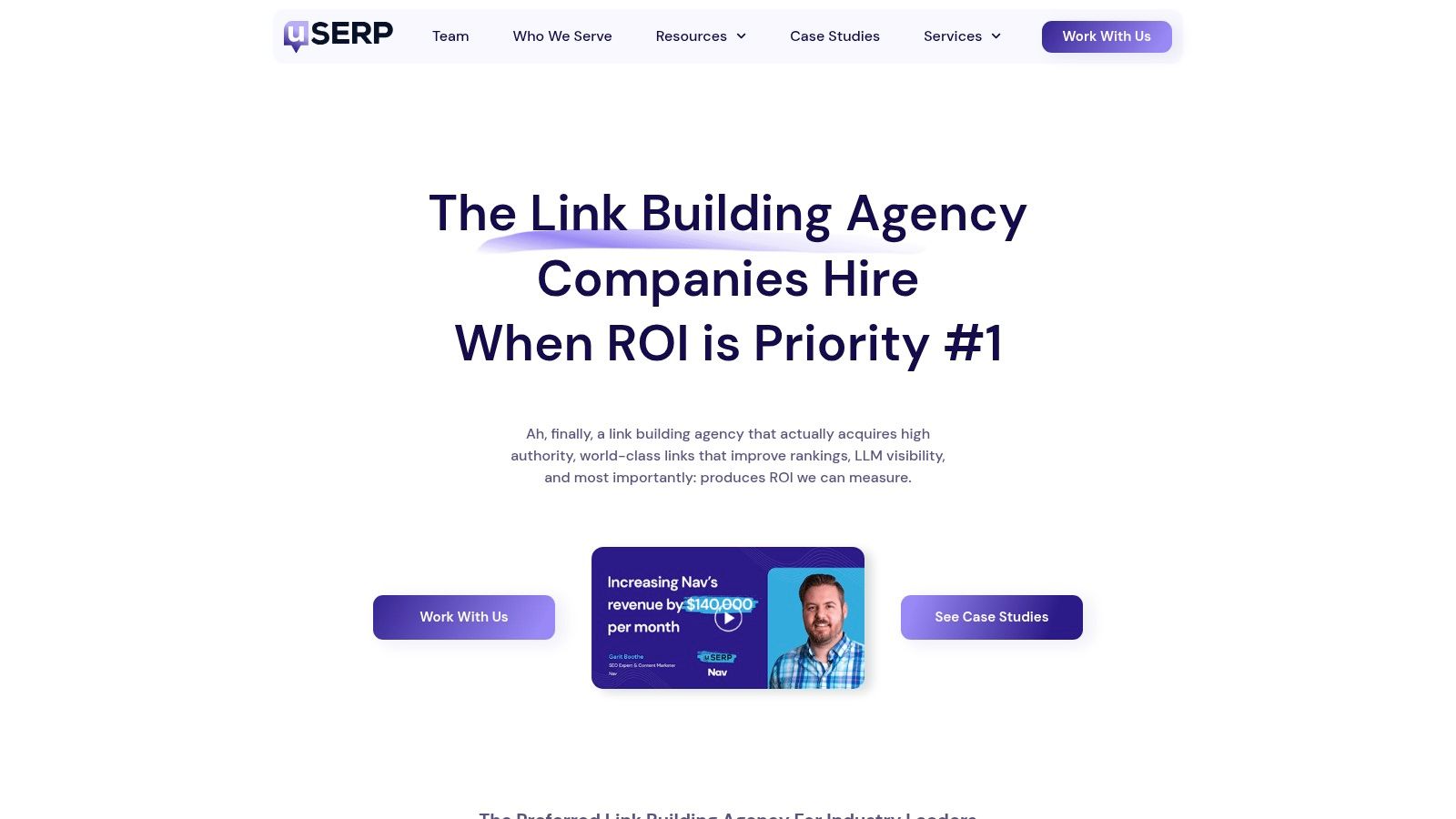
uSERP is the agency you hire when you care more about publisher quality, editorial context, and campaign control than getting the cheapest placement possible. It sits firmly in the premium, managed-service category.
What stands out is the way uSERP packages link building as an ongoing authority program, not a menu of one-off placements. You're not browsing inventory. You're buying outreach execution, reporting, and a strategy layer that usually includes editorial outreach, unlinked mention reclamation, resource page opportunities, guest content, and contextual insertions.
Where uSERP fits best
This is a strong fit for SaaS, B2B, and enterprise teams that need links they can defend internally. If your VP asks where the links came from, why those pages were targeted, and whether velocity is being monitored, uSERP is built for that level of scrutiny.
Their client portal and KPI tracking matter more than people think. Link building gets messy fast when no one can answer basic questions about target pages, live placements, or removed links. A replacement policy also helps reduce the pain of links disappearing after a campaign closes.
Practical rule: Hire an agency like uSERP when your biggest problem is execution quality, not idea generation.
A few trade-offs are obvious.
Best for retained campaigns: uSERP makes more sense when you need sustained acquisition over months, not a quick test purchase.
Good for executive visibility: Their reporting structure is useful when SEO has to show progress to non-SEOs.
Less flexible for one-off buyers: If you want to cherry-pick individual sites yourself, this isn't the model.
I'd put uSERP in the “let experts run it” bucket. If your team already has strong content and clear commercial pages, this type of agency can keep the program disciplined.
2. Page One Power
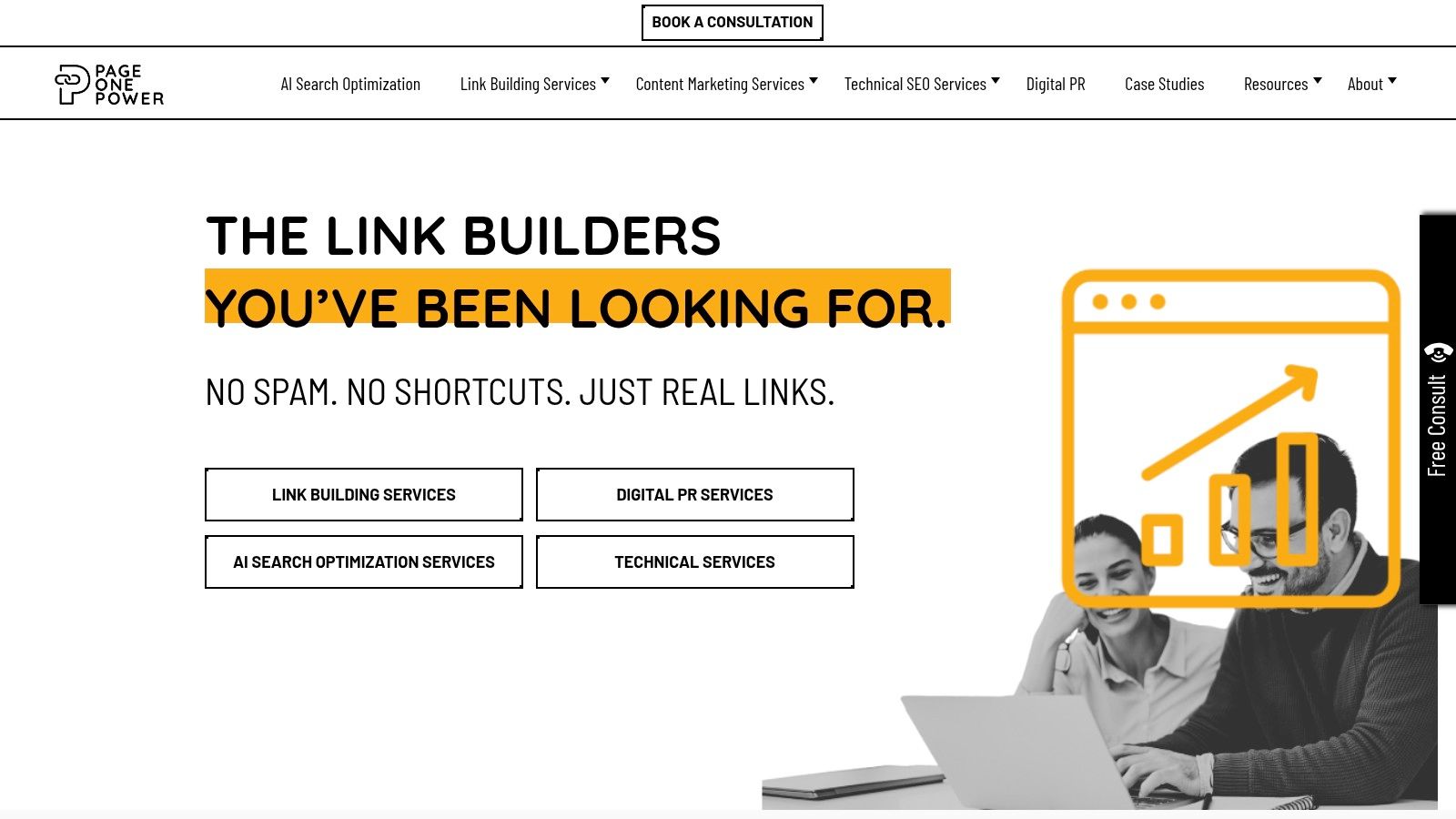
Page One Power has a different feel from agencies that talk mostly about authority metrics. Their positioning is more relevance-first and asset-led. That matters because a lot of link sellers still over-index on site-level metrics and underweight topical fit.
If your team has strong resource pages, original guides, or useful tools, Page One Power is built around that kind of material. Resource link building has been one of their core tactics for a long time, and they also support custom campaigns and white-label execution for agencies.
Why relevance matters more now
One of the biggest mistakes buyers make with backlink building sites is assuming “big publication” automatically means “better link.” That's increasingly unreliable. According to Los Angeles SEO Inc.’s analysis of topical relevance in backlink value, links from top-tier but non-industry-specific directories can pass 40% less authority than links from mid-tier industry publications with high audience engagement.
That lines up with what many SEO teams see in practice. A niche placement on a publication your audience reads often moves the needle more than a generic “authority” site that has no topical connection to your page.
Don't buy prestige. Buy relevance, audience overlap, and context.
Page One Power's monthly quotas give buyers something concrete to plan around, which agencies appreciate. The trade-off is commitment. This isn't a casual self-serve platform, and the onboarding process is more involved than an uncomplicated addition of links to a cart.
Strong fit for linkable assets: Best when you already have pages worth promoting.
Agency-friendly: White-label options help if you're fulfilling under your own brand.
Not ideal for impatient teams: If you want immediate publisher selection and fast checkout, a marketplace will feel easier.
3. LinkBuilder.io
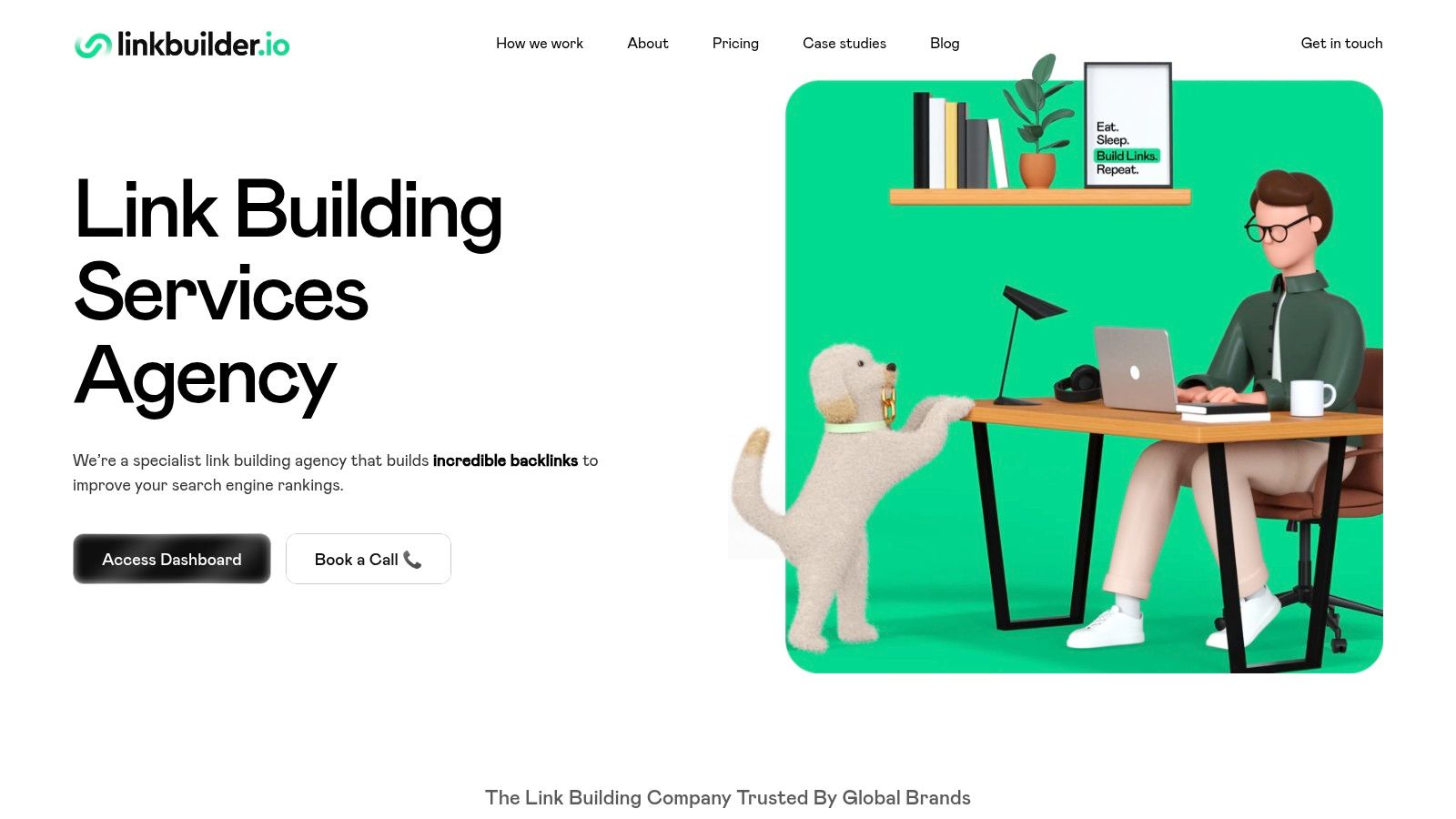
A common buying problem looks like this. You know you need links, but you do not need another full-service SEO retainer. You need a provider whose process, team, and reporting are built around link acquisition itself. LinkBuilder.io fits that agency category well.
That matters in this list because not every backlink building site solves the same problem. Some are marketplaces built for quick ordering. Some are tools that help your team run outreach in-house. LinkBuilder.io is a managed service for teams that want strategy and execution handled by specialists, usually at a higher cost than self-serve options and with less direct control over publisher-by-publisher selection.
Their range of tactics is the main reason to consider them. They run editorial outreach, skyscraper campaigns, broken link building, HARO-style pitching, link insertions, and digital PR-style campaigns. If your site needs different link types across product pages, content assets, and brand terms, that flexibility is useful.
The best fit is a site with real ranking upside and enough budget to avoid one-size-fits-all fulfillment. Some pages need editorial links from niche publications. Others need resource page placements or insertions that strengthen existing authority. A single method repeated at volume usually leaves gaps.
The monthly link guarantees are helpful for forecasting, especially if you are reporting progress to clients or leadership. Treat that as a delivery framework, not a quality shortcut. A quota tells you how the agency plans capacity. It does not remove the need to review relevance, anchor use, target pages, and the actual sites being pitched.
Expect this to work like an agency engagement, not a shopping cart.
Best for strategy plus execution: A strong option if you want experts running multiple link acquisition methods for you.
Less suited to low-budget testing: Teams looking for a few one-off placements will usually find marketplaces easier to use.
Requires buyer judgment: The service can handle outreach and fulfillment, but you still need clear goals and standards for link quality.
4. Loganix
Loganix is a good fit if you want something between a full-service agency and a self-serve marketplace. That positioning matters because "backlink building sites" are not all solving the same problem. Loganix is built for buyers who already know the link type they need and want a cleaner way to buy it.
That usually means agencies, local SEO teams, and in-house marketers managing repeatable campaigns across many pages or many clients.
Where Loganix fits best
Loganix works well for operational link building. You can order guest posts, niche edits, citations, local SEO services, and press release support from one vendor instead of splitting fulfillment across several freelancers or boutique providers. If your bottleneck is process, not strategy, that saves time.
The white-label setup is also useful. Teams serving clients often care as much about clean delivery, tracking, and predictable turnaround as they do about the order menu itself.
The trade-off is straightforward. Loganix gives you scale and convenience, but it does not remove the need for review. Marketplace-style buying still rewards teams that check topical fit, outbound link quality, anchor usage, and whether the target page deserves a link in the first place.
That is the key dividing line with this category. Agencies help decide what to build and why. Marketplaces help you get it fulfilled faster. Loganix sits closer to the marketplace side, even though it offers more support than a bare directory of sellers.
Use it if your strategy is already clear and your team needs dependable production.
Best for hybrid buyers: Strong option for teams that want more structure than a typical marketplace without paying for a fully custom agency engagement.
Useful for local and agency workflows: Citations, white-label support, and repeatable ordering make it practical for service-heavy SEO operations.
Less suited to strategy-first campaigns: If you need link gap analysis, campaign design, and publisher targeting led for you, a true agency is usually the better category.
5. FATJOE
FATJOE is built for speed and volume. If your team wants a self-serve ordering process, content included, and placements categorized by DR and traffic tiers, FATJOE is one of the most straightforward options.
That simplicity is the selling point. Agencies with recurring fulfillment needs often prefer platforms where junior team members can place clean, repeatable orders without a long procurement cycle.
What FATJOE gets right
Content-included guest posts remove a common bottleneck. A lot of link campaigns stall because no one owns article production. FATJOE solves that by bundling writing into the workflow, which is useful when you're managing many client accounts at once.
The dashboard model also makes it easier to track live orders and replacement policies. Buyers who care about operational clarity usually appreciate that more than marketing copy about “premium outreach.”
But there's a catch. DR and traffic tiers don't tell you whether the placement belongs in your niche. If you use FATJOE well, you still map anchors carefully, choose destination pages intentionally, and avoid forcing links onto weak-fit sites just because the metrics look clean.
Strong for process-driven teams: Fast ordering and included content reduce internal friction.
Good for agencies handling volume: White-label style fulfillment is the natural use case.
Weaker for sensitive niches: If legal review, compliance, or publisher selection needs tight control, a managed agency may be safer.
This is one of those backlink building sites where discipline matters more than the platform itself. Used carefully, it's efficient. Used lazily, it turns into metric shopping.
6. Authority Builders (ABC)
Authority Builders is a curated guest-post marketplace for buyers who want more visibility into inventory. That transparency is the main draw. You can browse sites by niche, authority signals, and organic traffic, or hand the process off through managed placements.
Advanced users tend to like ABC because it gives them more control over site selection than many done-for-you providers. If you know how to evaluate publishers, that's valuable.
The right way to use ABC
Traffic filters and niche views help narrow the list fast, but they shouldn't become a shortcut for relevance. Marketplace inventory always tempts buyers to reduce decision-making to sortable columns. That's where bad buys happen.
One reason is engagement quality. According to SEOptimer's discussion of backlink site quality and link velocity, 68% of new backlinks from generic link building sites have low engagement metrics, and those links correlate with weaker ranking authority than links from high-engagement industry publications. This is a significant caution for every inventory-based marketplace.
ABC does a good job of giving buyers transparency and replacement or refund protections. What it can't do is stop a careless team from choosing sites that check technical boxes but don't reach the right audience.
Browse inventory like a media buyer, not like a spreadsheet operator.
Strong for experienced SEOs: Great if you want control over site choice.
Helpful safeguards: Replacement and refund terms reduce risk.
Easy to misuse: Buyers can still overvalue DA or surface metrics.
If your team has mature review criteria, ABC is efficient. If not, it can magnify weak decision-making.
7. Pitchbox
Pitchbox fits the "tool" category in this list. It is built for teams that want to run outreach in-house instead of buying placements from an agency or marketplace. That distinction matters because Pitchbox solves an operations problem, not a sourcing problem.
Use it when link building is already a repeatable process and the bottleneck is execution. Prospecting, email sequences, personalization, reply management, team assignments, and link tracking sit in one workflow. The integrations with major SEO platforms also help when campaigns start from backlink gaps, content promotion targets, or digital PR lists.
A common failure point shows up fast. One person keeps prospects in a spreadsheet, another sends from Gmail, and no one has a clean view of follow-ups, live conversations, or secured links. Pitchbox fixes that by acting like an outreach system of record for SEO teams.
That said, it is not light software.
If your team sends a small number of pitches each month, the setup and cost will feel heavy relative to the output. If you run multiple campaigns across clients, verticals, or content types, the structure starts paying for itself. This represents the main trade-off with Pitchbox. You are buying process control and scale, not convenience for occasional outreach.
Best for high-volume outreach: Strong fit for agencies and in-house teams with established campaigns.
Good operational control: Useful for workflow management, follow-ups, deliverability oversight, and link monitoring.
Less suitable for small teams: Overkill if you are still testing outreach or only need basic prospect management.
8. BuzzStream
BuzzStream is the practical alternative for teams that want outreach structure without enterprise complexity. It's been a reliable option for a long time because it does the fundamentals well: prospect management, email sequences, templates, tracking, and link monitoring.
Small agencies and in-house teams often choose BuzzStream because it's easier to roll out. You don't need a huge setup project to get useful work done.
Where BuzzStream is strongest
If your team is moving from spreadsheets into a real outreach process, BuzzStream is one of the safer starting points. It centralizes contacts, tracks conversations, and gives you enough reporting to keep campaigns organized without overwhelming the team.
The Chrome extension and integrations are practical rather than flashy. That's part of the appeal. Many SEO teams don't need advanced AI reply handling or complex deliverability controls on day one. They need consistent execution.
There are limitations. Prospecting automation and plan caps can become restrictive as campaigns scale. That's usually when teams graduate to something like Pitchbox. But for many companies, BuzzStream hits the sweet spot between affordability and control.
Strong for growing teams: Ideal when you need structure more than deep automation.
Easier onboarding: Good for marketers who aren't full-time outreach specialists.
Not as powerful for scale: Heavy-volume agencies may outgrow it.
I'd recommend BuzzStream to any team building an in-house outreach habit for the first time. It creates process without demanding a full operational overhaul.
9. Connectively (formerly HARO)
A writer sends a deadline-driven request at 9:15 a.m. If your team replies with a sharp, credible quote before lunch, you might earn a link from a publication no marketplace can promise.
That is why Connectively sits in a different bucket from agencies, marketplaces, and outreach tools. It is a journalist-source platform. The job here is not prospecting or order management. The job is matching real expertise to live media requests, fast enough and well enough to get picked.
The upside is clear. Strong wins from Connectively tend to be editorial, brand-building, and difficult for competitors to copy. The downside is just as real. Output is uneven, response rates can be low, and success depends heavily on speed, judgment, and the quality of your subject matter expert.
This option fits a specific type of team.
Connectively works best when you have a founder, executive, or in-house specialist who can give original commentary without sounding rehearsed. Journalists usually ignore generic advice, padded brand mentions, and anything that reads like recycled SEO copy. The teams that do well here build a process around triage, fast approvals, and tight editing.
It can also surface bylined article and interview opportunities, which gives you more than a simple quote-pitch channel. That matters if your goal is authority, not just link count.
The trade-off is predictability. If you need guaranteed monthly link volume, this is the wrong primary solution. Connectively is better used as a specialist channel inside a broader program, especially alongside agency outreach or marketplace fulfillment that covers more stable production.
Best for expertise-led brands: Strong fit for teams with credible spokespeople and quick response times.
Different from marketplaces and tools: You are earning coverage through relevance and expertise, not ordering links or managing outreach at scale.
Use it as a supplement: High-quality wins are possible, but month-to-month delivery will be inconsistent.
From Sites to Strategy Building Links That Last
A team buys 20 links in a month, sees a short lift, then spends the next quarter cleaning up a profile full of weak placements, off-topic pages, and publishers nobody reads. That is usually a selection problem, not just an execution problem. The best backlink building sites are the ones that fit the job you need done.
Start with the category, not the brand name. Agencies such as uSERP, Page One Power, and LinkBuilder.io make sense when you need strategy, prospecting, outreach control, and accountability. Marketplaces like Loganix, FATJOE, and Authority Builders fit teams that already know the link type, quality range, and volume they want. Tools such as Pitchbox and BuzzStream serve a different use case. They help in-house teams run outreach at scale, but they do not replace judgment, messaging, or relationship building.
That distinction matters because each option fails in a different way.
Agency programs cost more and usually move slower at the start, but they give you better control over relevance, anchor strategy, and campaign direction. Marketplaces are faster to buy from and easier to budget, but quality can vary, and the burden shifts to you to screen sites, manage pacing, and avoid footprint-heavy patterns. Outreach tools are efficient once your process is working. Without a trained operator, they just help you send mediocre campaigns faster.
Budget pressure pushes teams toward volume. That is where bad decisions pile up. As noted earlier, many marketers pay for links and use authority metrics as a first-pass filter. That is fine as a screening step. It breaks down when DR becomes the whole decision. A DR 60 page on a dead site is still a weak placement. A DR 35 page on a trusted, relevant publication can do more for rankings, referral value, and brand credibility.
The safer approach is to evaluate links the way an SEO lead reviews a portfolio. Look at topical match, editorial standards, organic visibility, indexing patterns, outbound link behavior, and whether the linking page has a reason to exist without your placement on it. Then look at velocity. A steady flow from credible sources usually holds up better than a sudden spike from generic guest post inventory.
Use a simple selection framework:
Choose an agency if you need strategy, outreach quality, and reporting tied to business goals.
Choose a marketplace if you need predictable fulfillment and can judge placement quality yourself.
Choose a tool if you already have people, process, and editorial standards in place.
Choose earned media channels if your brand has real expertise and can wait for uneven but high-trust wins.
If you want a grounded complement to that thinking, Raven SEO's overview of natural link growth is worth reading.
Treat backlink building sites as delivery models, not magic solutions. Pick the wrong category and you create cleanup work. Pick the right one and you build a link profile that keeps helping six months from now.
Top 9 Backlink Building Services Comparison
Provider | Core features ✨ | Quality & UX ★ / Highlights 🏆 | Pricing & Value 💰 | Target audience 👥 / USP ✨ |
|---|---|---|---|---|
uSERP | Editorial outreach, guest content, unlinked mention reclamation; client portal | ★★★★★; 🏆 Premium, transparent KPI reporting | 💰 $$ (retainer, enterprise-focused) | 👥 Agencies & SaaS; ✨ High‑authority editorial placements & replacement policy |
Page One Power | Custom campaigns, resource link building, guaranteed monthly links | ★★★★☆; 🏆 Relevance‑first, 13+ yrs experience | 💰 $–$$ (retainer, minimum term) | 👥 Brands & agencies; ✨ Guaranteed monthly links & white‑label options |
LinkBuilder.io | 20+ tactics (skyscraper, HARO, insertions); tailored roadmaps | ★★★★; 🏆 Link‑only specialist with earned‑media option | 💰 $ (retainer, volume packages) | 👥 Teams focused solely on link acquisition; ✨ Wide tactic mix + monitoring |
Loganix | Self‑serve marketplace + managed fulfillment; order/dashboard tracking | ★★★★; 🏆 Predictable fulfillment & agency tooling | 💰 $–$ (per‑placement + managed plans) | 👥 Agencies & white‑label partners; ✨ Flexible buy‑single or recurring orders |
FATJOE | DR/traffic‑tiered guest posts with in‑house content; dashboard guarantees | ★★★; 🏆 Fast turnaround; content included | 💰 $ (self‑serve, volume bundles) | 👥 Agencies needing scale & speed; ✨ Packaged content + money‑back/lifetime guarantees |
Authority Builders (ABC) | Browse vetted inventory by niche/traffic; managed placements | ★★★★; 🏆 Traffic guarantees & replace/refund policy | 💰 $ (marketplace pricing varies) | 👥 Advanced users & agencies; ✨ Vertical‑focused inventory & traffic vetting |
Pitchbox | Prospecting + AI personalization, reply handling, deliverability tools | ★★★★★; 🏆 Enterprise outreach automation & integrations | 💰 $$ (enterprise tiers) | 👥 Large agencies & in‑house outreach teams; ✨ Scalable outreach CRM with governance |
BuzzStream | Outreach CRM: discovery, templates, sequences, link monitoring | ★★★★; 🏆 Budget‑friendly with clear upgrade path | 💰 $ (lower entry cost) | 👥 Small agencies & in‑house teams; ✨ Simple, cost‑effective outreach CRM |
Connectively (HARO) | Journalist queries, AI‑assisted responses, media database on paid tiers | ★★★; 🏆 Editorial link potential without paid placements | 💰 $ (free tier + pay‑as‑you‑go/premium) | 👥 PRs, experts, brands; ✨ High‑authority earned editorial backlinks |
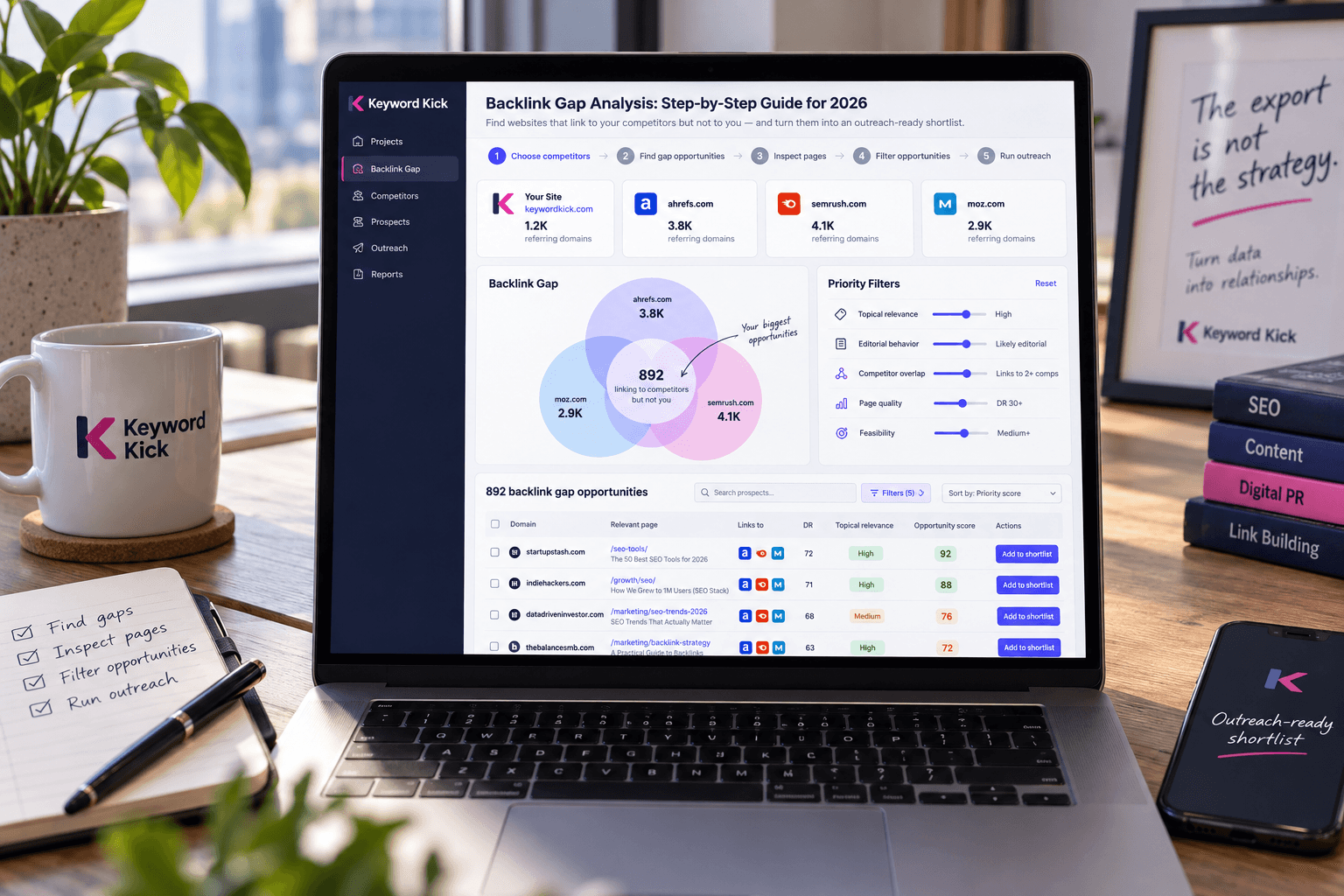
If you're evaluating backlink building sites and want a clearer view of where links, rankings, technical issues, and page priorities connect, Keyword Kick is worth a serious look. It brings rank tracking, backlinks, audits, keyword research, competitor analysis, GA4, and Search Console into one workspace, then turns that data into specific actions your team can execute. For agencies, in-house teams, and consultants, that means less time stitching reports together and more time deciding which pages to push, which links matter, and what to fix next.