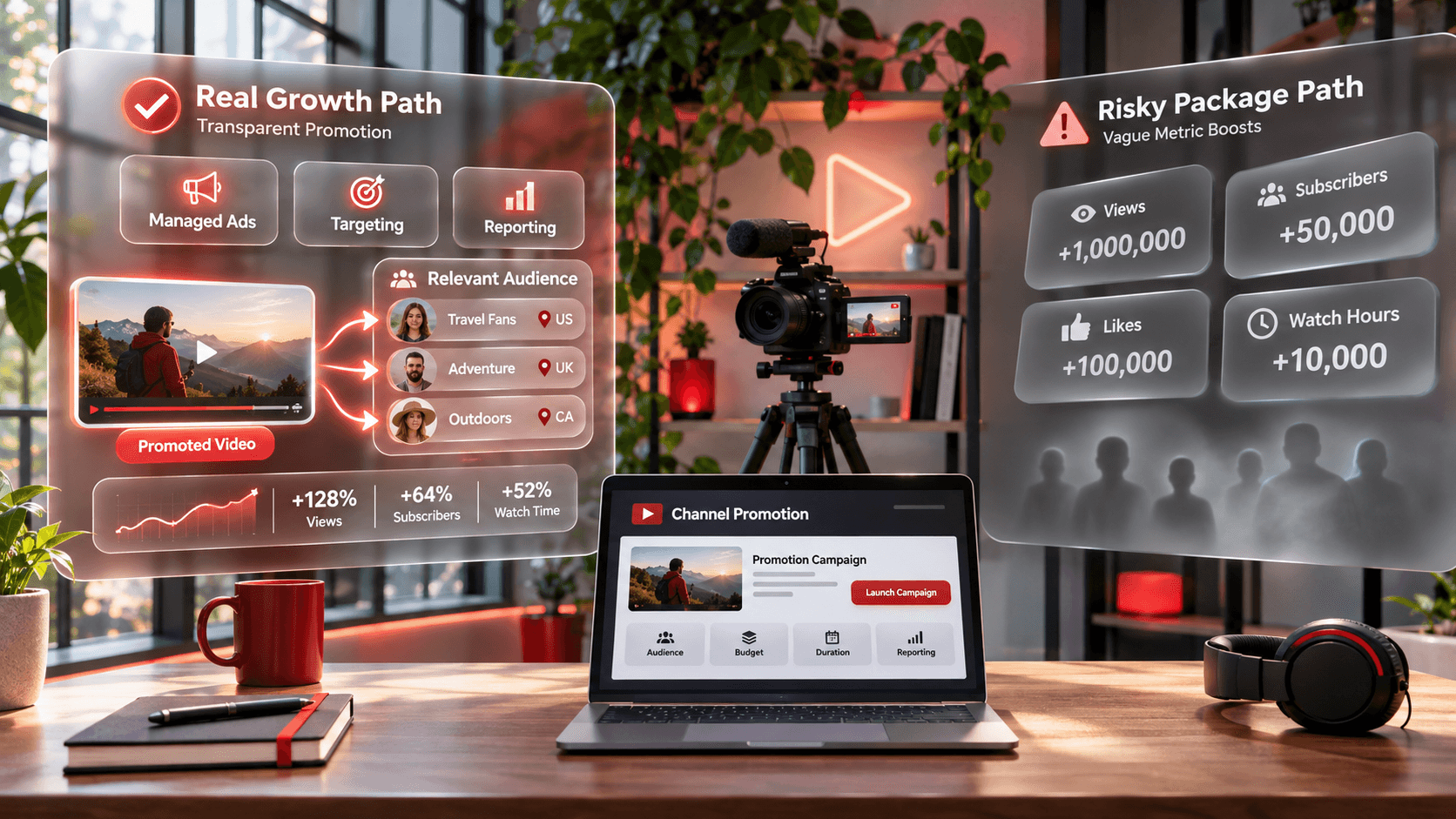
The most popular advice about buying YouTube growth is also the least useful: compare the price, pick a package, and watch your numbers rise. A purchased subscriber or view count can look like progress while leaving you with viewers who don't return, misleading campaign reports, and unanswered questions about where the activity came from.
The cheapest growth number often costs the most when you can't explain how it was acquired. YouTube's Fake Engagement Policy prohibits artificially increasing engagement, says artificial traffic won't count, and warns that violations can lead to channel strikes.
The best sites to buy YouTube growth packages fall into very different categories. Managed advertising services sell campaign setup, targeting, and paid distribution. Engagement-package vendors sell quantities of views, subscribers, likes, or watch hours. Some also offer useful research tools, but those utilities don't establish the quality of their paid traffic.
Buy access to a relevant audience, not reassurance from a rising counter.
The providers below aren't interchangeable, and their position isn't a safety endorsement. For a brand channel, advertising with transparent reporting is the more defensible starting point. For any metric-based package, the acquisition method needs scrutiny before payment.
The practical test stays the same: what are you buying, how will people encounter your video, and what evidence will remain in YouTube Studio after delivery ends?
1. HypedX
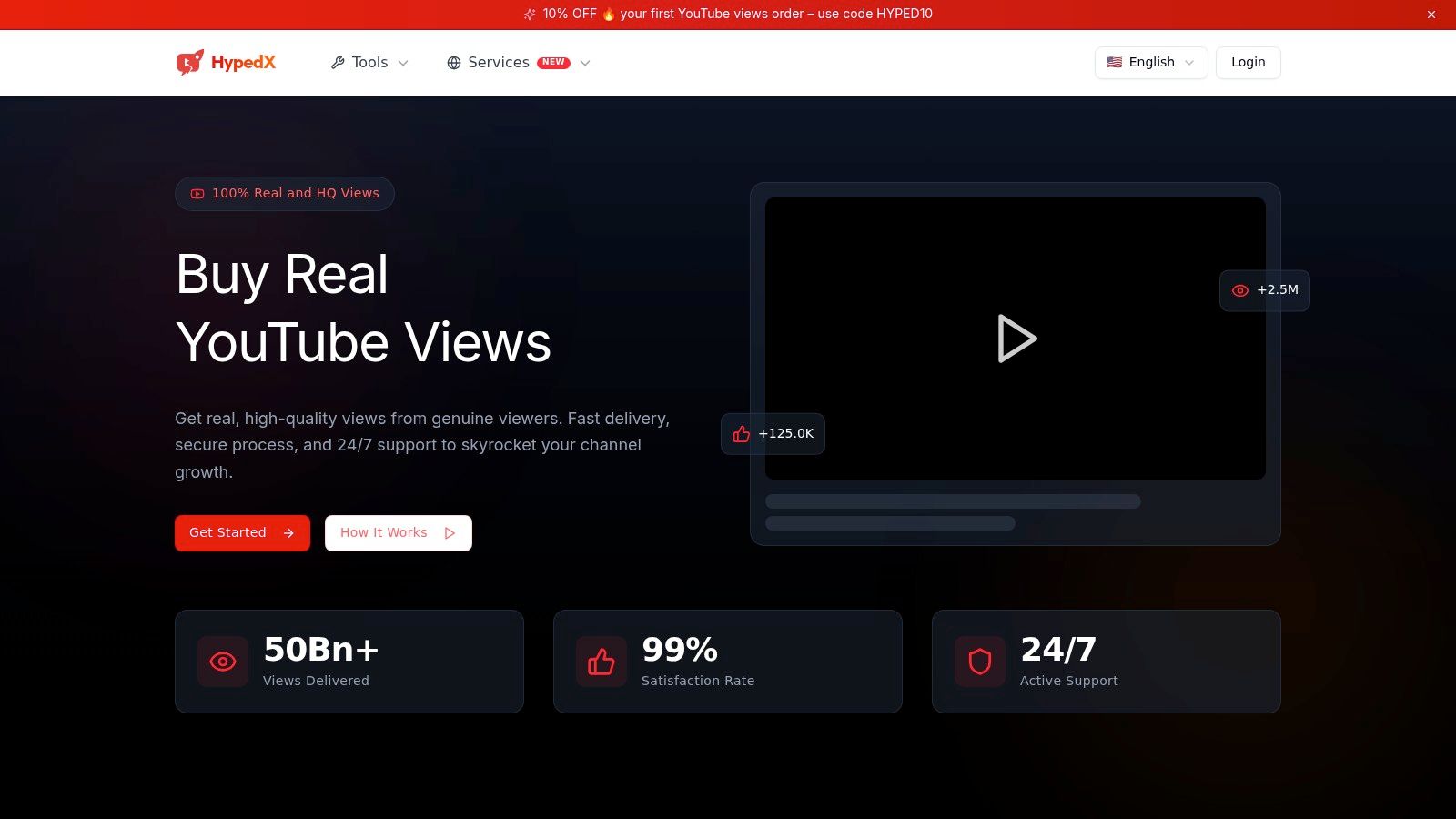
HypedX combines paid YouTube engagement services with browser-based research and content utilities. Creators can buy YouTube views, explore country-specific viewing options, or use tools for video analysis, keyword research, rank tracking, and channel monitoring.
That combination addresses separate problems. The package storefront serves creators seeking additional activity on selected videos. The utilities help with fragmented research and repetitive preparation, including titles, tags, Shorts captions, comment sentiment analysis, and video-to-article drafts.
Its service menu includes standard and premium views, subscribers, likes, comments, Shorts views, watch hours, and high-retention views. Geographic options can help buyers specify a market, but a country label doesn't establish viewer interest, voluntary participation, or lasting engagement.
Where the tools help and the package needs scrutiny
The research utilities are the clearer fit for a creator preparing uploads or reviewing competitors. A video analyzer or rank tracker can support investigation without requiring a purchase of engagement. Earnings and monetization calculators should be treated as planning estimates, not approval decisions or revenue forecasts.
The purchasing workflow involves choosing a package, submitting a video URL, and paying. HypedX says it doesn't require a YouTube password and describes gradual delivery, service guarantees, and direct fulfillment.
Those are provider statements, not independently verified campaign outcomes. Its claims about genuine viewers and policy compliance still require evidence of how viewers are acquired. HypedX also states that it isn't affiliated with YouTube or the other referenced social platforms.
Before buying, separate the useful conveniences from the unresolved traffic questions:
Acquisition method: Establish whether distribution uses advertising, placements, or another disclosed mechanism.
Audience fit: Match geography, language, and subject interest to the video.
Reporting: Require an explanation of the traffic sources you should expect in Studio.
Remedy: Read what the guarantee covers, including exclusions and undelivered activity.
Best fit: creators who value a combined utilities hub and are prepared to evaluate paid services separately. I wouldn't treat the breadth of its tools as evidence that its engagement packages are safe or effective.
2. Sprizzy
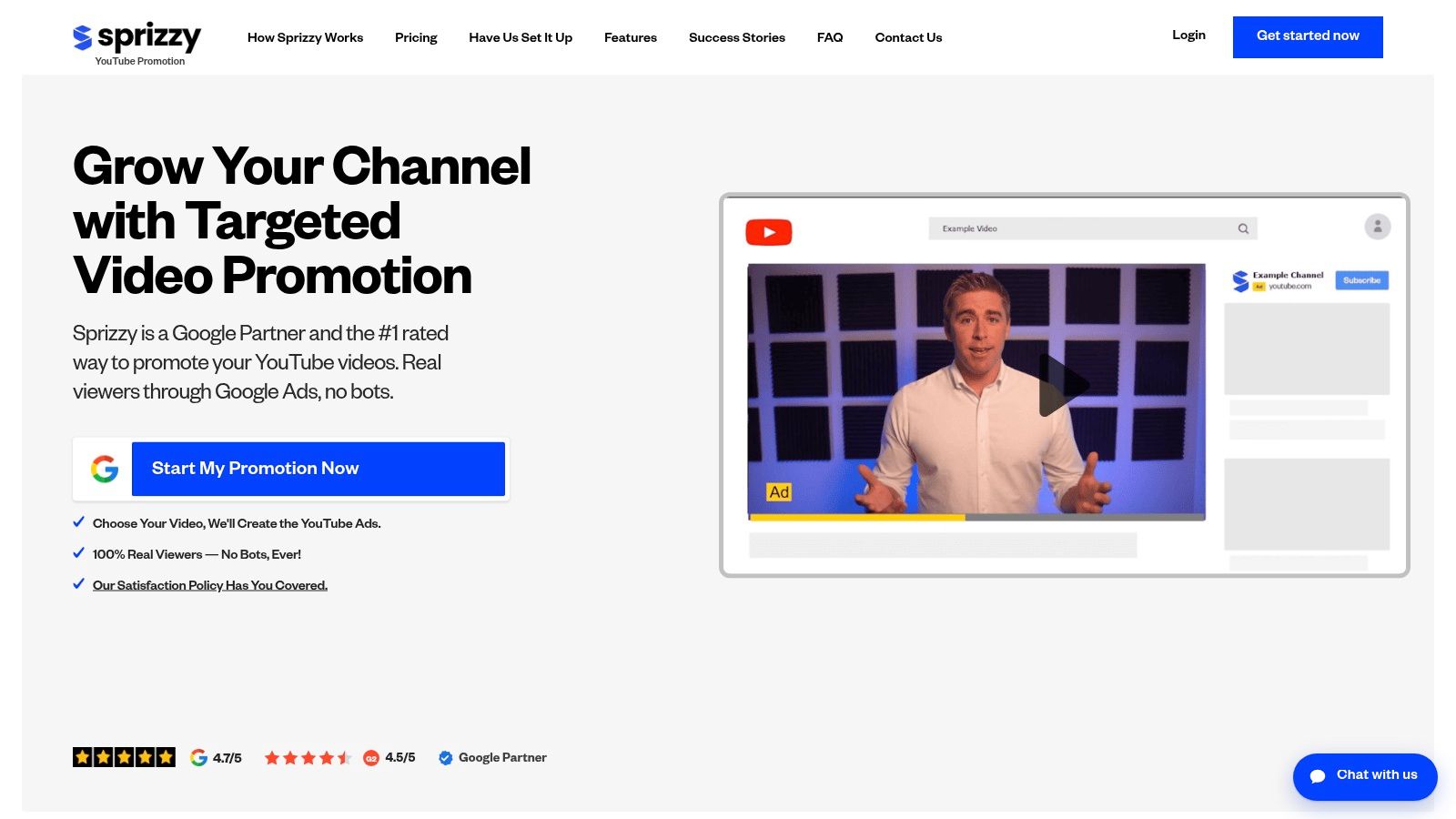
Sprizzy sells managed promotion rather than a fixed engagement bundle. Sprizzy describes campaigns that promote YouTube content through Google Ads, with campaign setup and audience testing handled for the creator.
That's a practical distinction for a channel operator who understands the intended viewer but doesn't want to manage an advertising account. You supply the content and audience direction. The service manages paid distribution and provides dashboard reporting.
Its promotion options cover videos, Shorts, and channels, with pay-as-you-go campaigns rather than a required monthly contract. It also advertises a first-promotion money-back guarantee, subject to terms. Read those terms before treating the guarantee as protection against disappointing business results.
What you're outsourcing
The benefit is less campaign administration, not a promise of organic discovery. Paid exposure can introduce a video to prospective viewers, but the video still needs to give them a reason to keep watching or return.
Give the campaign manager a useful brief:
Viewer profile: Specify language, location, interests, and the problem your content solves.
Content choice: Promote an upload that already explains its value quickly.
Success measure: Choose relevant viewing, website visits, or another defined outcome instead of total reach alone.
The trade-off is reduced hands-on control compared with managing Google Ads yourself. You'll need to judge both the campaign results and the quality of the reporting.
Best fit: creators who want advertising managed for them. Don't buy it as a monetization shortcut. Ad-driven subscribers and watch time aren't a substitute for the qualifying activity required by the YouTube Partner Program.
3. VeeFly
Say an e-commerce team wants to promote a product tutorial in the markets it serves. A custom advertising campaign is easier to evaluate than an unexplained delivery of views because the team can define the audience before spending.
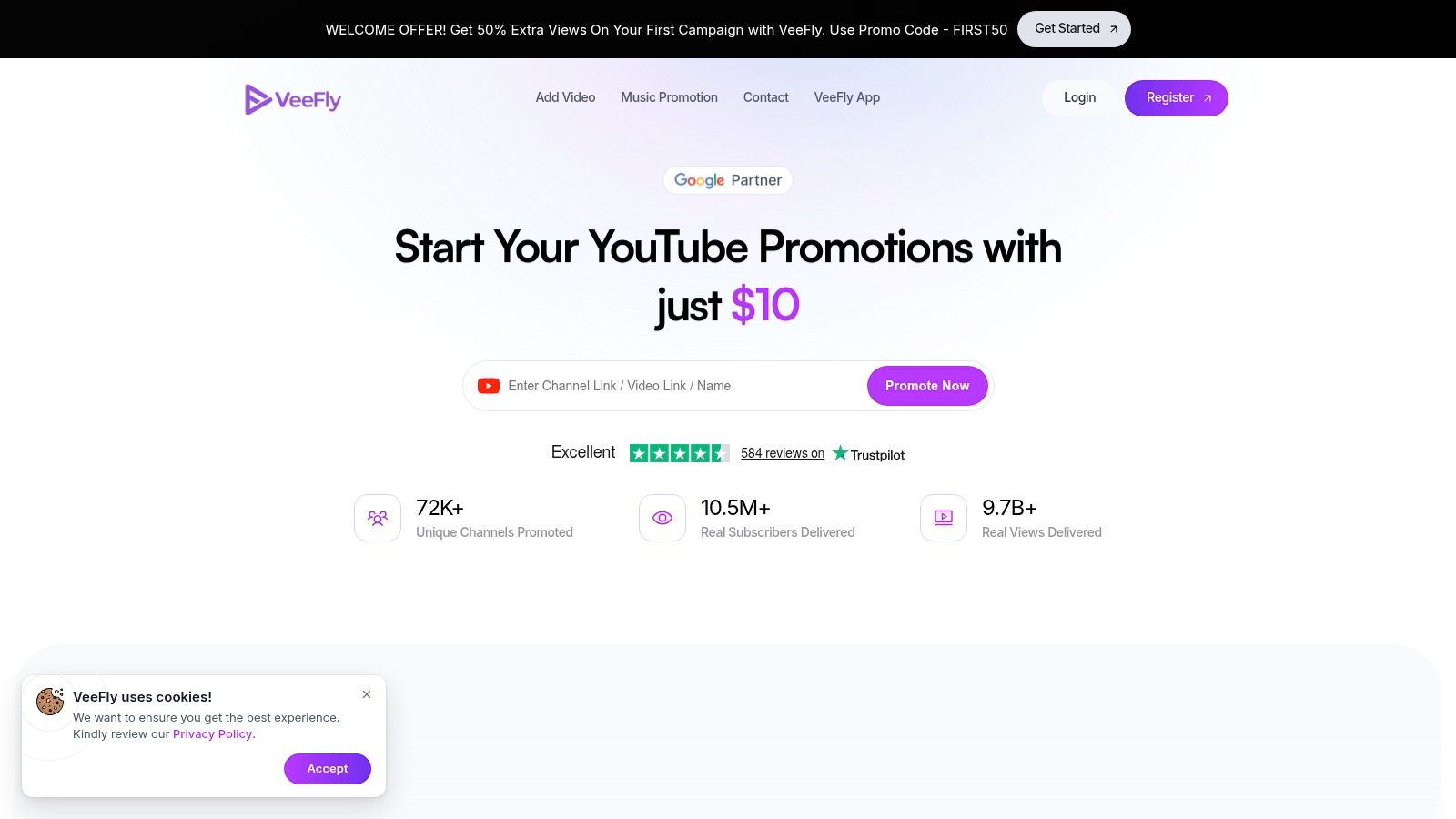
VeeFly offers YouTube promotion through Google Ads, with custom budgets, audience and ad-type targeting, outcome estimates, and campaign reporting. It also offers packages for promoting multiple videos.
The useful feature is the ability to test a defined campaign before expanding it. The limitation is that projected outcomes remain estimates. They aren't evidence that viewers will become customers, subscribers, or repeat viewers.
Operator's recommendation: Save the targeting settings and projected outcomes before launch. Compare the delivered audience with that brief, not just with the view estimate.
For the tutorial campaign, keep the targeting commercially relevant. Broad worldwide reach may look attractive, but it doesn't answer whether prospective buyers understood the product or visited the store.
Check YouTube Studio alongside VeeFly's dashboard. Review the promoted video's traffic-source mix, geography, average view duration, and retention. Where reporting allows, distinguish advertising activity from viewers arriving through search, browse, or suggested videos.
Best fit: teams that want managed advertising with a configurable test budget. Its pre-purchase projections can help plan a campaign, but they shouldn't become contractual assumptions unless the terms explicitly say so.
Scale only when the campaign reaches the intended audience and produces the result you need. A completed delivery isn't the same as a successful acquisition test.
4. YouTube Promote
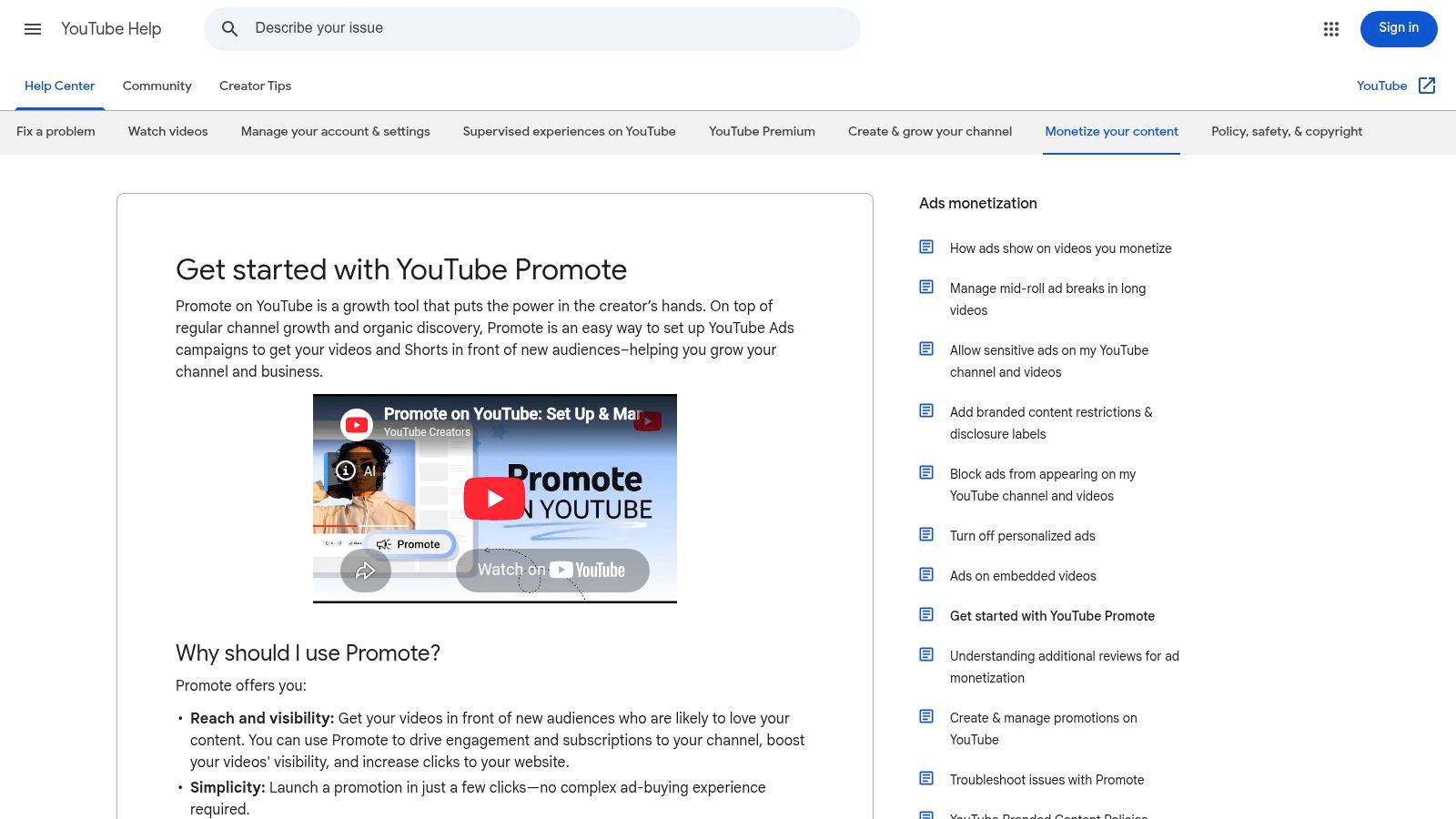
YouTube Promote is the direct option when you don't need a separate growth vendor. YouTube's promotion tool lets creators set up paid video and Shorts promotions within the platform, choose a budget and timeline, and review estimates during setup.
The advantage is a simpler buying relationship. You're purchasing advertising through YouTube rather than relying on a reseller to explain an unfamiliar traffic source.
That doesn't turn paid reach into organic growth. Subscribers and watch hours gained through ads don't count toward YouTube Partner Program eligibility thresholds, so campaign planning and monetization planning need separate scorecards.
Choose simplicity or deeper control
Promote suits a creator who wants straightforward distribution without learning the broader Google Ads interface. It offers less campaign control than the full advertising platform, which matters when a team needs more detailed testing and optimization.
Use it with a clear purpose:
Content discovery: Introduce a useful video to a relevant audience.
Message testing: Compare whether an upload communicates its value to unfamiliar viewers.
Business measurement: Track the intended next action separately from the public view count.
For teams choosing the surrounding analytics stack, our business SEO platform buyer's guide helps frame the broader reporting decision. Keep advertising results distinct from search visibility and website conversions.
Best fit: solo creators and lean teams that want a platform-native advertising workflow. It's a sensible starting point for simplicity, but it won't repair an unclear title, a weak opening, or content that doesn't satisfy the audience you're targeting.
5. Google Ads
An agency promoting a software demo usually needs more control than a creator boosting an upload. Audience definitions, geographic exclusions, campaign budgets, and conversion measurement all affect whether the spend serves the business.
Google Ads is the self-managed option for running YouTube video campaigns. It provides audience and geographic targeting, budget controls, and campaign analytics without requiring a separate growth-package provider.
The benefit is control. The cost is management work. Someone must configure the campaign, review delivery, interpret results, and decide what to change.
Build the campaign around the next action
For a product launch, decide whether the video should generate awareness, qualified visits, or another measurable action. Don't ask a single public metric to represent all of those goals.
Our SEM keyword research playbook can help teams clarify audience intent and commercial relevance before allocating spend. Search demand can inform messaging, but a video campaign still needs its own targeting and creative decisions.
Keep the initial setup interpretable. Group content by purpose, name campaigns clearly, and avoid changing the video, audience, and destination simultaneously. Otherwise, you'll struggle to explain which change affected the outcome.
Google Ads doesn't guarantee subscribers, and ad-driven subscribers and watch time aren't a route around Partner Program eligibility requirements. Evaluate the advertising on its declared objective.
Best fit: agencies and in-house teams with campaign-management capacity. If nobody owns optimization, a managed service may be operationally easier, even though you'll give up some direct control.
6. Media Mister
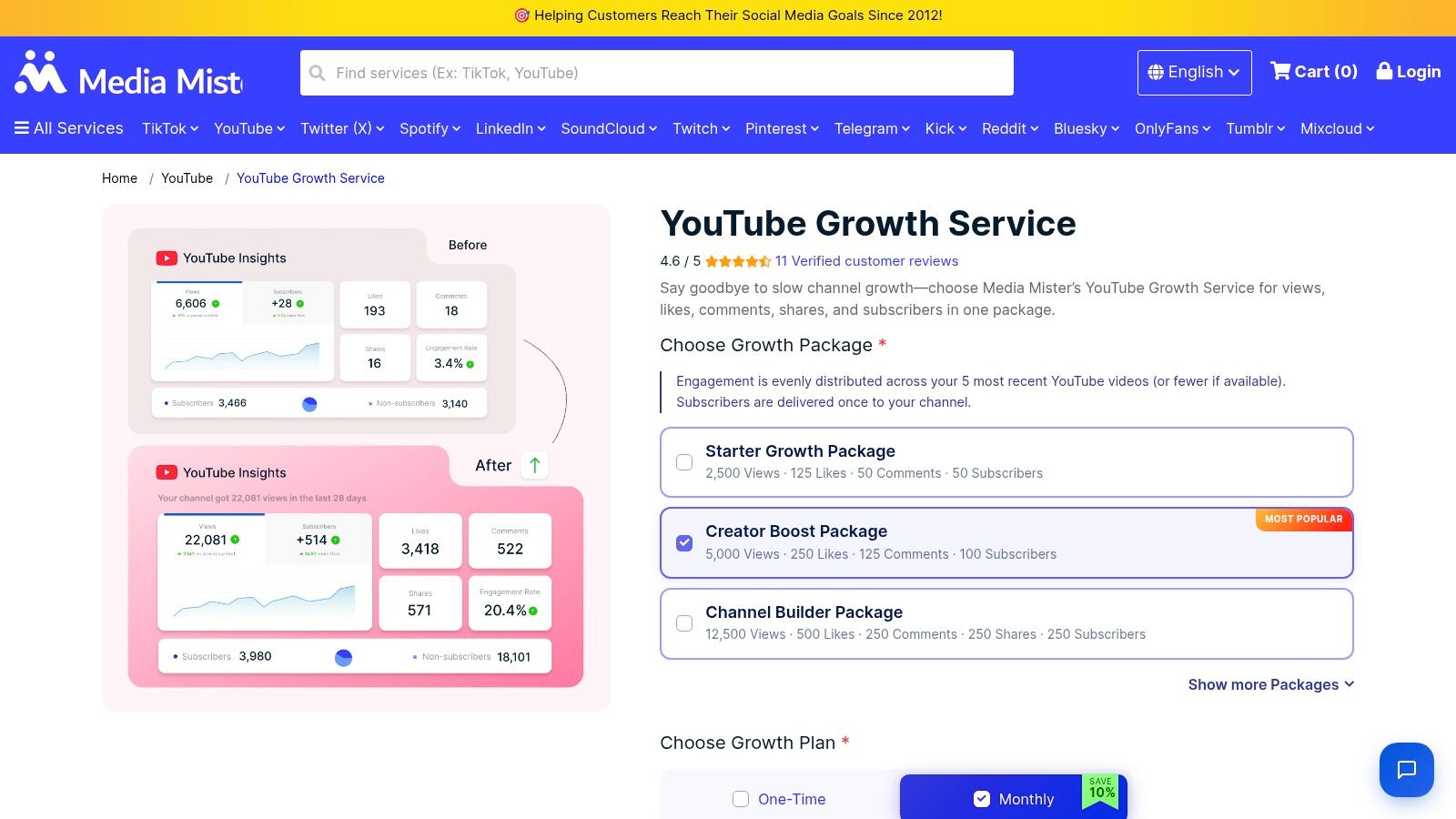
Media Mister offers YouTube growth bundles combining engagement metrics such as views, likes, comments, shares, and subscribers. Buyers can choose one-time or recurring arrangements, with activity distributed across recent videos.
This is a metric-package purchase, not the same proposition as targeted advertising. Ordering several metrics together is convenient, but convenience doesn't establish that interested people chose to watch and engage.
For commercial channels, the distinction extends beyond platform policy. The FTC's final-rule announcement explains the prohibition on buying fake social influence indicators when buyers knew or should have known they were fake and used them to materially misrepresent influence for a commercial purpose.
What a bundle doesn't prove
A package can specify delivery quantities without explaining audience acquisition. Comments, subscribers, and views appearing together don't independently validate one another if their origin remains unclear.
Before considering an order, examine the evidence behind the offer:
Viewer participation: Determine why people would encounter and voluntarily watch the content.
Comment authenticity: Establish whether comments reflect genuine reactions rather than supplied scripts.
Billing terms: Separate recurring delivery commitments from cancellation and refund rights.
Audience continuity: Look for a reason viewers would watch a later upload without another purchase.
Not requiring a password is a useful credential safeguard. It isn't proof of traffic authenticity.
Best fit: buyers comparing the mechanics of bundled engagement offers, not brands seeking a defensible audience-acquisition default. I would choose transparent advertising over a bundle whose acquisition method can't be documented.
7. Growzaq
Buying watch hours isn't the same as earning monetization eligibility. Growzaq lists separate YouTube services for subscribers, views, likes, comments, and watch hours, allowing buyers to select a particular metric rather than a combined bundle.
That menu makes service selection straightforward. It doesn't resolve whether the delivered activity represents interested viewers or qualifies for the outcome the buyer has in mind.
YouTube's engagement-policy guidance makes genuine activity the standard and warns against artificial metric inflation. For a buyer, the important question isn't whether a watch-hour counter changes, but whether the acquisition method is legitimate and the activity is eligible for its intended use.
A watch-hour package doesn't fix originality, audience fit, or channel-level policy problems.
Growzaq describes ordering without a password and includes refund language for undelivered orders. Treat those as transaction details. A remedy for non-delivery doesn't necessarily address poor audience relevance, later removals, or monetization disappointment.
Inspect the audience behind the metric
Before spending, capture the promoted video's existing traffic sources, geography, retention, and subscriber activity. After delivery, inspect those same dimensions rather than relying on the vendor's completion status.
A geographic mismatch deserves investigation. So does an increase in subscribers without corresponding interest in later uploads. Neither observation alone proves artificial activity, but both weaken the business case for buying more.
Best fit: readers comparing individually sold services and their terms. For a monetization-focused channel, I wouldn't purchase watch hours on the assumption that a vendor can deliver approval. The package description and the eligibility decision are different things.
8. Boomoid
A refill policy can replace a missing number. It can't make a disinterested viewer return.
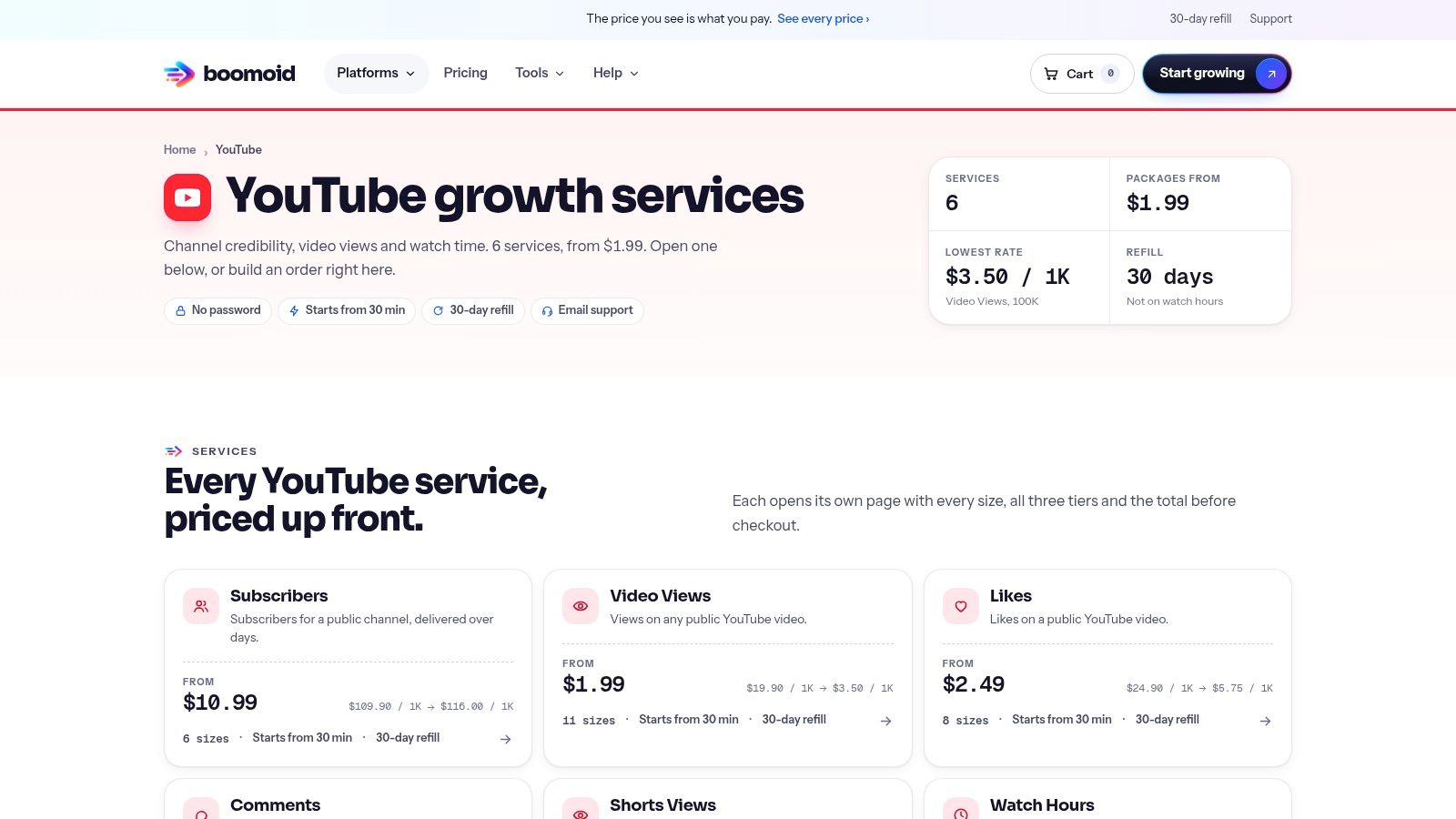
Boomoid sells individually priced YouTube services, including subscribers, video views, Shorts views, likes, comments, and watch hours. Its service-specific menu helps buyers distinguish the products without purchasing an all-in-one bundle.
The central limitation is the deliverable itself. Buying a metric doesn't establish that the activity came from people who wanted the content, and replacement delivery doesn't establish durable audience value.
YouTube's channel monetization policies prohibit artificially inflating engagement and connect compliance with continued monetization access. A service guarantee shouldn't be mistaken for protection against platform enforcement.
Read delivery terms as transaction terms
Boomoid publishes delivery and refill information on its service pages. Review what triggers a refill, what counts as completed delivery, and what happens if an order doesn't arrive as described.
Then separate those commercial promises from performance questions:
Shorts relevance: Will viewers care about the channel's broader subject, not just a short clip?
Subscriber quality: Is there a credible reason subscribers would watch future uploads?
Viewing behavior: Does the promoted content retain attention from the delivered audience?
Reporting clarity: Can the provider explain the traffic-source pattern you should expect?
Don't assume that a neat menu or visible starting price answers those questions.
Best fit: buyers who want to compare individual engagement categories. For a business channel, the purchasing convenience is outweighed by uncertainty unless the provider can substantiate genuine audience acquisition. I wouldn't use refill availability as the deciding factor.
9. Social Growth Engine
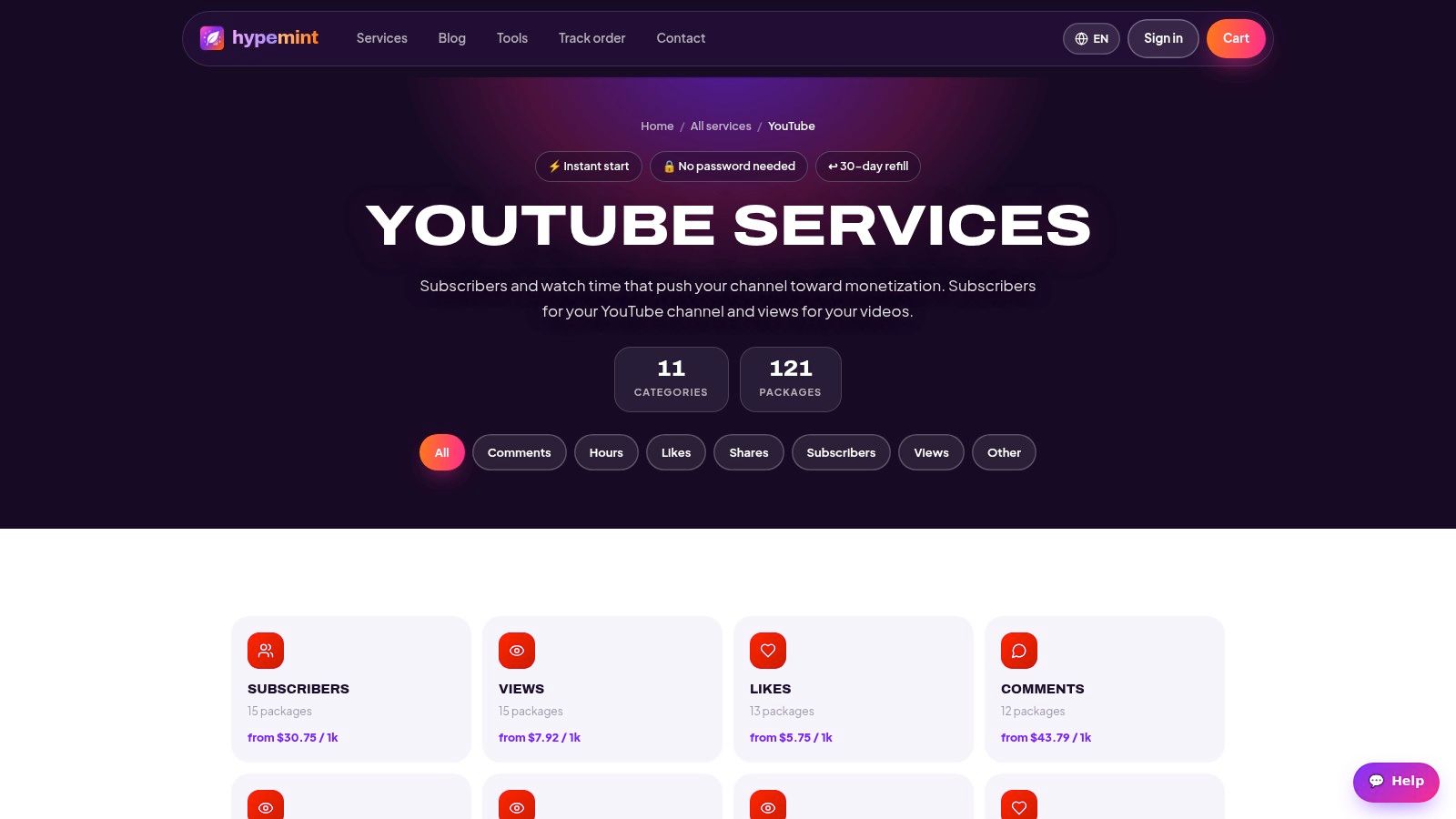
Publishing regularly creates a recurring promotion task. Social Growth Engine addresses that workflow with recurring video-boost plans, subscriber add-ons, and one-time packages.
The scheduling model may suit a channel with a predictable upload cadence. However, recurring delivery can also make it harder to tell whether the audience is returning voluntarily or whether each upload depends on another paid boost.
Its plans should be evaluated by their actual deliverables, not their alignment with your publishing calendar. Cancel-anytime positioning also needs to be read alongside billing dates and delivery commitments.
Keep promotion separate from content eligibility
YouTube's response to creator questions about Partner Program policies explains that mass-produced or repetitive material remains subject to monetization review and that reused content needs meaningful original value. Buying recurring engagement doesn't solve those content issues.
Before choosing a subscription, decide what would justify renewal:
Audience relevance: Delivered viewers match the channel's language, location, and subject.
Repeat interest: Later uploads attract viewers without depending entirely on paid delivery.
Business contribution: The campaign supports qualified visits, inquiries, or another defined goal.
Our guide to calculating true keyword value and ROI offers a useful budgeting principle: evaluate spend against business value, not the apparent affordability of a unit.
Best fit: buyers seeking scheduled delivery who can verify the underlying acquisition method. For brand channels, I would favor a recurring advertising arrangement with transparent targeting over recurring metric delivery. Automating an unclear purchase doesn't make it more defensible.
How the Main Providers Differ on Model, Entry Cost, and Best Use
Item | Service Model | Starting Price | Best For |
|---|---|---|---|
HypedX | Paid engagement packages plus YouTube research and content tools | Prices vary by package | Creators seeking YouTube tools and packaged engagement services |
Sprizzy | Managed YouTube advertising through Google Ads | $50 per campaign | Creators who want managed, audience-targeted video promotion |
VeeFly | YouTube video promotion through Google Ads | $10 per custom campaign | Creators who want to test a campaign with a small budget |
YouTube Promote | Built-in YouTube video and Shorts advertising | Set your own budget | Creators who want to promote content directly on YouTube |
Google Ads | Self-managed YouTube video advertising | Set your own budget | Teams needing detailed targeting and campaign controls |
Media Mister | Bundled YouTube engagement metrics | Prices vary by package | Buyers seeking multiple engagement metrics in one order |
Growzaq | Individually selected YouTube metric packages | Entry-level packages available | Buyers who want to choose specific metrics |
Boomoid | Individually priced YouTube engagement services | Published prices vary by service | Buyers comparing separate services for videos or Shorts |
Social Growth Engine | Recurring video-boost plans and one-time packages | Advertised pricing varies by plan | Buyers seeking scheduled support tied to publishing cadence |
Choose Growth You Can Defend, Not Just Numbers You Can Buy
The best sites to buy YouTube growth packages aren't necessarily the ones advertising the largest quantities. The useful distinction is whether you're buying explainable distribution or unexplained activity.
Managed advertising can reduce setup work. YouTube Promote offers a simpler direct workflow, while Google Ads gives experienced teams more control. Engagement packages require a different level of scrutiny because the advertised deliverable often tells you little about how the audience was acquired.
Before paying, confirm the deliverable, traffic source, and refund terms in writing. Save the package description and targeting brief. Define the audience you want and the result that would make the purchase worthwhile.
Verify the result beyond delivery
Establish a baseline using comparable uploads before the campaign starts. Favikon's engagement benchmark report supports evaluating engagement in the context of channel size and format rather than treating delivered views as sufficient evidence of success.
Use YouTube Studio to inspect the promoted content and later uploads:
Traffic sources: Check whether the reported acquisition method matches the activity you receive.
Retention: Compare average view duration and percentage viewed for relevant traffic segments.
Audience fit: Review geography and language against the campaign brief.
Returning viewers: Look for continued interest after paid delivery stops.
Commercial outcomes: Compare qualified website activity or conversions with the campaign objective.
Don't treat every retention difference as proof of bad traffic. Advertising audiences and established subscribers can behave differently. Investigate the source and context before drawing a conclusion.
For organic search growth on your own website, GA4 and Search Console provide a separate, more inspectable measurement path. Search Console helps you understand search visibility and clicks; GA4 helps you evaluate on-site behavior and configured conversion events. Neither replaces YouTube Studio or independently certifies that purchased engagement is authentic.
At Keyword Kick, our Free plan includes Google Search Console and GA4 integrations, cannibalization detection, and daily rank updates. That gives teams a way to examine website search performance alongside their broader acquisition work without confusing it with YouTube's internal audience reporting.
Keep promotion budgets attached to a specific audience goal. Renew because the campaign produces relevant viewers and measurable results, not because the vendor completed an order.
Before your next purchase, export your YouTube Studio baseline and write down the audience and outcome you're funding. Then get started with Keyword Kick to connect your website's GA4 and Search Console reporting, so your team can evaluate search visibility and on-site results separately from purchased YouTube activity.