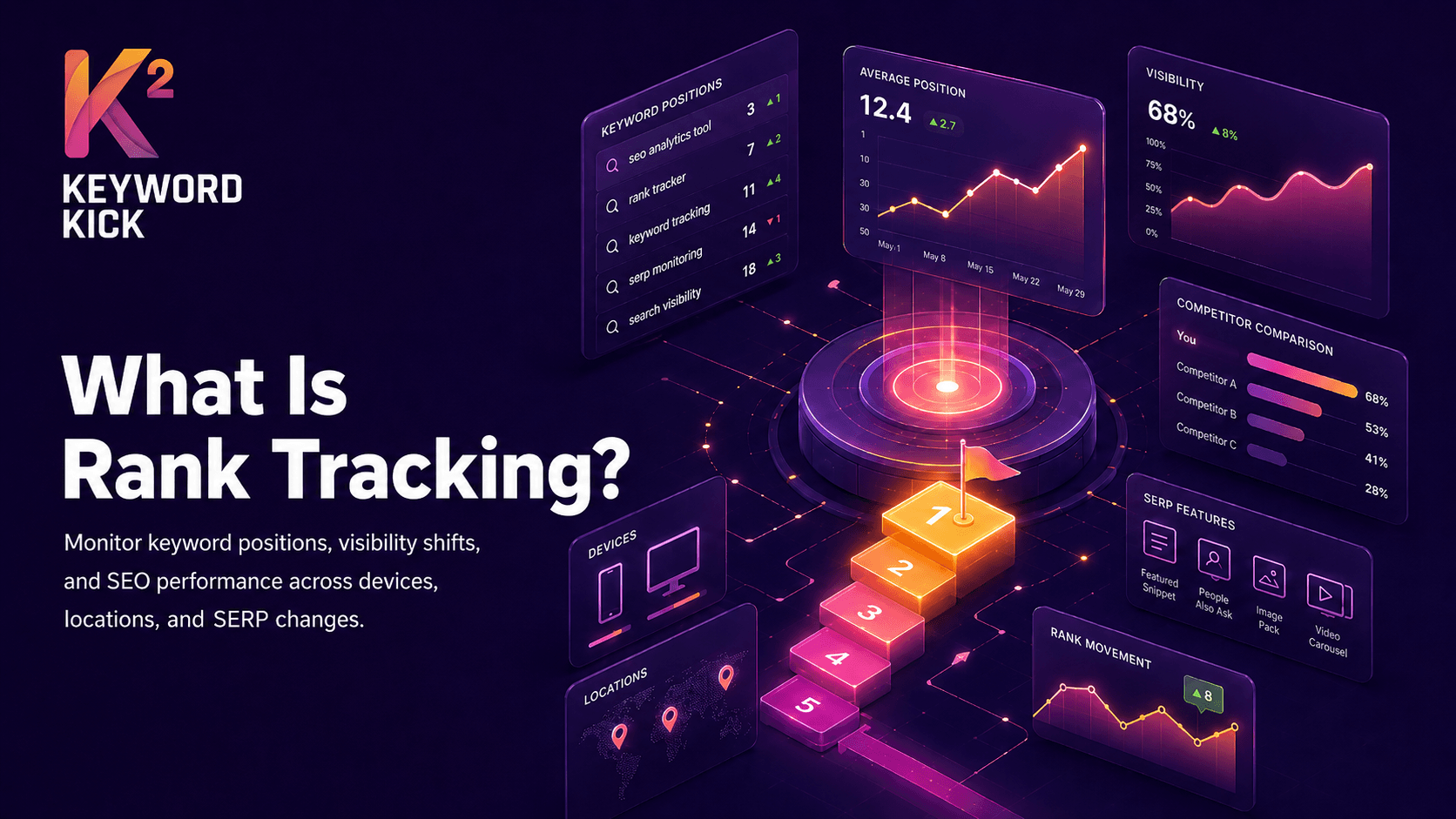
Rank tracking is the process of monitoring a website's position in search results for specific keywords over time, and modern platforms now do this across 107,000+ locations as search visibility shifts by device, geography, and search surface. In practice, rank tracking is a vital sign for SEO health because it shows whether your pages are gaining or losing visibility before you can explain what happened in traffic.
You probably know the feeling. Traffic dips on Monday, rebounds on Wednesday, then flattens out again. Search Console shows impressions moving one way, clicks another, and your top page still seems to rank “well” when you check manually.
That's where many get stuck. They look at rankings as a scoreboard, when rank tracking works better as a diagnostic system. It helps you see whether a content refresh helped, whether a technical release caused losses, whether competitors pushed you down, or whether the SERP itself changed around you.
Why Your SEO Rankings Are a Moving Target
A lot of SEO frustration comes from treating rankings like a fixed number. They aren't. They behave more like a stock ticker for your visibility. The line moves constantly, and one glance rarely tells you what matters.
A page can slip a few spots without hurting the business at all. Another page can hold roughly the same position and still lose clicks because the results page changed around it. That's why “we rank on page one” is often too shallow to be useful.
One common pattern looks like this. A team updates core pages, sees traffic wobble, and assumes the content change caused it. Then they discover a broader search shake-up was happening at the same time. If you follow Google algorithm updates in 2026 and what changed, you already know that ranking movement often has more than one cause.
One snapshot hides the real story
Manual spot checks create false confidence. You search a term, find your page, and think everything is fine. But that single search doesn't show where you ranked yesterday, last week, or across the rest of your keyword set.
What matters is the pattern:
A cluster drop: Several related terms slide together. That often points to a page-level or intent-level issue.
An isolated drop: One keyword moves while the rest stay steady. That usually calls for a SERP-level review before rewriting the page.
A visibility gain with flat traffic: Your page may now appear more often, but not in places that attract clicks.
Rank tracking earns its keep when traffic changes and you need to know whether the cause sits in rankings, CTR, query intent, or the shape of the SERP.
Without that history, teams guess. They rewrite headlines when the underlying problem is cannibalization. They blame technical SEO when a competitor launched a superior page. They celebrate a ranking increase that never turns into business impact.
What Is Rank Tracking and What Isn't It
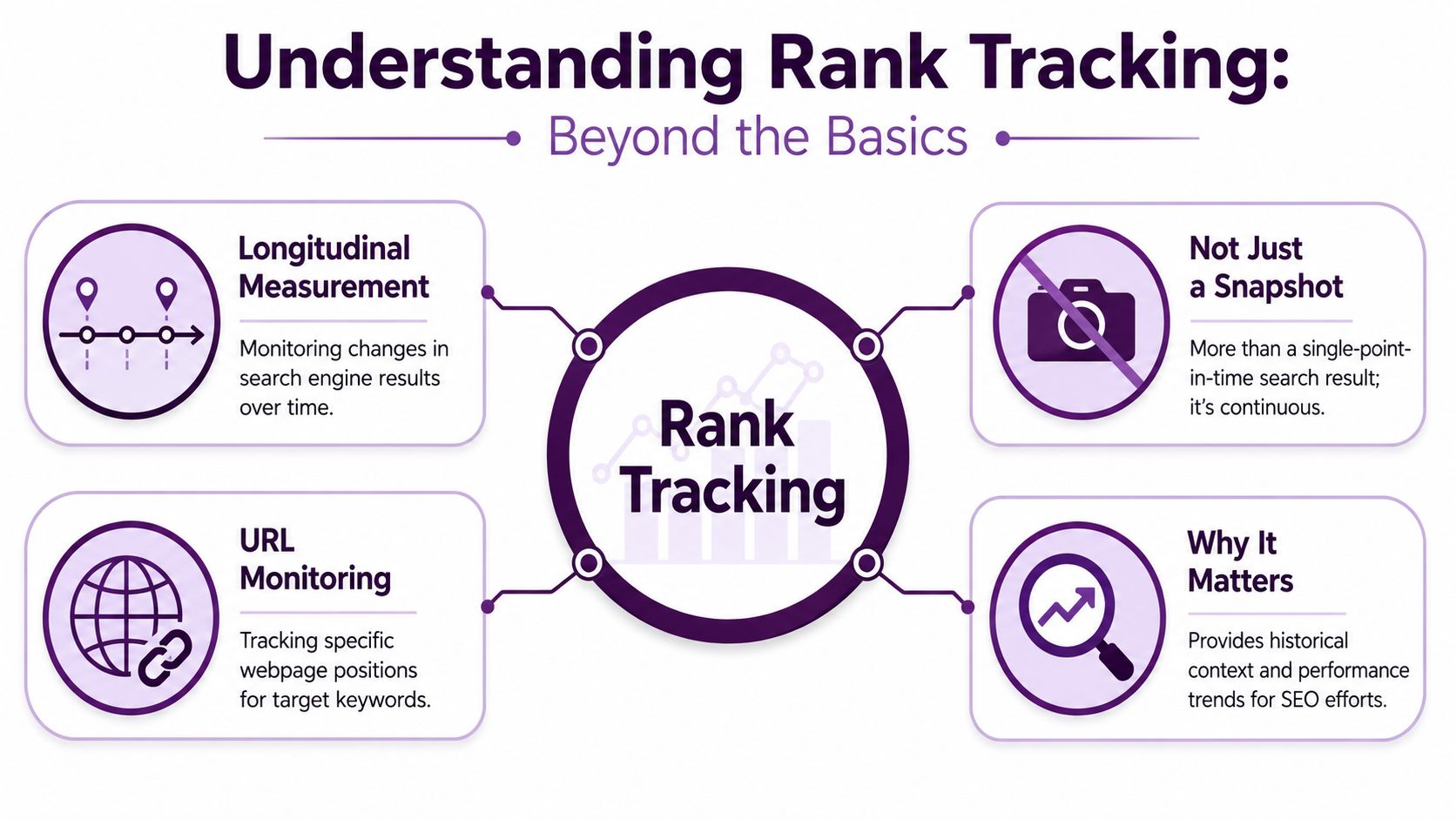
What is rank tracking? It's the ongoing measurement of where your URLs appear in search results for a defined keyword set over time.
That definition matters because rank tracking isn't just a static list of positions. According to Serpstat's explanation of rank tracking as a longitudinal measurement system, it records where a URL appears across time and adds context such as history, competitors, traffic distribution, and market-share context. That's the difference between a screenshot and a monitoring system.
Think like a doctor, not a scorekeeper
The best analogy is vital signs. A doctor doesn't look at one heartbeat reading and declare the full diagnosis. They compare readings over time, look for trends, and combine that signal with other evidence.
Rank tracking works the same way.
You define the patient: Your domain, pages, keyword groups, competitors, locations, and devices.
The tool records ongoing readings: Where each URL shows up in search over time.
You interpret change in context: A ranking gain on a low-intent query doesn't mean the same thing as a gain on a commercial page.
A single ranking change can produce very different outcomes depending on query intent, SERP layout, and whether the page sits on the first page or is buried deeper in the results. That's why serious rank tracking tools store historical positions and segment keywords into groups instead of dumping everything into one average.
What rank tracking isn't
Rank tracking gets misused when teams expect it to answer questions it can't answer alone.
It is not:
A traffic report: Better rankings don't guarantee more clicks.
A conversion report: A page can rank well and still attract the wrong audience.
A pass-fail grade for SEO: You can improve underlying SEO health before rankings visibly respond.
A single universal truth: Different users see different results depending on device, location, and search context.
Practical rule: Use rank tracking to ask better questions, not to end the investigation.
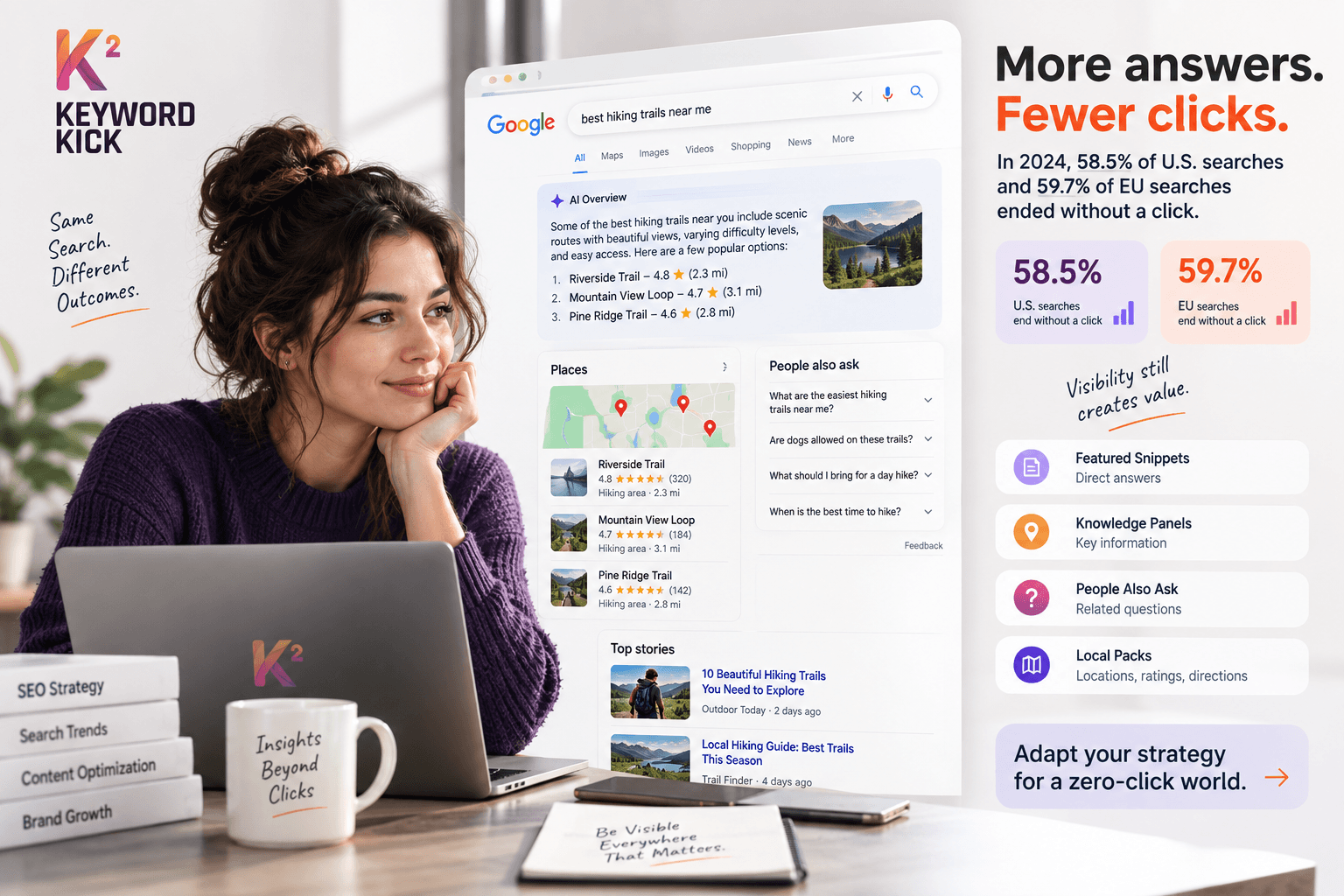
If a stakeholder says, “We moved up, so why didn't traffic grow?” that's not a contradiction. It's the point. Rank tracking tells you visibility changed. It doesn't tell you, by itself, whether users saw more ads, a video carousel, a local pack, or an AI-generated answer that soaked up attention.
The Mechanics Behind Tracking Your Rankings
Most rank trackers follow a simple operating model. You provide the keywords and settings. The system checks the results page for those searches. It records where your URL appears, then stores that data so you can analyze movement over time.
That sounds basic, but the value comes from consistency. If the same keyword gets checked on a steady cadence with the same rules, you can finally compare changes without the noise of manual searching.
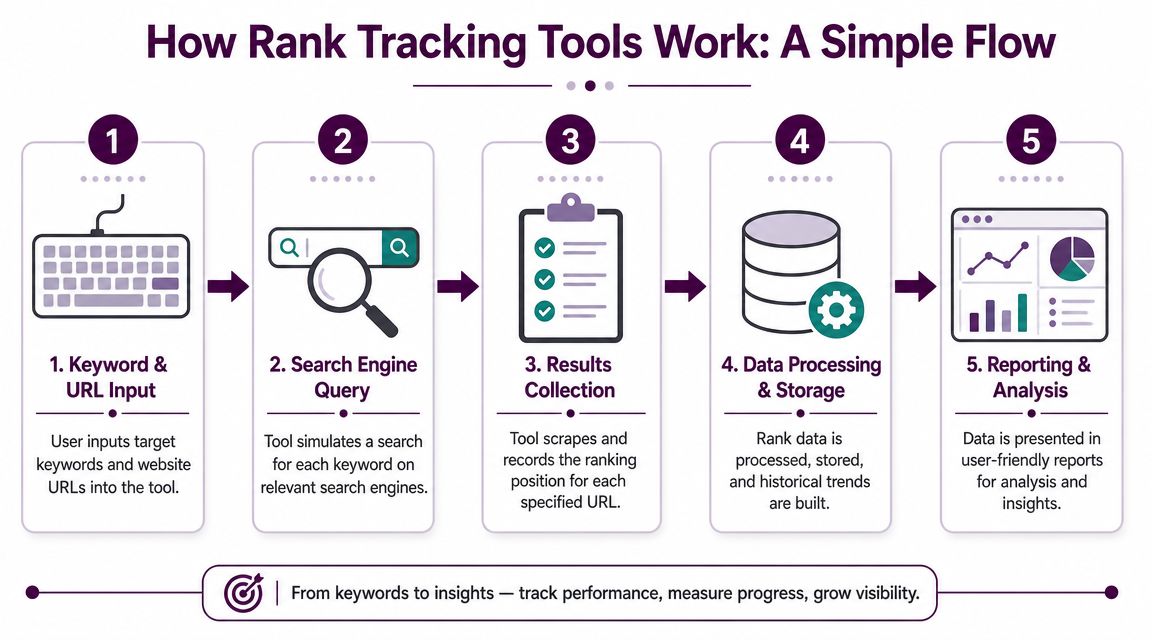
What the workflow usually looks like
Here's the practical flow behind most platforms:
Keyword and URL setup
You choose what to monitor. Good setups group keywords by page type, intent, market, or business priority.Search context selection You specify location, device, and often search engine because rankings can vary by all three.
SERP retrieval
The tool checks results for each query and identifies your URL's position.Data storage
Each reading gets saved into a historical record.Reporting and comparison
The platform shows trends, movement by keyword group, and competitor overlap.
If you need the setup side of this process, this guide on how to set up a rank tracking campaign step by step covers the operational basics.
Why cadence and segmentation matter
The collection method matters less than the discipline behind it. DAXRM's guidance on rank tracking workflows emphasizes consistent updates, daily tracking, device and local segmentation, and competitor comparison because rankings fluctuate by market, location, and search context.
That leads to a practical rule many teams miss: average position alone is incomplete.
A modern tracking setup should help you answer questions like these:
Which queries moved first: Did visibility change before traffic changed?
Which pages own the cluster: Is one page ranking for many high-intent queries, or are signals scattered across multiple URLs?
Where competitors are gaining: Did another domain push into your space on the same terms?
Whether the movement is local or broad: Are losses happening in one market, one device type, or across the board?
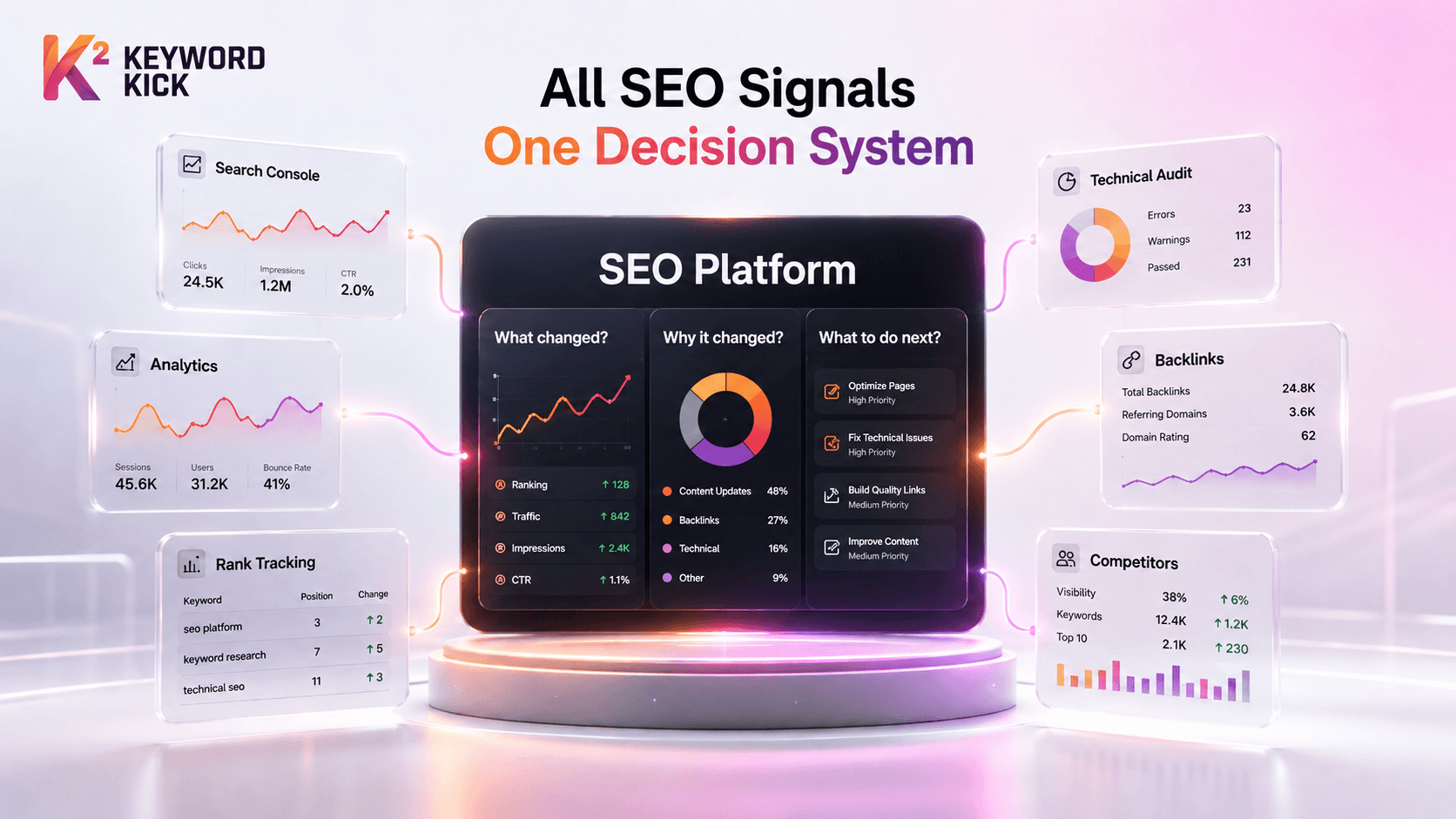
One platform category now bundles this with broader SEO data. For example, Keyword Kick combines rank tracking with Google Search Console, GA4, backlink, and technical SEO signals in one workspace, which makes the “why did this move?” analysis faster than switching between separate tools.
Types of Rank Tracking and Their Use Cases
There isn't one rank tracking setup that fits every site. The right model depends on how people search for your business and where search demand happens.
What makes this more complicated now is that the old idea of one classic Google results page no longer holds up. SE Ranking's position tracking overview notes the shift toward tracking across Google, Bing, YouTube, and DuckDuckGo, with coverage for 107,000+ locations, while other tools now highlight AI visibility. That changes the question from “What rank am I?” to “Where am I visible, and in what context?”
Choosing the right lens
The table below keeps the decision practical.
Tracking Type | Primary Goal | Who It's For | Key Metric to Watch |
|---|---|---|---|
Local tracking | Measure visibility in a specific city or service area | Local businesses, franchises, service providers | Position by city or location |
National tracking | Monitor broad market visibility across a country | E-commerce brands, publishers, SaaS companies | Trend by keyword group |
Global tracking | Compare performance across countries or languages | International brands and global teams | Market-by-market visibility |
Mobile tracking | Understand rankings in mobile search contexts | Any business with strong mobile discovery | Mobile position trends |
Desktop tracking | Monitor desktop-heavy research or B2B behavior | B2B sites, enterprise services, desktop-led journeys | Desktop position trends |
SERP feature tracking | See whether you appear in enhanced result types | Publishers, brands, content teams | Feature ownership and presence |
AI visibility tracking | Watch whether your brand or content shows up in AI-led surfaces | Teams adapting to newer search experiences | Presence across AI-driven search surfaces |
Where each type earns its value
Local tracking matters when a person in one city sees a different reality than a person in the next city over. For that setup, local SEO rank tracking by city is more useful than a national average.
National tracking fits sites that sell broadly and don't depend on one metro area. It helps content and category teams see whether visibility is rising across priority themes.
Global tracking becomes necessary when the same keyword behaves differently across markets. A page can be strong in one country and irrelevant in another, even when the language is similar.
Mobile versus desktop tracking is less optional than many teams assume. The same query can trigger different layouts, different competitors, and different click behavior.
SERP feature tracking matters whenever “ranking well” isn't enough. If a featured snippet, video result, local pack, or image block appears above standard listings, organic position tells only part of the story.
The more search fragments across devices, locations, and AI surfaces, the less useful one blended rank number becomes.
That's the trade-off. More segmentation gives you better answers, but also more data to manage. The fix is prioritization. Track rigorously where decisions depend on it. Track lightly where the stakes are lower.
Benefits and Limitations of Rank Tracking
Rank tracking is one of the most useful SEO systems you can run. It's also one of the easiest to misuse.
The upside is obvious when you've ever had to explain a traffic drop to a client, a CMO, or your own leadership team. Historical rank data gives you evidence instead of guesses. The limitation shows up when someone stares at daily fluctuations and starts rewriting pages for the wrong reasons.
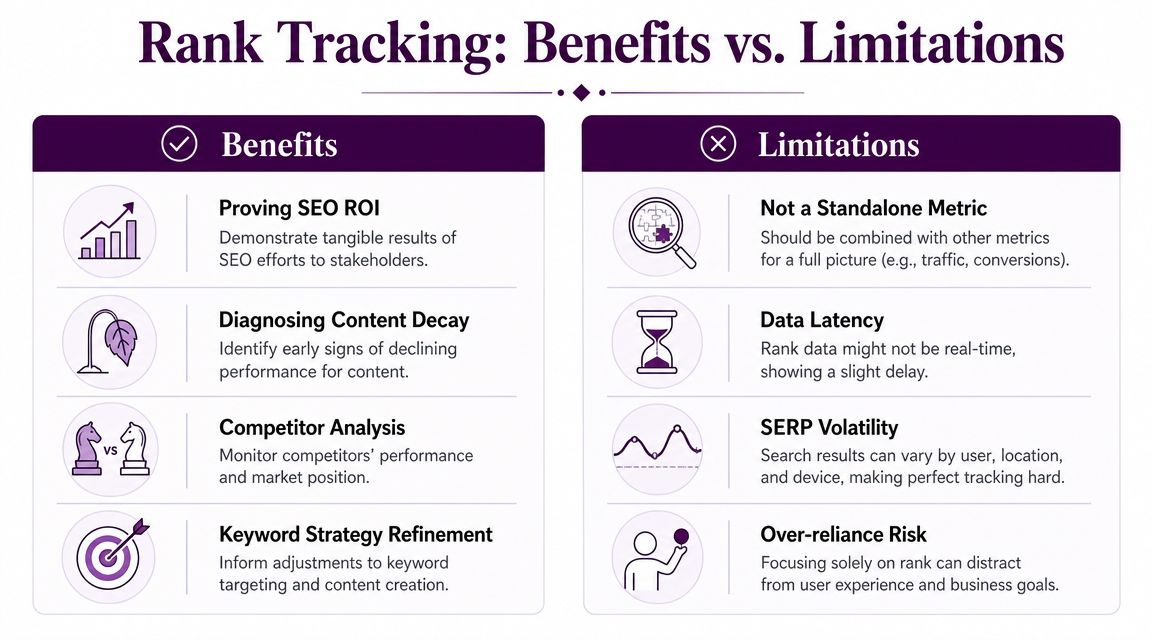
Where rank tracking helps most
Used well, rank tracking improves decision-making in a few reliable ways:
Proving movement over time
When you refresh content, publish new pages, or fix technical issues, rank history helps you verify whether visibility followed.Catching decay earlier
Traffic is often a lagging signal. Rank movement can show that a page is softening before the traffic report makes the problem obvious.Finding quick wins
Pages hovering near stronger visibility often need refinement, not a full rebuild. Rank groups help you spot those opportunities faster.Watching competitors in the same SERP
Search is competitive by definition. If you gain, someone else often loses. Tracking both sides gives you a clearer read on what changed.
Where teams go wrong
The biggest failure mode is obsession with noise.
A rank tracker checks reality at intervals. Search results themselves are fluid. If you treat every movement like an emergency, you'll burn time and create churn in pages that may not need any change.
Common traps include:
Overreacting to short swings: Small daily movement can be normal.
Looking at one keyword in isolation: Clusters tell a truer story than individual terms.
Treating rank as the business result: Visibility matters, but clicks and conversions decide impact.
Ignoring personalization and SERP variation: A tracked position is a structured baseline, not a universal experience.
A rank tracker gives you a repeatable baseline. It does not recreate every user's exact search experience.
That distinction matters more now than it did a few years ago. Personalized results, changing layouts, and AI elements all make “the rank” less absolute than many reports imply.
The best teams use rank tracking as one layer in an evidence stack. They don't throw it out because it has limits. They also don't treat it like a complete answer. That middle ground is where the tool becomes useful instead of distracting.
How to Turn Rank Data Into SEO Strategy
The jump from dashboard to action is where approaches either gain clarity or lose their way. Rank data only becomes strategy when you connect it to page type, search intent, and click behavior.
That matters most in the scenarios people find confusing. The classic one is simple: rankings improve, but traffic falls anyway. That sounds like bad data until you realize rank tracking and traffic tracking measure different things.

According to Clearscope's explanation of rank tracking versus traffic tracking, rank tracking is not the same as traffic tracking, and if rankings improve while traffic falls, the first checks should be CTR, search intent, and SERP layout changes. Google Search Console also treats position as one dimension of search performance, not the full story.
A practical interpretation framework
When rank data changes, work through it in this order:
Check the keyword group, not just the single term
If one keyword moved, inspect the SERP. If a cluster moved, inspect the page or site.Compare rank movement with Search Console CTR
Higher position with lower CTR often means the result became less compelling or the page got displaced visually.Review SERP layout changes
If the query now surfaces videos, local results, or AI answers more prominently, clicks can shift even when your tracked rank improves.Reconfirm intent match
A page can climb for a query that no longer sends the kind of visitor you want.Look for ownership gaps
Sometimes a page ranks, but another format wins attention. If video is now prominent in the SERP, stronger YouTube channel promotion strategies can support visibility beyond the page itself.
What smart teams actually do with the data
The most effective workflows are simple:
Trend first: Watch movement over time instead of chasing every fluctuation.
Segment by intent: Informational and transactional keywords rarely deserve the same response.
Map keywords to URLs: That's how you catch cannibalization and weak page ownership.
Annotate major changes: Track content updates, migrations, and technical releases beside ranking history.
Tie reporting to decisions: Every report should answer what to do next, not just what moved.
A useful question: “What changed in the search experience for this query?” That usually gets you further than “Why didn't position fix everything?”
That shift in thinking is the key benefit. Rank tracking stops being a report you send upward and becomes a system your team uses to diagnose visibility, prioritize fixes, and explain search performance without guessing.
If you want a single place to analyze ranking movement alongside GA4, Google Search Console, backlinks, and technical SEO signals, Keyword Kick is built for that workflow. It helps teams move from “what changed?” to a prioritized action list, which is where rank tracking starts paying off.