You already know the pattern. A page that used to hold its ground starts slipping. Rankings soften week by week. Traffic looks weaker, but not broken enough to trigger panic. The team reviews competitors, checks for update fallout, rewrites a few headings, and waits.
Sometimes that story is wrong.
The biggest SEO losses I see now aren't always caused by a stronger competitor or a broad algorithm change. They're often caused by your own site creating internal conflict that no one noticed because the pages look healthy in isolation. That's where agent seo starts to matter. Not as a content spinner or a faster reporting layer, but as a system that joins data sources, spots hidden conflicts, and tells you what to fix first.
The Hidden Drain on Your SEO Performance
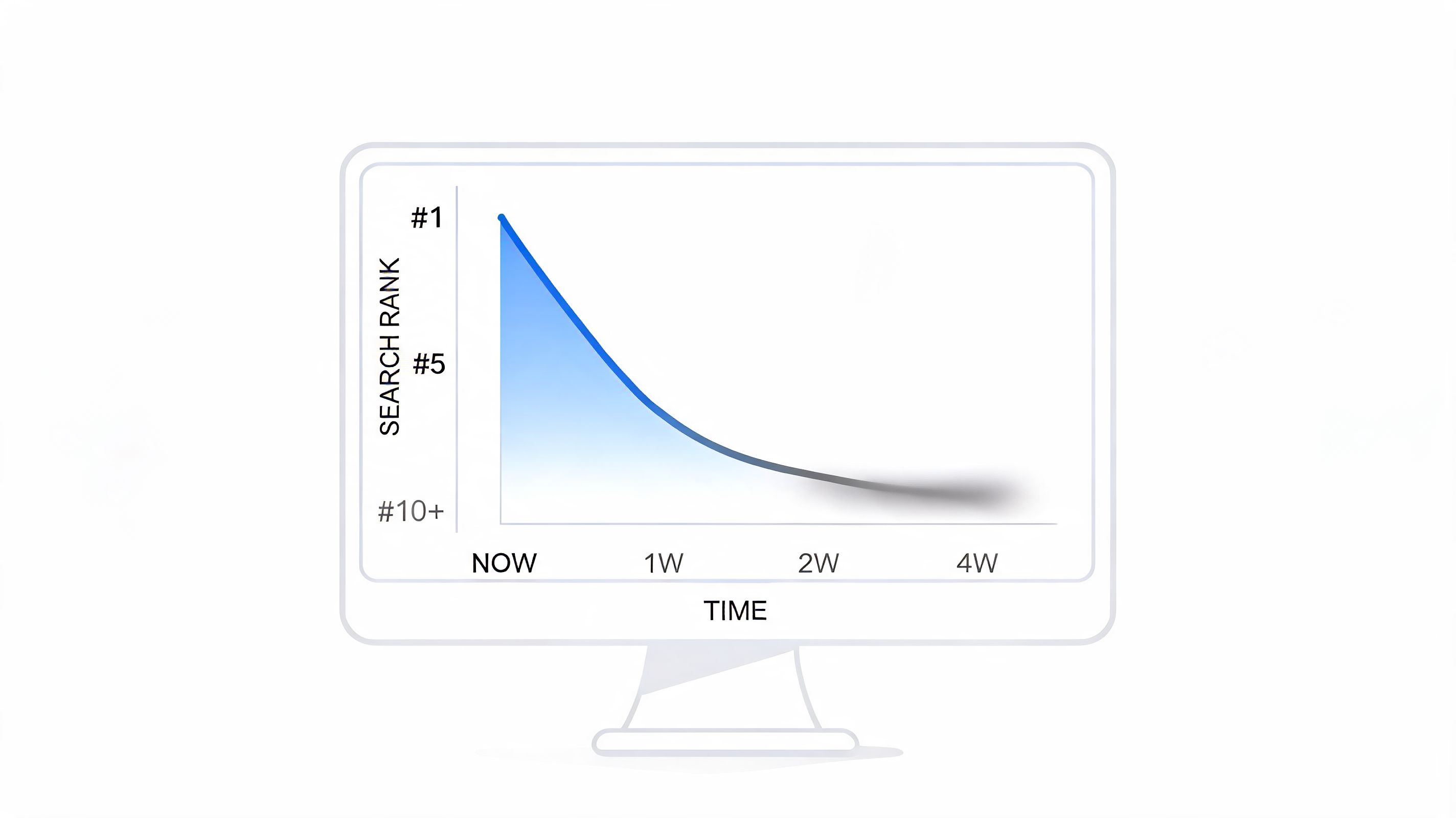
One of the clearest examples came from a client with a high-traffic page that had been losing position gradually over six months. A manual review would have blamed competitors or algorithm shifts. That would've been a reasonable guess, and it would've been wrong.
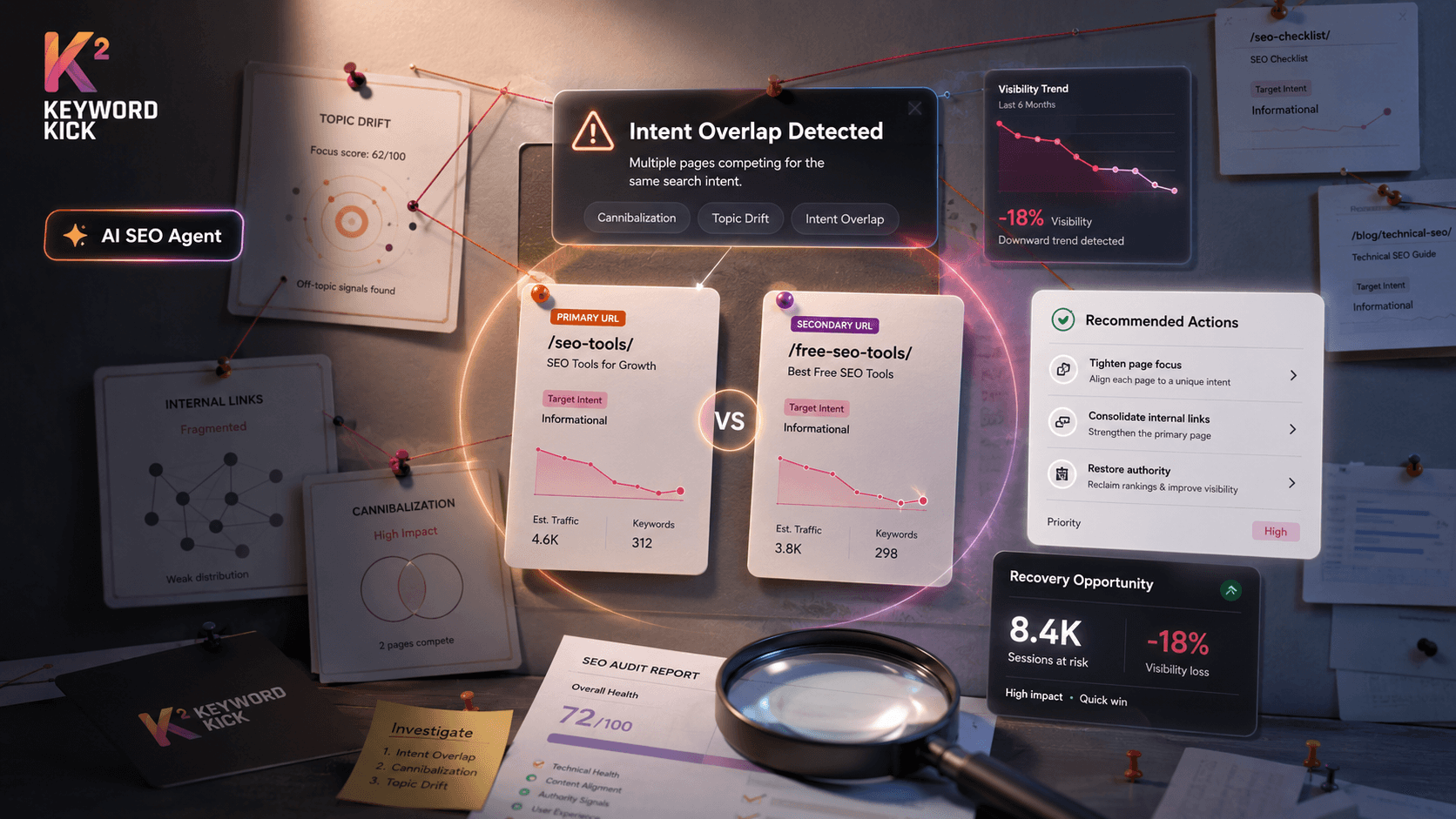
An AI SEO agent traced the problem to topic drift. A sibling page had been edited over time until it overlapped the original page's intent. Google started rotating between the two URLs instead of treating one as the clear result. The site was splitting its own relevance.
What manual review missed
This kind of issue is hard to catch in a traditional audit because both pages can still rank. Neither page looks obviously broken. There are no crawl errors screaming for attention. No one sees a single red flag in Search Console unless they compare query-to-URL behavior closely enough.
The fix was simple once the cause was clear. Tighten the sibling page's focus. Rebuild the internal link hierarchy so the primary page becomes the clear authority. The implementation took 45 minutes. The position recovered within a month, and the client regained an estimated 8 to 10k monthly organic sessions they had been leaking internally.
Practical rule: If a page declines slowly while indexation, links, and page health look stable, check for internal intent overlap before you blame the market.
This is why agent seo matters. It doesn't just automate the obvious work. It catches patterns that only appear when you join ranking data, URL behavior, and intent classification at scale.
A lot of teams spend too long reacting to symptoms instead of isolating causes. If you're trying to improve organic traffic with a clearer diagnosis process, this is one of the fastest places to find hidden waste.
Where the drain usually hides
In practice, these losses tend to come from a short list of problems:
Edited pages that drift off purpose and start targeting a query owned by another URL
Old blog posts that never got consolidated after a better guide or landing page was published
Internal links that send mixed signals about which page should rank
Healthy-looking duplicates that split impressions and clicks without triggering obvious alarms
Manual SEO can catch these issues. It just usually catches them late.
What Exactly Is an Agent SEO
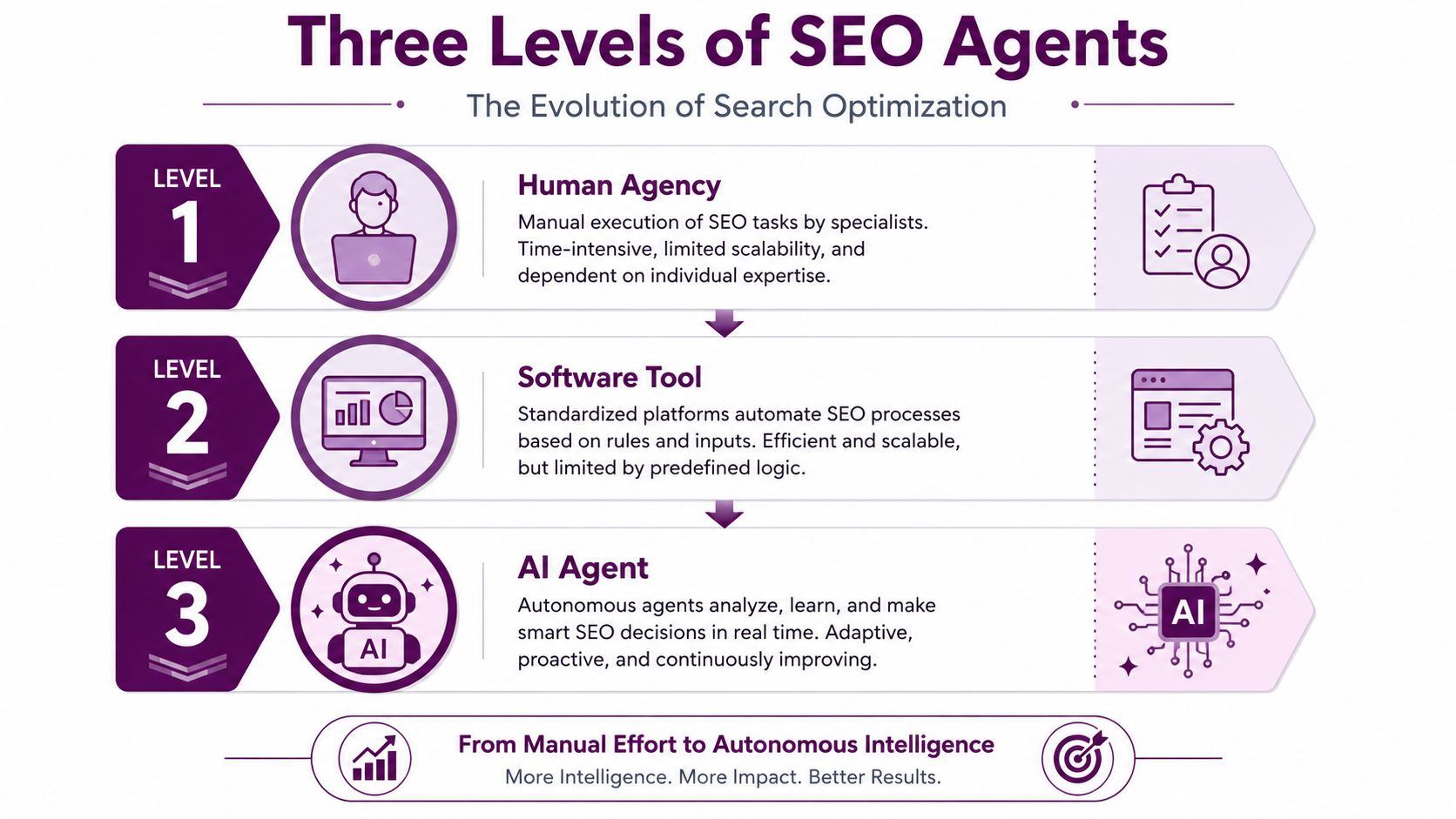
The term agent seo gets used loosely, which is why teams often talk past each other. Sometimes they mean a freelancer. Sometimes they mean automation. Sometimes they mean an AI system that can reason across multiple datasets and recommend an action.
Those are three different things.
Three levels of SEO agents
Level | What it is | What it does well | Where it falls short |
|---|---|---|---|
Human SEO agent | Agency, consultant, or in-house specialist | Strategy, judgment, prioritization | Slow on repetitive data work |
SEO automation | Scripts and software workflows | Rank checks, site crawls, scheduled alerts | Doesn't reason well across conflicting signals |
AI SEO agent | A connected system that analyzes and recommends actions | Finds patterns, prioritizes work, drafts next steps | Still needs oversight on high-stakes changes |
A human SEO agent is still the strategist. That's the person or team you trust to decide whether a cannibalization fix should be a redirect, a rewrite, or a split.
Automation is narrower. It runs predefined tasks. Think rank tracking, crawl monitoring, metadata checks, or broken-link detection. Useful, but not interpretive.
An AI SEO agent sits in the middle of your operating system. It connects sources like Search Console, analytics, rank tracking, and crawl data. Then it asks a more useful question: what is happening, why is it happening, and what should happen next?
Why this shift happened
The search environment forced this change. Google holds about 89.9% of global search market share in 2026, and zero-click searches account for about 60% of queries, according to these search statistics compiled by Incremys. That means classic rank-chasing isn't enough. Visibility now depends on SERP features, intent, and whether the query produces a click at all.
That context matters because an AI agent isn't valuable just because it saves time. It's valuable because search got more fragmented at the results level while staying highly concentrated at the platform level.
The best agent seo setups don't replace judgment. They reduce the time you spend discovering the problem so you can spend more time deciding the right fix.
If you want a clean way to think about the transition, this explanation of moving from dashboard SEO to AI-guided SEO captures the operational shift well. The main change is that the system stops being a passive reporting layer and starts becoming an active decision layer.
What an agent should actually do
A serious SEO agent should be able to:
Connect live data sources so recommendations come from current performance, not static exports
Classify intent across queries and URLs
Surface conflicts such as cannibalization, topic drift, and mismatched content types
Prioritize actions instead of dumping a long issue list on the team
Draft remediation steps that a specialist can review and approve
If it only generates content briefs and titles, that's not really agent seo. That's a writing assistant with an SEO label.
The Tangible Benefits Uncovered by SEO Agents
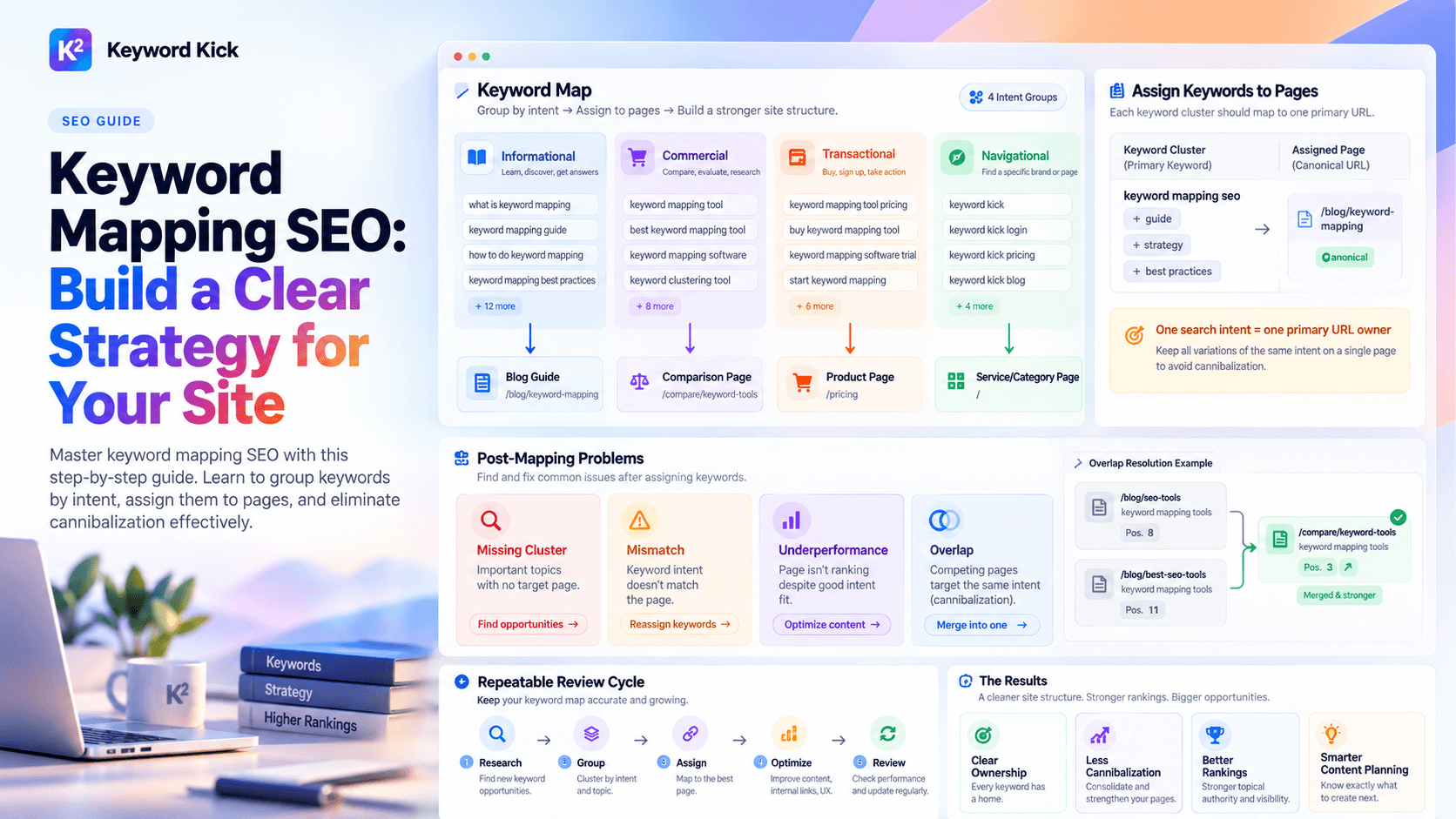
A pattern shows up on mature sites all the time. Two URLs look healthy in isolation, both attract impressions, neither appears broken, and the team leaves them alone. Then an agent maps queries to URLs, layers in intent, and exposes that both pages are competing for the same search demand.
A SaaS site I worked on had that exact issue. Its main guide ranked #6 for the target query, while an older blog post sat at #14 for the same term cluster. A standard page-by-page review would have passed both URLs. The agent flagged a near-duplicate intent cannibalization conflict and showed the overlap clearly enough that the fix became obvious.

The fix that manual research overlooked
The recommendation was straightforward:
301 the older blog post into the stronger guide
Consolidate internal links so one URL became the clear destination
Tighten on-page targeting so the surviving page fully matched the informational intent
After the merge, the guide moved to #3 within about three weeks. Impressions for that query increased by roughly 60%, and CTR improved with it.
That kind of gain is common enough to matter. The hard part is spotting the conflict early, especially on sites with hundreds or thousands of URLs. Agents do that well because they review relationships between pages, not just page-level metrics.
Why small rank gains produce outsized results
According to SE Ranking's SEO statistics, organic traffic represents 46.98% of all website traffic, and the #1 organic result has an average CTR of 39.8%. A move from the lower half of page one into the top positions can change traffic materially, even if you publish nothing new.
That is why the best agent workflows focus on friction removal before content expansion. They find cases where existing authority is being diluted across overlapping URLs, mismatched formats, or weak internal linking.
One practical extension of this is content refresh and alignment. Teams that pair agents with structured AI content optimization tools for on-page updates can move faster on rewrites after the issue is diagnosed, but the lift usually comes from better prioritization, not from automation alone.
What agents consistently catch
The strongest agents produce value in three areas.
First, they surface internal competition. That includes cannibalization, overlapping intent, and multiple pages chasing the same SERP format.
Second, they improve triage. Large sites do not suffer from a lack of issues. They suffer from a lack of ordering. An agent can sort opportunities by likely upside, implementation effort, and confidence level so the team does not spend a week fixing low-impact noise.
Third, they reduce analysis time on repetitive work. Pulling Search Console query data, matching it to rank tracking, checking crawl status, and drafting a remediation brief is tedious. Agents can handle that sequence quickly and consistently if the inputs are clean.
Where agents still need a strategist
Agents are weak at judgment calls tied to positioning.
They can identify that two pages should stop competing. They cannot decide whether the surviving page should sound like product marketing, sales enablement, or customer education unless you define that standard up front. They can propose the consolidation. The strategist still decides the narrative, the trade-off, and what success should look like after the change.
That is the actual benefit. SEO agents do not replace expertise. They make expert time more valuable by shortening the path from messy data to a decision the team can act on.
A Practical Guide to Implementing an SEO Agent
Monday morning. Search Console is down one set of pages, rankings are flat on another, and the content team wants a brief by noon. An SEO agent helps only if it is connected to the right inputs, scoped to a narrow job, and forced to show its reasoning. Without that, it produces polished noise.
That is why implementation matters more than model choice.

The first three inputs I always feed an agent
The first pass should rely on inputs that explain page ownership and search behavior, not vanity metrics.
Google Search Console query by URL data
This is the baseline. It shows which queries each page earns impressions and clicks from, which makes overlap visible fast. If an agent cannot map queries to URLs, its recommendations are guesswork.Intent classification on top queries
Query overlap alone is not enough. Two pages can target similar terms but deserve to exist if the intent differs. Labeling top queries by informational, commercial, and navigational intent gives the agent a rule set for consolidation, expansion, or separation.Page-level performance signals Indexation status, crawl state, and Core Web Vitals keep the diagnosis honest. I do not want an agent recommending a rewrite when the actual problem is that Google is only indexing part of the page set.
Search volume and link data still matter. They matter after the agent can answer a simpler question: which page should own which topic today?
The first three setup steps
Teams get better results when they configure the agent around one repeatable workflow first. Cannibalization triage is a good starting point because the inputs are clear and the output is easy to review.
Use this sequence:
Connect core sources first
Start with Search Console, GA4, rank tracking, and your crawl data. Ad platform data can help later, but it is rarely needed for the first diagnostic pass.Define the decision rules before the first run
Set rules for what counts as overlap, what level of traffic loss merits escalation, and when the agent should recommend consolidation versus internal linking or on-page differentiation.Force the output into a fixed brief format
Ask for affected URLs, overlapping query clusters, likely cause, recommended action, confidence level, and required reviewer. If the format changes every run, the team will stop trusting it.
One practical option is Keyword Kick, which connects GA4, Google Search Console, rank tracking, backlinks, and technical SEO signals so its K² agent can turn fragmented SEO data into prioritized actions. That helps when you want one system to move from diagnosis to recommended next steps instead of stitching several tools together manually.
What the workflow should produce
A useful implementation produces work a team can approve, assign, and ship.
A ranked issue list with estimated impact, confidence, and likely cause
An opportunity brief that names the affected URLs, query clusters, and recommended fix
Clear separation between technical issues and content issues so developers, SEOs, and writers are not solving different versions of the same problem
Approval gates for redirects, merges, canonicals, and large rewrites
On a large site, the time savings become evident. The gain is not magic content generation. It is faster diagnosis, fewer handoffs, and less time spent rebuilding the same spreadsheet every month.
If you are also reviewing your content workflow, this guide to AI content optimization tools is a useful companion because it separates content assistance from broader SEO decision support.
What this looks like in practice
A good rollout changes the weekly operating rhythm.
Instead of asking for a fresh audit every month, the team reviews a queue of prioritized conflicts and exceptions. One B2B workflow I have used follows a simple pattern: the agent pulls query-by-URL data, flags pages with overlapping intent, checks indexation and template issues, then drafts a short remediation brief. The strategist approves the action. The writer or developer executes it. The next run checks whether the conflict narrowed or shifted.
That setup avoids a common failure point. Teams often ask the agent for strategy too early. It performs better when it handles diagnosis, clustering, and briefing first.
A short demo format makes this process clearer in practice:
What works and what usually fails
What works is disciplined scope. Clean inputs, fixed output formats, explicit review rules, and a narrow initial use case.
What fails is broad access with weak governance. If the agent can recommend rewrites, redirects, and internal linking changes without clear thresholds or human review, quality drops fast. Another common problem is missing context. A page may look redundant in query data but still serve a distinct sales, support, or product purpose that the model cannot infer on its own.
Start with one workflow. Get the inputs right. Review every recommendation pattern for a few cycles, then widen the agent's role only after the team can predict where it is reliable and where it still needs human judgment.
Measuring Success and Avoiding Common Pitfalls
The easiest mistake with agent seo is measuring the wrong thing. Teams get excited that the system produced more recommendations, more briefs, or more content ideas. None of that matters if the site isn't getting cleaner, clearer, and easier for search engines to interpret.
The more useful way to measure success is operational first, outcome second.
What to track
A strong measurement model usually includes a mix of leading indicators and search outcomes.
Measure type | What to watch | Why it matters |
|---|---|---|
Operational | Conflicts resolved, time to fix, approval backlog | Shows whether the system is improving execution |
Quality | Intent alignment, recommendation accuracy, false positives | Shows whether the agent is trustworthy |
Search impact | Rank recovery, stronger CTR patterns, better page ownership | Shows whether fixes are changing visibility |
You don't need a huge dashboard. You need a short list that tells you whether the agent is helping the team make better decisions faster.
Where teams get into trouble
The biggest failure mode is over-automation.
An agent can be right about the diagnosis and still create damage if it executes too aggressively. Mass redirects, large internal linking changes, and architecture edits need review. The recommendation may be sound, but implementation still has trade-offs that software won't fully understand on its own.
Treat the agent like a brilliant junior analyst. Let it investigate relentlessly. Don't let it rewrite the site without review.
Another common mistake is weak data hygiene. If your Search Console data is incomplete, your crawl data is stale, or your intent labels are inconsistent, the agent won't fix that. It will scale the confusion.
Governance is part of the system
The SEO role is shifting here. The job is moving from operator to strategist and systems designer, and that creates a real governance question: when should the team trust the agent, and when should it require explicit approval? The Women in Tech SEO piece on how AI agents can make SEOs more valuable frames this well. The practical issue isn't whether to automate. It's how to automate safely.
A workable governance model usually includes:
Low-risk auto approval for repetitive diagnostics and draft briefs
Human review for medium-risk changes such as content consolidation recommendations
Strict approval thresholds for high-risk actions such as redirects, template edits, and structural changes
What good teams do differently
The best teams don't ask whether the agent is "smart enough." They ask whether the workflow is controlled enough.
They define where the agent can inspect, where it can recommend, and where it has to stop. That's the difference between an SEO system that compounds good decisions and one that creates expensive cleanup work.
Conclusion From SEO Operator to SEO Strategist
Agent seo doesn't remove the need for SEO expertise. It removes some of the manual labor that used to consume it.
That's where the true shift lies. The value is no longer in being the person who can spend a day exporting data, merging tabs, and manually spotting cannibalization patterns. The value is in deciding which conflicts matter, which page should win, and how a fix supports the wider business strategy.
That change is healthy for the discipline.
The routine parts of SEO are increasingly better handled by systems that can monitor rankings, compare query-to-URL relationships, cluster topics, and flag technical drag continuously. Human specialists are still needed for judgment, sequencing, stakeholder alignment, and the trade-offs that happen when search goals collide with product, brand, or revenue goals.
The future SEO team isn't smaller because of agents. It's sharper because the repetitive work stops crowding out the strategic work.
If you're using agent seo well, you're not handing over strategy. You're building an operating system where machines handle detection and synthesis, while humans handle intent, priority, and risk.
That's a better model than the old one. It catches hidden losses faster. It shortens the path from diagnosis to action. And it gives SEO leaders more time to work on the problems that move the business.
If you want to see how this model works in practice, Keyword Kick lets you connect your SEO data sources and use its K² agent to surface cannibalization, keyword gaps, technical issues, and prioritized next steps without relying on disconnected dashboards.