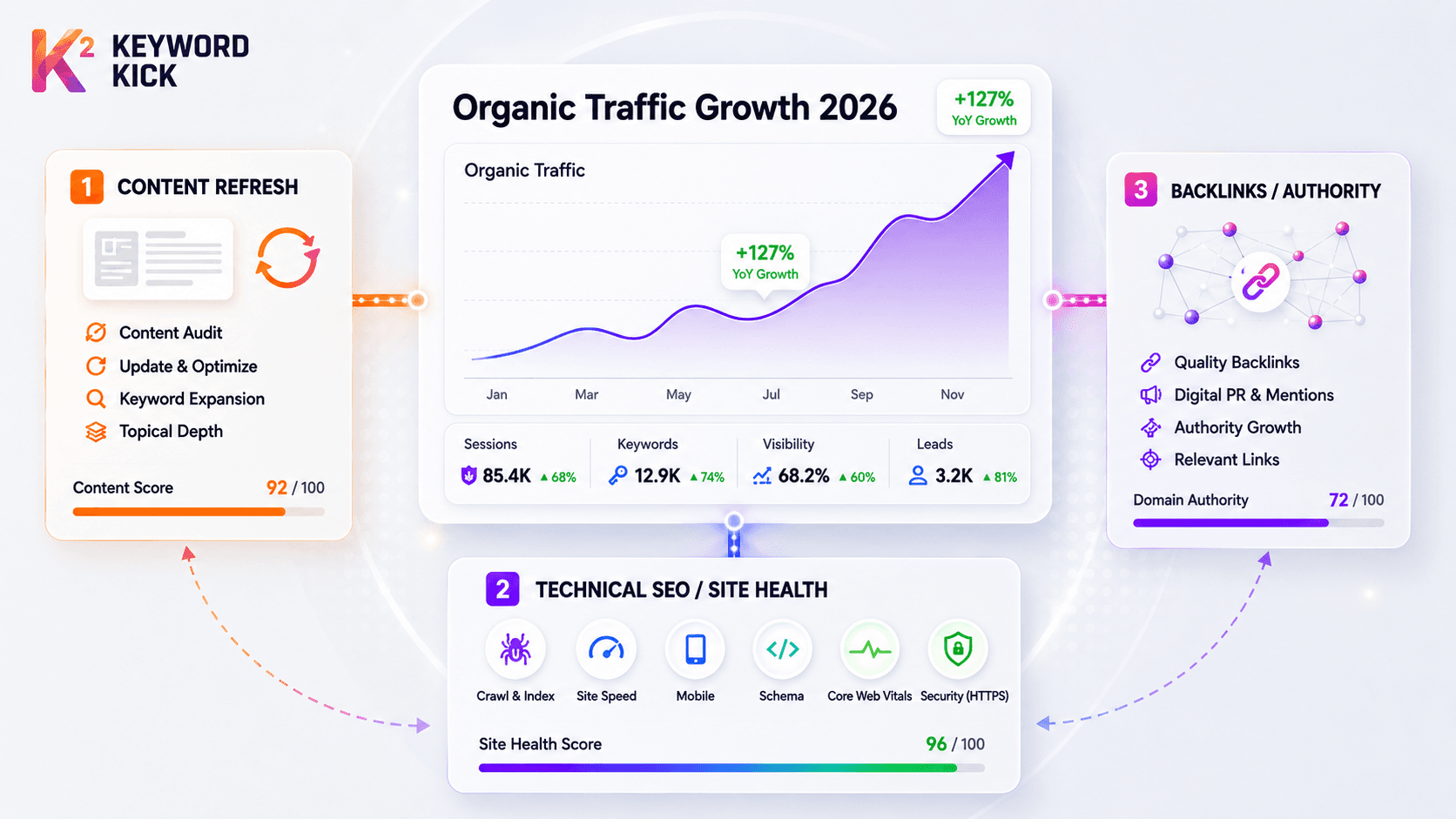
To actually improve your organic traffic, you need to work on three fronts at once: creating high-quality, relevant content, making sure your site is technically sound for search engines, and building authority through backlinks. A solid strategy doesn't just dabble in one; it integrates all three for growth that lasts.
Diagnosing Your Organic Traffic Performance
Before you can fix anything, you have to know what's broken. Think of this as a health check for your website. The first step is always to dive into your Google Analytics and Google Search Console data to get a clear baseline. Forget vanity metrics like total visits for a moment; the real story is in the details.
Your goal here is to spot traffic dips, identify pages that are underperforming, and map out where you currently stand with your keywords. So, what are the metrics that actually matter?
Click-Through Rate (CTR): Are your page titles and meta descriptions compelling enough to earn the click in the search results?
User Engagement: What happens after they click? Metrics like bounce rate and time on page tell you if users are finding what they expected.
Keyword Rankings: Which keywords are you ranking for, and where? Pages stuck on page two of Google are your lowest-hanging fruit.
This simple four-step workflow helps turn that raw data into a real, actionable plan.
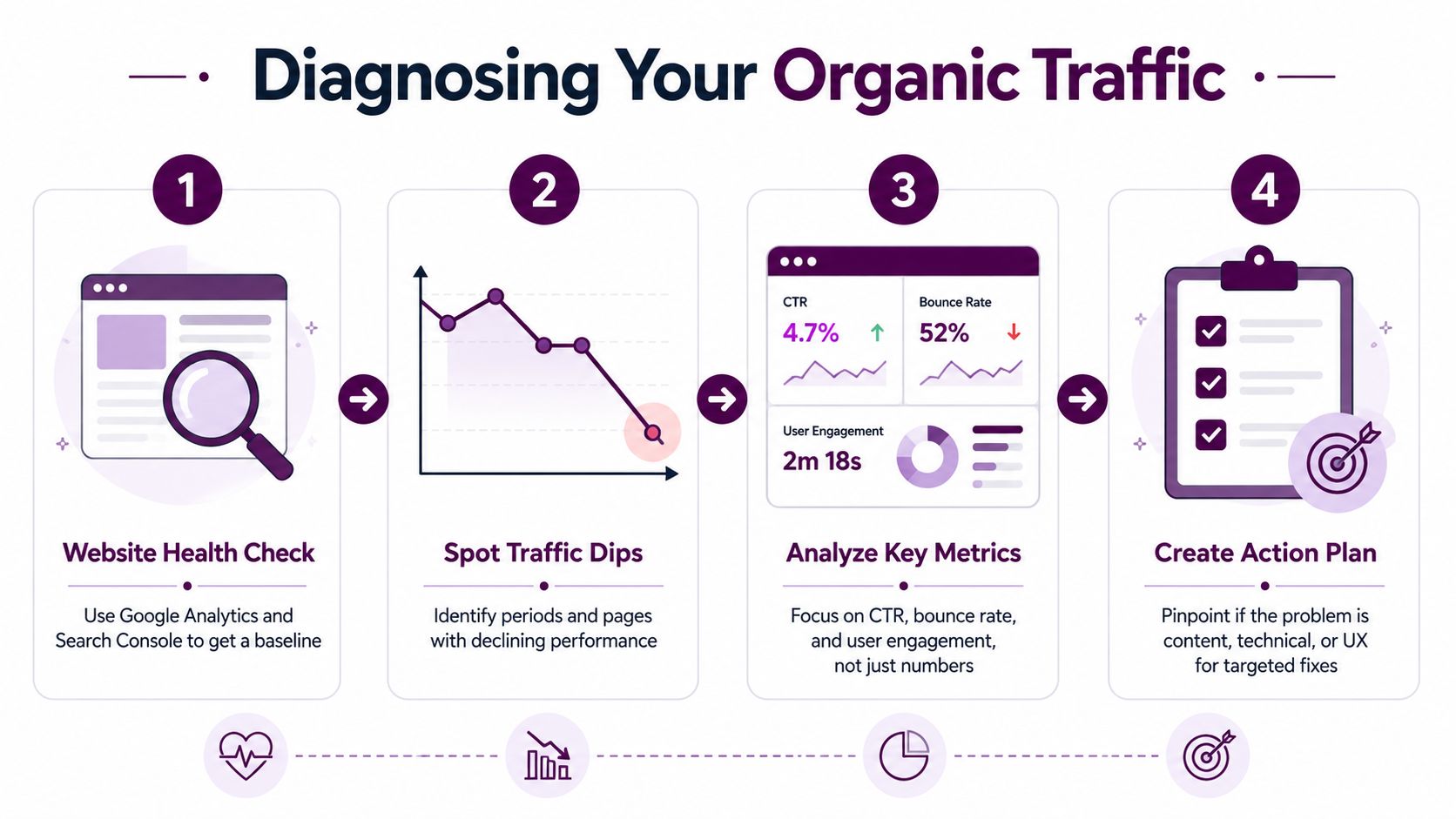
Following a process like this helps you move from just looking at numbers to creating a specific action plan. It pinpoints whether your biggest problems are with your content, your technical setup, or the user experience itself.
From Data to Action
Once you've got this initial data, you can start asking the right questions. A high bounce rate on a specific, important page, for instance, is a major red flag. Users decide in about 3 seconds whether to stay on a site, so page quality and relevance are everything. If people are leaving that quickly, you need to figure out why. Is the content a mismatch for the search query? Is the page a usability nightmare?
A successful diagnosis isn't about collecting numbers; it's about turning that data into a prioritized to-do list. Your analysis should clearly answer one question: "Where can I apply my effort for the biggest traffic impact?"
Ultimately, this diagnostic phase is what sets the stage for every other SEO task you'll do. To get a broader view of how all these pieces fit together, you can find general strategies to increase website traffic with Cometly that are fundamental to building your online presence.
Breathe New Life Into Your Content to Fill Critical Gaps
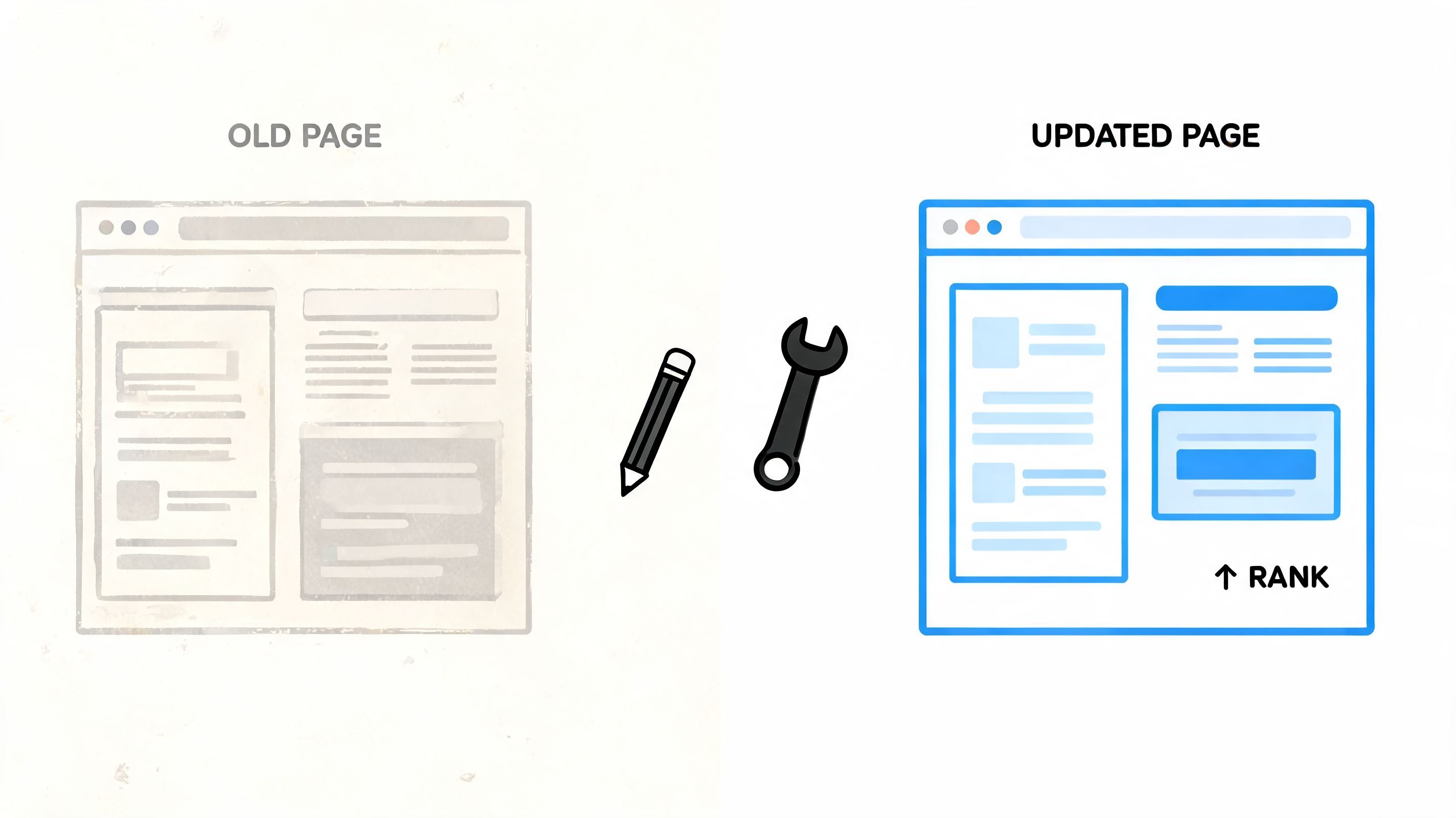
The fastest way to bump up your organic traffic isn't always grinding out brand-new content. More often than not, the real gold is buried in what you already have. A strategic content refresh can unlock that hidden potential and deliver measurable results—sometimes in just a few weeks.
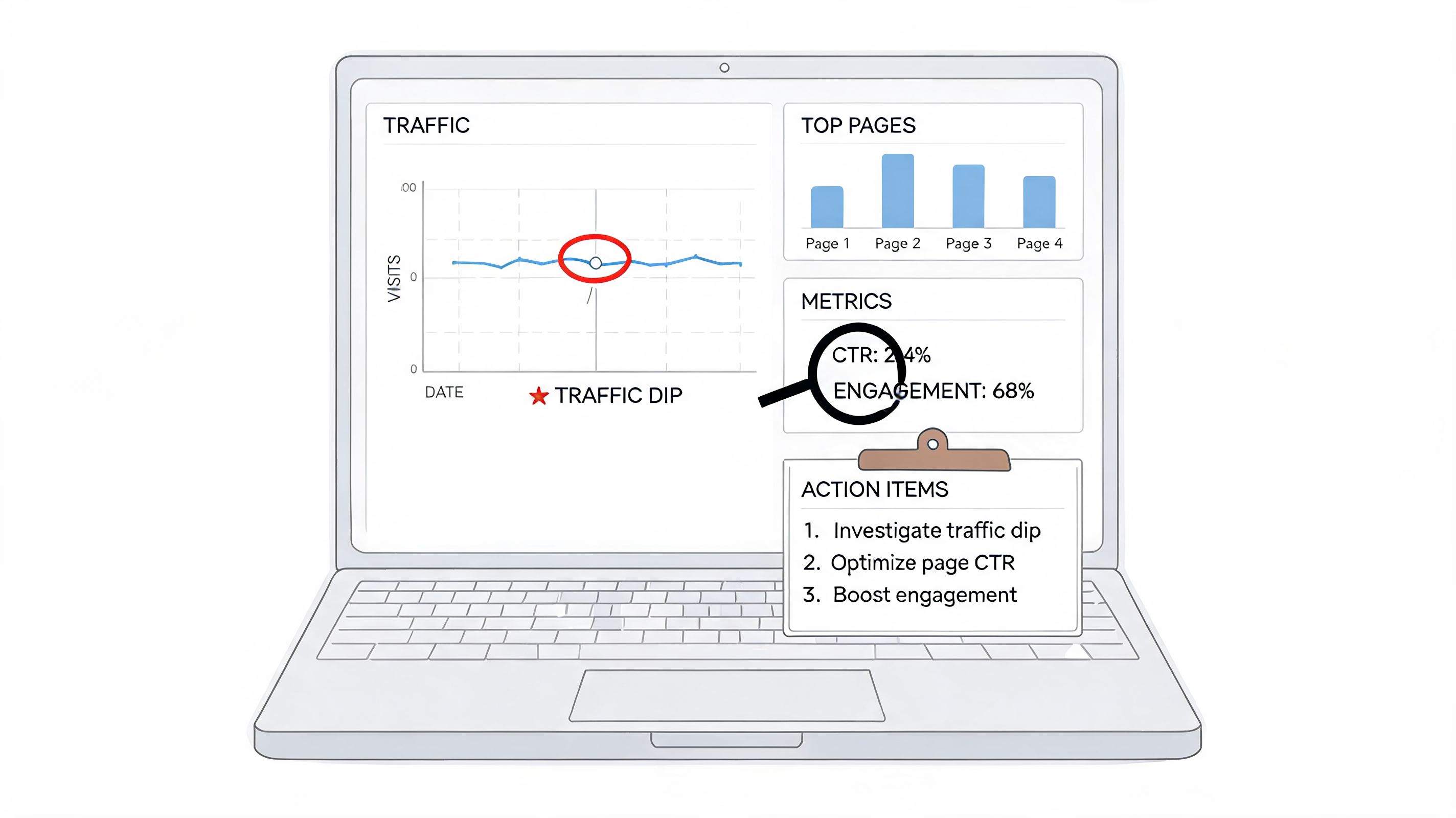
The first thing to do is a content audit, and your first stop should be Google Search Console. You're looking for pages that are stuck on the second page of Google for valuable keywords. I call these "striking distance" pages, and they should be your top priority. A small, targeted update can often be enough to push them into the top positions, where click-through rates jump dramatically.
Think about it: a blog post that’s ranking at position 12 for "how to prepare for a performance review" is a prime candidate. It’s already proven its relevance to Google; it just needs a little more horsepower to break into the top 10.
How to Prioritize Your Content Refresh Efforts
Instead of just guessing where to start, let the data guide you. A content audit helps you spot those underperforming or decaying pages that are ripe for an update. This is all about working smarter by focusing on the assets with the highest potential for growth.
An effective framework really comes down to three repeatable levers:
Targeting topics people are actively searching for.
Filling content gaps versus what your competitors offer.
Refreshing outdated or stale pages.
This matters because traffic is won by aligning content with what people want and improving what you have, not just by hitting "publish" more often. For a deeper dive, you can find more on this content-first approach at Loganix, a valuable resource for SEO professionals.
To find these opportunities, I always look for a few common symptoms. These point directly to the highest-impact fixes you can make.
High-Impact Content Refresh Opportunities
This table breaks down common symptoms and the specific SEO actions to take. It's a quick way to diagnose and prioritize your refresh efforts.
Symptom | Description | High-Impact Action |
|---|---|---|
High Impressions, Low Clicks | The page is ranking on page 2 (positions 11-20) and getting seen but not clicked. | Rewrite title tag and meta description to improve CTR. Add internal links. |
Traffic Decay | A page that used to perform well has seen a steady decline in traffic over the past 6-12 months. | Update outdated information, add new sections, and republish with a new date. |
Outranked by Weaker Content | You're losing to competitors with less authoritative domains or thinner content. | Perform a gap analysis. Add missing subtopics and improve content depth. |
Low Time on Page | Users click through but leave quickly, indicating the content doesn't match their intent. | Restructure the content to answer the primary query in the first 100 words. Improve readability. |
Focusing on these scenarios first means you're not just making changes for the sake of it—you're addressing specific weaknesses that are holding your pages back.
By analyzing the competitor articles that outrank you, you can uncover "missing" information or entire sections your content lacks. A detailed keyword gap analysis is the best way to do this. This process shows you the keywords your competitors rank for that you don't, giving you a clear roadmap for your content updates.
A page ranking just outside the top 10 is often easier to lift than a brand-new article. Rewriting it to better match search intent, updating old information, and improving overall quality can materially change click volume.
And remember, organic traffic isn't just about Google Search. Optimizing your content for platforms like YouTube is another powerful way to boost your organic reach. If you're creating video, it pays to learn the strategies behind getting more visibility, like these expert YouTube view tips.
Mastering Technical SEO for Better Indexing
You can have the best content in the world, but if Google can't find, crawl, or understand it, it might as well not exist. This is where technical SEO comes in. It’s the foundation for everything else, the work you do to make it effortless for search engines to index and rank your pages.
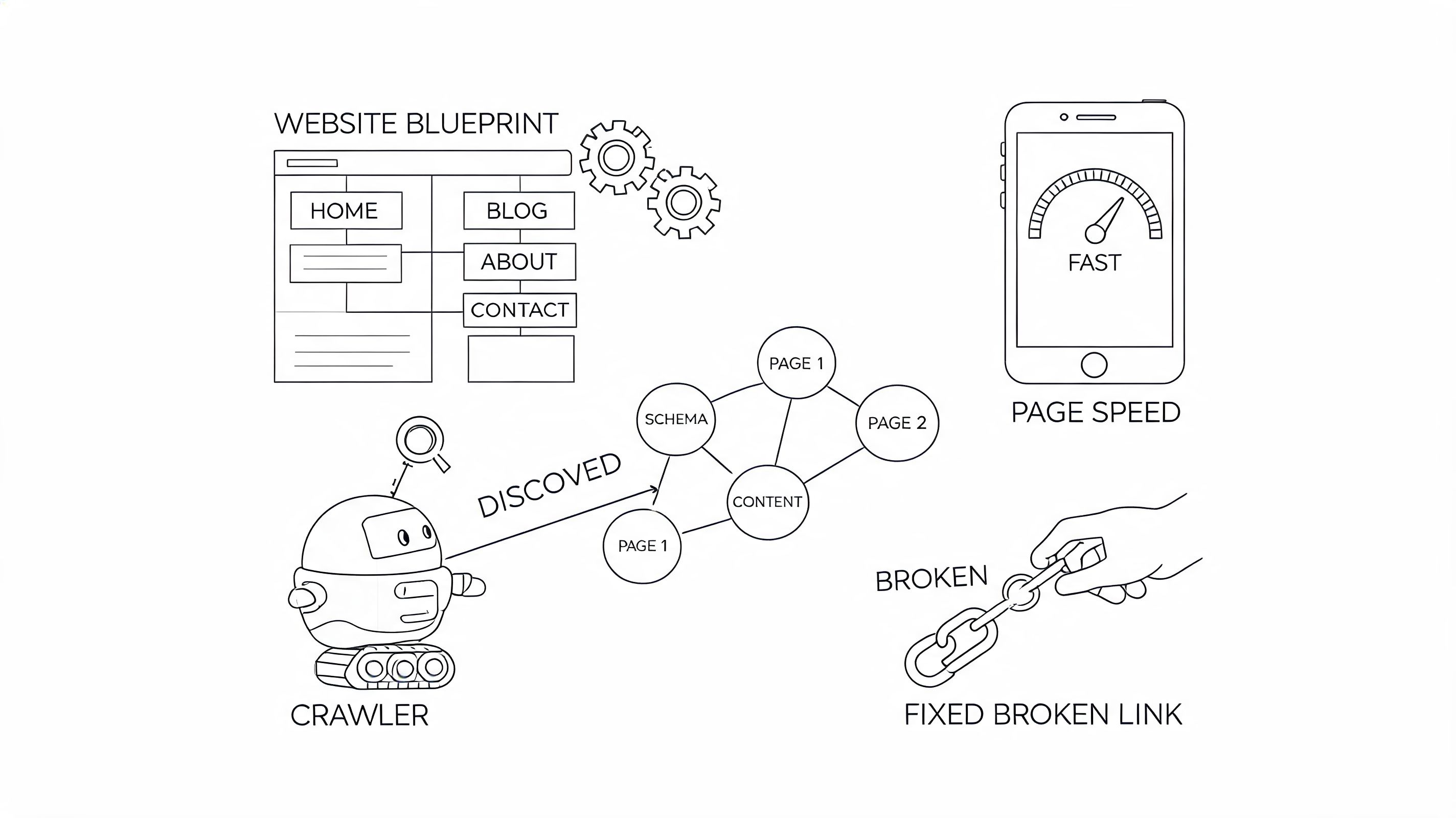
Think of it like this: your website is a library, and Google is the librarian. Technical SEO ensures all the books are on the right shelves, the aisles are clear, and the card catalog is perfectly organized. Get this right, and you'll see gains. Ignore it, and you're fighting an uphill battle.
Even simple fixes can make a huge difference. Slow page speed and mobile usability errors are two of the biggest culprits holding sites back, hurting both your rankings and your user experience.
Optimizing for Crawlability and Modern Search
Once you've handled the basics, it's time to think about how efficiently Google discovers your content. Every site has a crawl budget—the finite number of pages a search engine will crawl at any given time. Wasting that budget on broken links, redirect chains, or low-value pages means your best content might get overlooked.
This is also where you can get a serious edge with structured data, also known as schema markup. This code gives search engines specific, organized context about what’s on your page.
By adding schema, you're not just telling Google what your page is about; you're showing it how to display that information in a more engaging way through rich snippets, like star ratings or FAQ dropdowns.
This is how you earn that valuable extra real estate in the search results—the kind that makes users click your link over a competitor's.
To really get started, you need to run a thorough technical review. A good audit will uncover the hidden issues sabotaging your performance. Our comprehensive SEO site audit checklist is the perfect place to start, walking you through the process of spotting and fixing the common problems that hold sites back.
The goal is to get your site's technical health to a place where it's so flawless that your content has no choice but to shine.
Building Authority with Strategic Link Acquisition
You've done everything right. The content is killer, and the technical SEO is dialed in. So why are you still getting outranked? The missing piece is often authority.
Backlinks—links from other websites to yours—are still one of the most powerful signals Google uses to determine if your site is credible and trustworthy. Without them, even the best content can struggle to break through.
But this isn't about chasing hundreds of low-quality links. That's an old-school tactic that will get you penalized today. The modern game is about earning high-quality links by creating assets so valuable that other sites want to reference them. Think original research, a free tool that solves a real problem, or the most comprehensive guide on a topic.
Earning Quality Links That Last
Building a strong, sustainable backlink profile means moving beyond just one tactic. You need a mix of ethical, effective strategies that attract links from relevant, high-authority sites in your space.
Here are a few proven approaches that actually work:
Digital PR and Outreach: Once you have a truly great piece of content, don't just let it sit there. Actively promote it to journalists, bloggers, and key influencers in your industry. If it’s genuinely compelling, they'll share it and link to it.
Guest Blogging on Reputable Sites: Writing for other well-respected websites in your niche is a classic for a reason. It puts your expertise in front of a new audience and gives you a natural place to include an author bio with a link back to your site.
Unlinked Brand Mention Reclamation: This is one of the easiest wins. Set up alerts for your brand name. When you spot a site that mentioned you without linking, a polite email is often all it takes to get them to add the link.
The goal isn't just to get links; it's to create something genuinely exceptional that deserves to be linked to. A single link from an authoritative, relevant site is worth more than a hundred junk links from spammy directories.
And while you’re out earning external links, don't forget about your internal linking structure. Smartly linking between your own pages helps spread authority throughout your site, guiding both users and search engines to your most important content.
For a deeper look at how to build a modern, penalty-proof backlink profile, our guide on sustainable link building strategies is a great place to start.
Measuring What Matters and Iterating for Growth
Boosting organic traffic isn’t a one-time project. It’s a continuous cycle of action, analysis, and refinement. If you can't prove your SEO efforts are actually working, you're flying blind. It's time to move from guesswork to a deliberate feedback loop: measure, analyze, and iterate.
The first step is figuring out what actually matters. It's easy to get lost in a sea of data. Instead, build a simple dashboard that tracks a handful of key performance indicators (KPIs) that directly show your progress.
Your entire focus should be on tying your actions to specific outcomes. If you refresh an old blog post, you need to track its organic traffic and keyword ranking changes over the next few weeks. This is how you connect your work directly to measurable results.
SEO success isn't about doing everything at once. It's about doing the right things, seeing what works, and then doing more of it. A regular reporting cadence transforms your strategy from reactive fixes into proactive, predictable growth.
Establishing Your Reporting Cadence
A consistent review process is your early warning system. It helps you spot opportunities—and threats—before they turn into major problems. By tracking the right metrics, you can understand the true impact of your work on driving more organic traffic.
Here are the key metrics you should be monitoring:
Organic Conversions: Is the traffic you’re generating actually leading to leads or sales? This is the ultimate measure of ROI.
Keyword Ranking Changes: Track your position for target keywords, especially for pages you've recently optimized.
Traffic to Optimized Pages: Isolate the pages you’ve worked on. Are they gaining traction, or are your changes falling flat?
Click-Through Rate (CTR): Monitor how your headlines and meta descriptions are performing in the search results. A low CTR on a high-ranking page is a massive, missed opportunity.
This disciplined approach ensures your SEO strategy is always moving forward. You’ll quickly learn which tactics generate the best returns for your specific site and audience. This allows you to double down on what’s effective and, just as importantly, stop wasting time on what isn’t.
By iterating based on real data, you compound your organic growth over time.
Common Questions About Improving Organic Traffic
When you're trying to grow organic traffic, a few questions pop up time and time again. Let's cut through the noise and give you the straight answers you need to build a winning strategy.
How Long Does It Take to See Results from SEO?
Let's get this one out of the way: SEO is a long game. Anyone promising you page-one rankings in a week is selling snake oil.
For a site with some existing authority, you can usually start seeing positive movement within 3 to 6 months. This isn't a flood of traffic, but rather early signals—keywords climbing, impressions growing, and a few more clicks trickling in.
Quick wins are possible, of course. Fixing a major technical issue or refreshing a blog post that’s already hovering on page two can sometimes yield results in a matter of weeks. But for the kind of sustainable growth that changes a business, you're looking at a 6 to 12-month commitment to see truly meaningful results from content and link building.
Is Content Quantity or Quality More Important?
Quality. Every single time. It's not even a debate in 2026.
One truly exceptional article that becomes the go-to resource for a specific search query will deliver more traffic, links, and authority over its lifetime than ten half-baked, 500-word posts. Google's algorithms are incredibly sophisticated at figuring out which page actually helps the searcher.
Your primary goal should be to create the best, most helpful resource on the internet for your target topic. That said, publishing high-quality content on a consistent schedule is how you build topical authority and methodically expand your site's organic footprint.
Think of it as building a library. You need great books, but you also need more than one book to be considered a real resource.
Should I Focus on On-Page or Off-Page SEO First?
Start with your foundation: on-page and technical SEO. It makes zero sense to run a huge PR campaign to get people to visit a house with a leaky roof and broken windows.
Before you spend a single dollar or hour on link building, make sure your own site is in order. This means ensuring your website is:
Technically Sound: Free of crawl errors, broken links, and other red flags.
Mobile-Friendly: A non-negotiable in today's world. Your site has to work flawlessly on a phone.
Fast: Slow pages kill conversions and rankings. Aim for a quick, snappy user experience.
Optimized for Intent: Your content must directly answer the questions your target keywords imply.
Once your "house" is clean and functional, your off-page SEO efforts (like link building) become exponentially more effective. You'll get a much higher return on your investment.
What Is the Best Way to Find Keywords?
One of the most powerful—and most overlooked—places to find keywords is inside your own Google Search Console account.
Head over to the "Queries" report. This is a goldmine. You're looking for terms where you already rank in positions 8 through 20.
These are your "quick win" keywords. Google already sees your page as relevant, but it's stuck on the bottom of page one or on page two. Often, all it takes is a strategic content refresh, a few more internal links, or an updated title tag to push these into the top 5, where the real traffic is.
Beyond that, you can use tools like Google's free Keyword Planner or other platforms to see what keywords your competitors are ranking for that you aren't. Always prioritize keywords that show clear user intent and align directly with what your business offers.
Ready to turn these insights into action? Keyword Kick's K² AI Agent unifies your SEO data to provide prioritized, step-by-step recommendations on exactly what to do next to improve your organic traffic. Stop guessing and start growing with a free forever plan.