
A free profile link isn't automatically a meaningful SEO asset. Many links from free backlink sites are nofollow, buried on pages nobody visits, or attached to platforms that care more about advertising upgrades than organic discovery. The useful question isn't, “How many links can I create?” It's, “What business job can this placement perform?”
The strongest resources below serve different purposes. Google Business Profile supports local discovery and conversion actions. Crunchbase helps validate a company entity. LinkedIn and Product Hunt support brand visibility and referral reach. G2, Capterra, and GetApp can put software in front of buyers already comparing solutions. Their direct ranking value may be limited, but their entity, referral, local, branded-search, and buyer-intent value can be substantial.
I evaluate each platform by its link attribute, trust or authority indicator, audience fit, submission effort, policy risk, and likely business outcome. Complete accurate, eligible profiles instead of chasing volume. Google's Search Quality User report explicitly includes unnatural, artificial, deceptive, or manipulative inbound and outbound links among reportable quality issues, so careless submissions can create more risk than value.
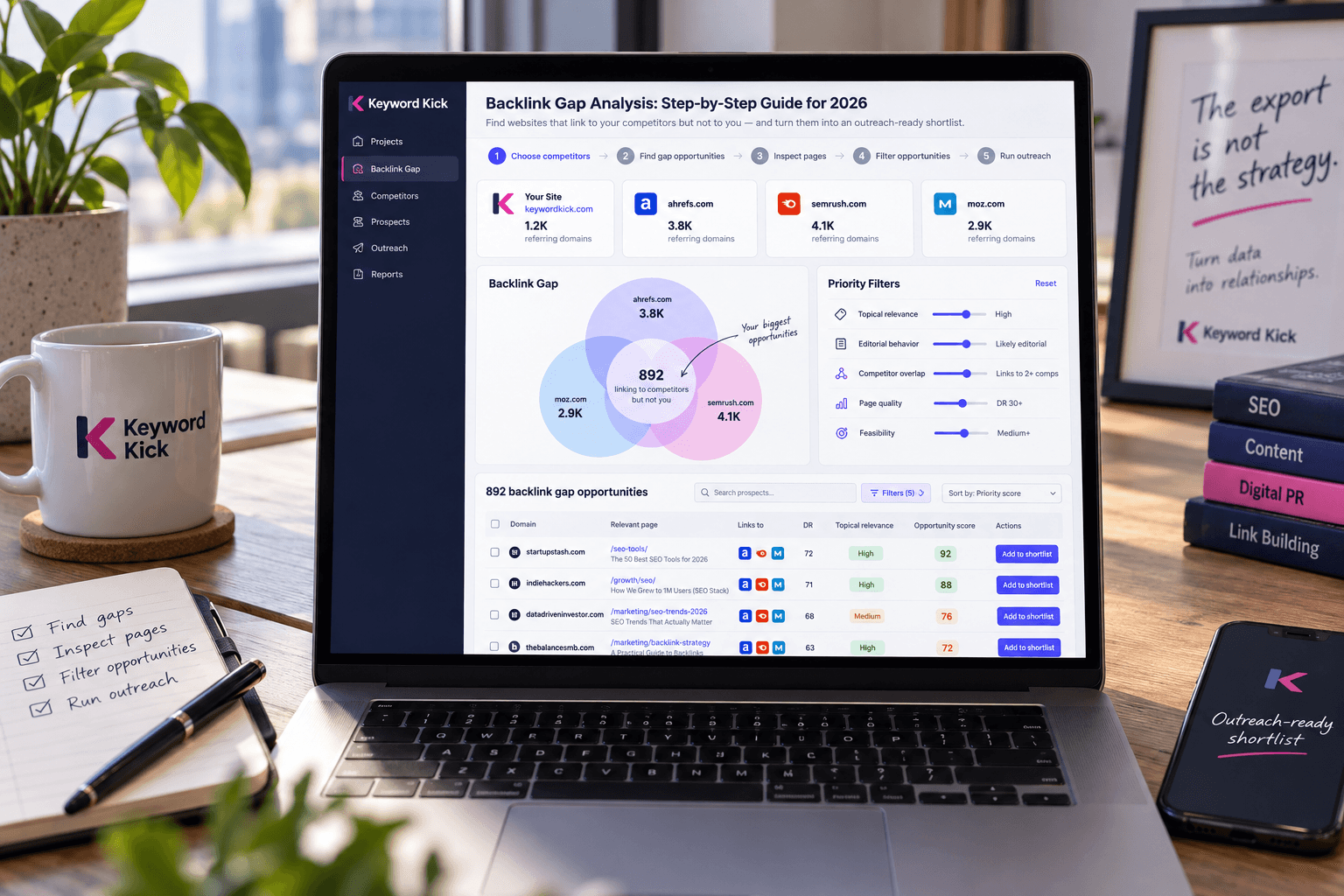
After implementation, use Keyword Kick to monitor referring domains, rankings, and the pages receiving attention. That turns a directory exercise into an evidence-based decision about which profiles deserve maintenance.
1. Google Business Profile
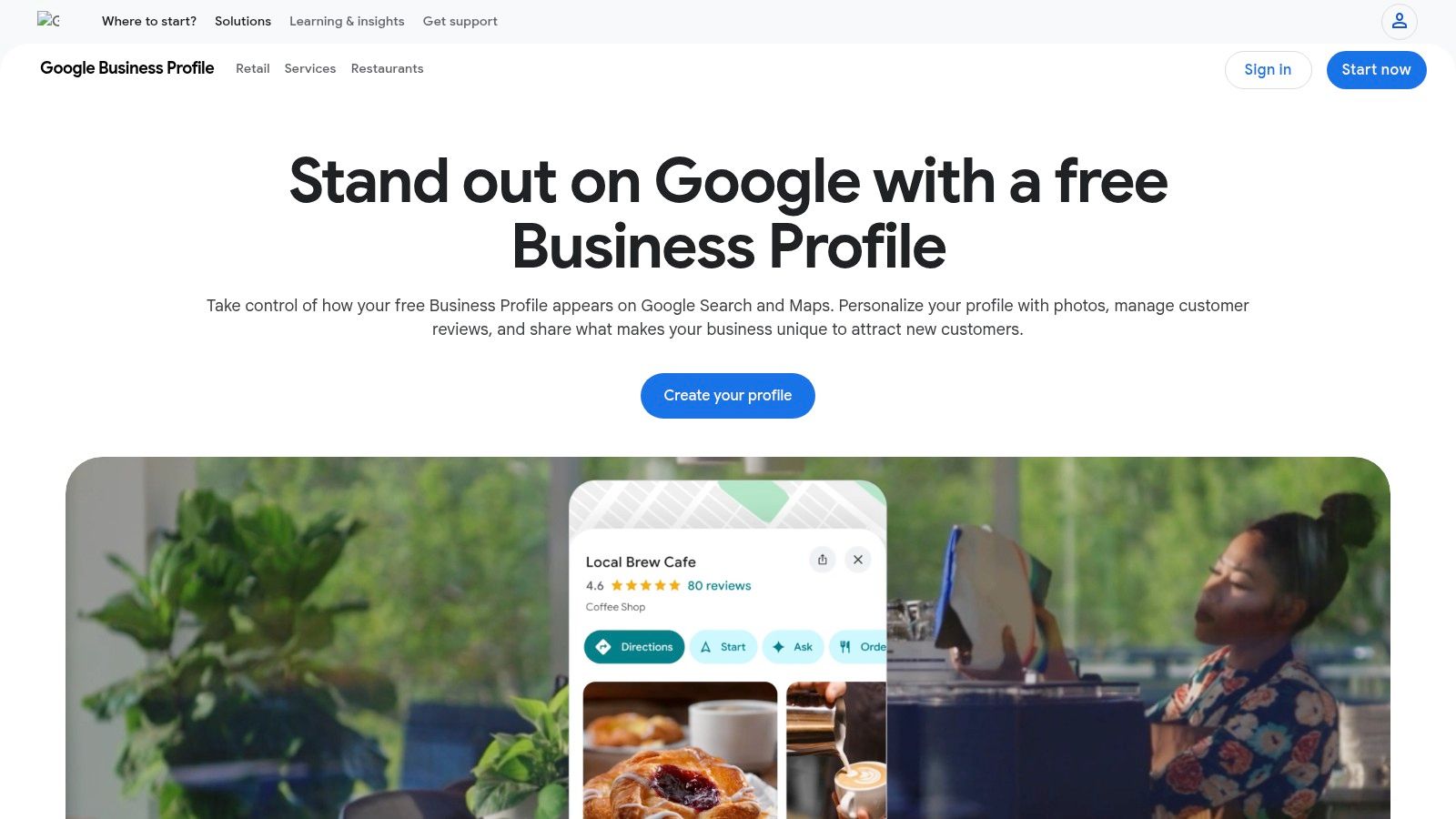
Google Business Profile is the highest-priority listing here for an eligible local business, but not because its website link should be treated as a conventional authority-passing backlink. Its practical value comes from controlling how your brand appears in Google Search and Maps, where users can discover business details, visit your website, and take actions such as booking or ordering.
Claim the profile through Google Business Profile only if the business meets Google's representation and verification requirements. Service-area businesses may qualify, and some remote or SaaS companies can qualify when they have a legitimate business presence. A virtual address created solely to obtain a listing isn't a safe shortcut.
Use the profile as a conversion surface
Add the primary website URL, accurate categories, service details, imagery, hours, and any eligible action links. Keep the business name, address, phone details, and landing pages consistent with the rest of your web presence. A profile with outdated hours or an incorrect service description can lose trust even when the listing remains visible.
For local teams, the profile supports more than link discovery:
Local visibility: It places core business information across Google's local surfaces.
Entity clarity: Consistent details help Google associate the brand with its location and services.
Direct actions: Website, booking, ordering, and other eligible links can send users into conversion flows.
For a practical local-search workflow, use this guide to dominate local search marketing and attract customers.
Practical rule: Don't create a GBP listing simply to obtain a backlink. Create it to provide accurate information to people who are already looking for the business.
2. Bing Places for Business
Bing Places for Business is a sensible second local listing because it extends your business information beyond Google. The profile can feed Bing Search and Bing Maps, and businesses can add a website URL and social links to their listing. Its value depends on whether your audience uses Microsoft search and related surfaces, so it shouldn't receive the same effort as Google Business Profile by default.
Start with Bing Places for Business and check whether the business already has an unmanaged listing. In many cases, you can import information from a Google Business Profile, which reduces setup time, but imported data still needs a human review. Business names, phone numbers, hours, categories, and URLs can become inconsistent when platforms sync imperfectly.
The strongest use case is incremental discovery. A local customer who finds the business through Bing Maps may click the website link, call directly, or use the listing to confirm that the brand is legitimate. For a B2B company, the direct SEO effect is less compelling, but accurate presence across search ecosystems can support branded discovery.
Keep the data aligned
Use the same core business information as your other listings, then verify the public result after approval. Don't assume that a successful import means every field is correct.
Best fit: Local businesses, service providers, and brands with a verified physical or service-area presence.
Useful outcome: Additional search and map visibility, plus referral visits.
Main limitation: The platform's impact varies with audience behavior and Microsoft-surface usage.
Treat Bing Places as a low-effort distribution channel, not a reason to duplicate listings across every directory that accepts submissions.
3. Apple Business Connect
Apple Business Connect controls the information shown in an Apple Maps Place Card. For businesses that serve iPhone users, this is a local-discovery and mobile-conversion asset first, and a backlink opportunity second. The primary website field can send users to your homepage, while eligible custom actions can direct them to a deeper page or a specific business workflow.
Set up the listing through Apple Business Connect, then complete verification and review the place details carefully. Add strong imagery, accurate branding, hours, categories, and a website URL that matches the action users are likely to take. A restaurant may want a menu or ordering destination. A service business may prefer an appointment page.
Match actions to intent
Custom actions aren't equally available to every category or region, so plan around the options Apple provides during setup. Don't force a generic homepage link when a more relevant destination is available.
Apple Business Connect works best when:
The business has a legitimate location or eligible presence: Verification and representation requirements still apply.
The audience is mobile-led: Maps users often want immediate directions, contact details, booking, or ordering.
The landing page is specific: Deep links can reduce the friction between discovery and action.
The profile can also reinforce branded visibility by giving Apple a controlled source of business information. That doesn't make every outbound link a strong PageRank asset. It makes the listing useful because it appears where potential customers already search for places, products, and services.
Audit the Place Card after major website, branding, or location changes. A stale image, broken action link, or incorrect operating hour can undermine the trust this listing is supposed to create.
4. Yelp
Yelp is most useful as a consumer-facing business page, particularly for US-oriented local businesses. Claiming a free page gives the brand a dedicated website field, review presence, business description, and another result that may appear for the company or a local service.
Create or claim the page through Yelp for Business, then complete only information the business can substantiate. Add the website URL, categories, service details, hours, photos, and a description that helps a visitor decide whether to contact the business. Yelp's review environment is independent, so businesses shouldn't treat the profile as a controlled testimonial page.
Judge Yelp by referral and reputation value
The link itself shouldn't be the main reason to invest. Yelp can support branded-search real estate and referral traffic, while the page may also help users confirm consistent business information. Its strongest fit is a local company whose prospects already use consumer review platforms.
Strong fit: Restaurants, professional services, home services, and other consumer-facing local businesses.
Weak fit: A remote software company with no eligible local presence.
Real trade-off: A free listing is accessible, but paid upsells and limited control over review visibility can make management more demanding.
Respond to reviews according to Yelp's policies and your brand standards. Don't manufacture reviews, pressure customers to use specific language, or create duplicate pages to suppress criticism. Those tactics create policy and reputation risk while doing nothing to improve the quality of the underlying business experience.
A claimed Yelp page earns its keep when people visit it, trust the information, and continue to the website or contact channel. If it receives no meaningful attention and the information rarely changes, maintenance can be lighter than active review management.
5. Crunchbase
Crunchbase serves a different purpose from local directories. It's a company and startup database that can help align your official name, website, founding information, categories, and other attributes across B2B research and media workflows. For a SaaS company, agency, or startup, that entity context can matter more than the raw link attribute.
Claim or update the company profile through Crunchbase. Use the official website, consistent company naming, accurate descriptions, and current organizational details. Don't fill gaps with assumptions or outdated funding and leadership information. A profile that contradicts the company's own website can weaken confidence for journalists, prospective partners, and researchers.
Prioritize entity consistency
Crunchbase is valuable when third parties use it to understand what the company is and how it relates to its brand, products, people, and market. That makes the website link part of a broader identity system.
Entity role: Connects the company name with structured business attributes.
Audience role: Supports startup, investor, media, and B2B research.
Maintenance role: Requires updates as the company changes.
Some deeper data and access features are paid, but a basic profile can still be useful when the company qualifies and the information is complete. It isn't a substitute for editorial coverage, customer references, or links earned from relevant publications.
Track whether the profile becomes a referring domain and whether branded searches lead users to it. How to monitor backlinks with an operational playbook can help teams connect profile maintenance with backlink and ranking monitoring instead of treating the listing as a one-time task.
6. LinkedIn Company Page
A LinkedIn Company Page is primarily a professional distribution and credibility channel. Add the company website, describe the business clearly, connect the page to relevant employees, and publish useful updates for the audience you want to reach. External links on LinkedIn are typically marked nofollow or UGC, so the page shouldn't be sold internally as a major PageRank source.
Build the presence through LinkedIn Pages, then keep the logo, tagline, company description, industry, location, and website aligned with the official site. A neglected page with an old product description can create more confusion than trust.
Use the page to earn attention
LinkedIn's practical value comes from the people who see, share, discuss, and act on the company's content. A useful product announcement, technical explanation, hiring update, or research summary can bring qualified visitors to a relevant page even when the link attribute limits direct ranking equity.
The best operating pattern is:
Profile foundation: Add the website and complete the company details.
Distribution: Publish content that answers a professional audience's questions.
Measurement: Review engagement, referral visits, and branded visibility rather than counting profile links.
Premium features and advanced analytics may change the available calls to action, but a free company presence can still support brand recognition. Don't turn every post into a link drop. LinkedIn users respond better when the post provides a clear reason to click, such as a detailed explanation, resource, product page, or event.
For agencies and B2B brands, LinkedIn often has stronger entity and referral value than direct SEO value. That's a worthwhile trade when the audience includes decision-makers, partners, employees, or journalists.
7. Product Hunt
Product Hunt is a launch and product-discovery platform for technology products. Its direct website link can send users to the product, but the platform's more realistic value comes from exposure to early adopters, tech buyers, journalists, and potential supporters. Links are commonly marked UGC, so launch teams should measure attention and qualified visits rather than expecting a large ranking effect.
Create or maintain the product page at Product Hunt. Use a concise product description, accurate category, compelling media, and a primary URL that matches the launch promise. Community comments, reviews, badges, and discussion can add social proof, but only when the product page attracts genuine participation.
Launch activity has a real cost
A Product Hunt launch requires coordination. You'll need a clear announcement, prepared responses, product access, and a plan for handling questions. A weak launch can consume substantial effort without producing durable traffic, especially if the team relies on promotional messages rather than useful conversation.
Prioritize it when:
The product has a technology audience: SaaS, developer tools, productivity products, and consumer apps are natural fits.
The team can support discussion: Founders and product specialists should answer questions directly.
The landing page is ready: Visitors need a clear explanation and an obvious next step.
Don't create artificial votes, comments, or launch activity. Community-driven platforms can expose manipulation quickly, and the resulting brand damage outweighs any profile-link benefit. A genuine launch can create citations, conversations, and referrals that later lead to stronger editorial links elsewhere.
8. G2
G2 is a software marketplace where buyers compare products, read reviews, and evaluate alternatives. For a SaaS company, the profile can influence purchase decisions and branded searches even when paid programs control some of the most visible lead-generation features. The free profile is therefore best judged by buyer intent and trust, not by backlink equity alone.
Claim the product or vendor presence through G2. Complete the product description, categories, feature information, screenshots, integrations, and website link. Keep claims specific and consistent with the product itself. Buyers notice when a profile promises capabilities that the documentation or product experience doesn't support.
Reviews create both opportunity and responsibility
A G2 profile needs active review operations. Ask genuine customers for feedback without scripting their responses or offering incentives that violate platform rules. Respond to criticism professionally, clarify misunderstandings, and use recurring complaints to improve the product and the profile.
A strong G2 presence can support:
Buyer-intent discovery: Users are already comparing software solutions.
Branded SERP coverage: Review and category pages can occupy valuable search real estate.
Conversion support: Structured information and credible customer feedback reduce uncertainty.
The trade-off is competition. In crowded categories, a basic listing rarely stays compelling without current information and review attention. Paid tiers may provide additional lead and analytics features, but paying for visibility doesn't remove the need for an accurate profile.
For a broader comparison of acquisition resources, see 10 best backlink building sites for quality SEO in 2026. Use G2 when the expected buyer value justifies the ongoing work.
9. Capterra
Capterra is a software comparison directory within the Gartner Digital Markets ecosystem. Its listing can expose a product to users searching by category, feature, and use case, with structured product information and a link to the provider's website. The direct link is only one part of the opportunity. The more valuable asset is often the chance to appear where a buyer is already narrowing a shortlist.
Create or claim the vendor listing through Capterra. Treat the profile as a product page, not a directory form. Explain who the software serves, what it does, which integrations it supports, and where it differs from nearby alternatives. Screenshots and current feature descriptions help buyers evaluate the product without leaving the platform.
Organic visibility and paid placement are different
Capterra's category and comparison pages can attract organic search visibility, but sponsored placements may receive stronger prominence. Don't confuse paid prominence with the baseline value of maintaining an accurate free listing. A free profile can still support referral traffic, review discovery, and branded search coverage, but its visibility may be limited in competitive categories.
Use the platform when:
The product matches an active software category: A precise category fit improves audience relevance.
The team can manage reviews: Buyers use feedback to assess risk.
The website supports comparison traffic: Visitors should land on a page that answers pricing, features, security, or implementation questions.
Keep the listing current as packaging and capabilities change. A stale profile can send high-intent visitors to an inaccurate expectation, wasting the referral opportunity and weakening conversion performance.
10. GetApp
GetApp focuses on app discovery and software comparison. Its profile format gives vendors room for product information, screenshots, videos, feature details, and an outbound website link. That makes it useful for software companies that can invest in presentation and want another path into the Gartner Digital Markets ecosystem.
Maintain the listing through GetApp, then build the profile around the questions buyers ask before they request a demo or start a trial. Explain workflows, integrations, supported users, implementation requirements, and meaningful differentiators. Use media that demonstrates the product rather than decorative screenshots with no context.
Profile curation determines the payoff
GetApp can send qualified referral traffic from category and comparison pages, but visibility and conversion depend on active management. Sponsored profiles may receive better placement, and competing products can make a basic listing difficult to notice. That's a commercial trade-off, not a reason to publish incomplete information.
A practical operating rhythm includes:
Content maintenance: Refresh screenshots, videos, features, and descriptions when the product changes.
Review stewardship: Encourage authentic feedback and respond to concerns without manipulating sentiment.
Conversion alignment: Send visitors to the page that matches the listing's promise, not an unrelated homepage.
GetApp is most worthwhile for a software company with clear buyer intent and enough internal capacity to maintain multiple directory profiles. If the team can't keep product information accurate, prioritizing one strong marketplace presence may be better than spreading effort across several similar platforms.
Top 10 Free Backlink Sites, Quick Comparison
Platform | Core Features ✨ | Visibility & Trust ★ | Value & Cost 💰 | Target Audience 👥 | Top Strength 🏆 |
|---|---|---|---|---|---|
Google Business Profile (GBP) | Local listing, website & action links, Maps/Search/Assistant presence | ★★★★★, dominant local pack & mobile CTR | 💰 Free (verification required) | 👥 Local businesses, service-area, mobile-first brands | 🏆 Best-in-class local visibility |
Bing Places for Business | Claim listings, website/social links, import from GBP | ★★★☆☆, incremental SERP surface beyond Google | 💰 Free | 👥 Windows/Edge & Microsoft user audiences | 🏆 Easy GBP import + Microsoft surfaces |
Apple Business Connect (Apple Maps) | Place Card, website, Actions (deep links), imagery/branding | ★★★★☆, strong iOS/mobile reach | 💰 Free (region/verification limits) | 👥 iOS users, mobile-focused businesses | 🏆 Deep links & CTA control on Apple Maps |
Yelp (Business Page) | Claim page, website field, reviews, moderated data quality | ★★★★☆, high US consumer trust & referral traffic | 💰 Free (paid upsells available) | 👥 US consumers, local-intent searchers | 🏆 Review volume & strong referral presence |
Crunchbase (Company Profile) | Company entity pages, structured attributes, website link | ★★★☆☆, cited by media, analysts, knowledge panels | 💰 Free basic; paid tiers for data | 👥 Startups, investors, B2B researchers | 🏆 Entity credibility for startups/SaaS |
LinkedIn Company Page | Company profile, website field, content distribution & analytics | ★★★★☆, professional trust (external links often nofollow) | 💰 Free (premium promos available) | 👥 Professionals, B2B marketers, recruiters | 🏆 Professional audience & content distribution |
Product Hunt (Product Page) | Product page + Visit website link, reviews, badges, community feedback | ★★★★☆, high tech/early-adopter discoverability | 💰 Free | 👥 Tech adopters, press, early users | 🏆 Launch visibility & social proof |
G2 (Software Profile) | Vendor/product profiles, reviews, product comparisons, analytics | ★★★★☆, strong for purchase-intent queries | 💰 Free profile; paid lead-gen/analytics | 👥 B2B buyers, procurement teams | 🏆 High-intent buyer discovery & review trust |
Capterra (Software Directory) | Vendor listings, structured product info, category & comparison pages | ★★★★☆, strong category search visibility | 💰 Free listing; sponsored placements paid | 👥 Software researchers & buyers | 🏆 Credible review signals in category searches |
GetApp (Software Directory) | App-focused profiles with media (screenshots/videos) and outbound links | ★★★☆☆, exposure within Gartner ecosystem | 💰 Free listing; common paid promos | 👥 App buyers, comparison shoppers | 🏆 Media-rich listings alongside Capterra/G2 |
Build a Trustworthy Link Portfolio, Not a Link Pile
The ten resources fall into a practical priority order. Start with eligible local profiles, then complete authoritative entity and professional profiles, and finally invest in software directories or community platforms where buyer intent justifies the work.
For a local business, Google Business Profile should usually come first, followed by Bing Places, Apple Business Connect, and Yelp where the audience and eligibility fit. These profiles can support discovery, map visibility, local trust, phone calls, bookings, and referral visits. Their value isn't adequately represented by whether the website link passes traditional ranking equity.
Next, complete the profiles that clarify who the company is. Crunchbase can support structured company identity for startups and B2B brands. LinkedIn can distribute expertise and product information to a professional audience. These channels often work through entity reinforcement, branded visibility, and referral attention rather than direct PageRank.
Software companies should then evaluate G2, Capterra, and GetApp by buyer intent. A free listing is worth maintaining when it reaches people comparing products, supports credible reviews, and sends visitors to a relevant conversion page. Product Hunt belongs in the community category. It can be valuable for a genuine launch, but it requires preparation and shouldn't be reduced to a profile-link tactic.
The safety rules are straightforward:
Use accurate business details: Keep names, addresses, phone information, descriptions, and URLs consistent.
Avoid duplicate or misleading listings: Claim existing profiles instead of creating unnecessary duplicates.
Follow platform policies: Eligibility, verification, review, content, and representation rules matter.
Don't manipulate activity: Never manufacture reviews, votes, comments, or launch engagement.
Measure business outcomes: Link count alone can't tell you whether a profile is useful.
Google's quality guidance makes the risk clear. Pages containing or receiving unnatural, artificial, deceptive, or manipulative links can be reported, so avoid platforms that publish irrelevant placements, paid links disguised as editorial recommendations, or large volumes of low-quality submissions. The 2026 directory-submission analysis cited in the brief estimated about 12,000 active web directories, with 73% free to submit and 27% requiring payment or premium placement. It also estimated that 47% were created after 2020, which shows that the ecosystem is active, but not that every directory deserves attention. The referenced backlink-checker resource supports the broader need to evaluate opportunities selectively.
Track whether each profile is indexed, whether it sends referral visits, whether branded-search visibility improves, and whether the target page earns meaningful engagement. Monitor new and lost referring domains in Keyword Kick, then retain only profiles that remain accurate, useful, and aligned with the audience. Backlink analysis should support decisions about maintenance and opportunity cost, much like these mattress industry link building techniques emphasize relevance and fit over indiscriminate acquisition.
Keyword Kick brings rankings, referring domains, backlink monitoring, competitor link gaps, and target-page performance into one SEO workspace. Use it to identify which free backlink profiles are indexed, sending visits, or supporting visibility, then visit Keyword Kick to turn that data into prioritized next actions.