
The popular advice is simple: find sites with high Domain Rating, secure a link, and repeat. That workflow produces impressive spreadsheets, but it often hides the question that matters most: is this specific link a credible recommendation in context?
A backlink from a powerful-looking domain can be weak when the page is unrelated, buried in a neglected archive, surrounded by commercial links, or never seen by a real audience. A less celebrated site can offer a stronger signal when its page directly addresses your subject, attracts relevant readers, and links to your resource for a clear editorial reason. That's the practical meaning of backlinks high quality. Quality belongs to the link and its context, not just to the domain's headline metric.
Why Domain Authority Alone Does Not Define Link Quality
Domain-level metrics are useful for sorting prospects, but they're poor substitutes for judgment. Domain Authority, Domain Rating, and similar scores are third-party estimates. They can help you compare sites within a prospect list, yet they don't prove that a particular page has topical authority, genuine readership, or a sensible reason to cite your content. A domain can look strong in a dashboard while the proposed linking page contributes almost nothing.
For readers who need a refresher, this Domain Authority guide from DesignStack provides useful background on how the metric is interpreted. It should be treated as a diagnostic indicator, not as Google's own ranking score. The same caution applies to the broader Domain Authority glossary definition, especially when a sales email presents one number as proof that a placement is valuable.
Evaluate the page, not just the site
Start with the referring URL. Does it rank for queries related to your subject? Does the page answer a question your target audience asks? Is your link placed within the main discussion, where an editor would naturally cite a useful source, or is it sitting in a contributor box, footer, sidebar, or generic list?
The distinction matters because Google's documented link-spam guidance, summarized in this overview of Google's link spam policy, warns against manipulative acquisition patterns. A link that exists only because someone sold a placement, inserted an unrelated anchor, or published a thin article for ranking purposes may be discounted even when the domain looks authoritative.
Practical rule: If the link wouldn't help a human reader discover or verify something useful, don't call it high quality just because the domain metric is high.
Relevance beats celebrity
Think of backlinks as professional endorsements. A recommendation from a specialist who works in your field carries more persuasive weight than an endorsement from a celebrity who has never used your product or studied your subject. The specialist may have a smaller audience, but the recommendation makes sense to the people who matter.
This doesn't mean authority is irrelevant. A strong referring page with genuine editorial standards can be valuable, particularly when it also covers your topic closely. The mistake is treating authority and relevance as interchangeable. A high-authority page about an unrelated subject may provide less useful context than a moderately authoritative page that sits inside a well-used topic cluster.
The strongest evaluation asks four questions:
Why this page? Can you explain the editorial reason for the link in one sentence?
Why this destination? Does the target URL offer evidence, instruction, data, or a tool that improves the page?
Why this anchor? Does the wording describe the destination naturally?
Why this audience? Would the page's readers plausibly click through?
If those answers are weak, the opportunity probably looks better in a prospecting tool than it will perform in search.
Six Measurable Signals of a High-Quality Backlink
A high-quality backlink leaves evidence at the link level. I review the source page first, then the surrounding site, and finally the profile-wide pattern. That order prevents a strong domain metric from masking a weak placement.
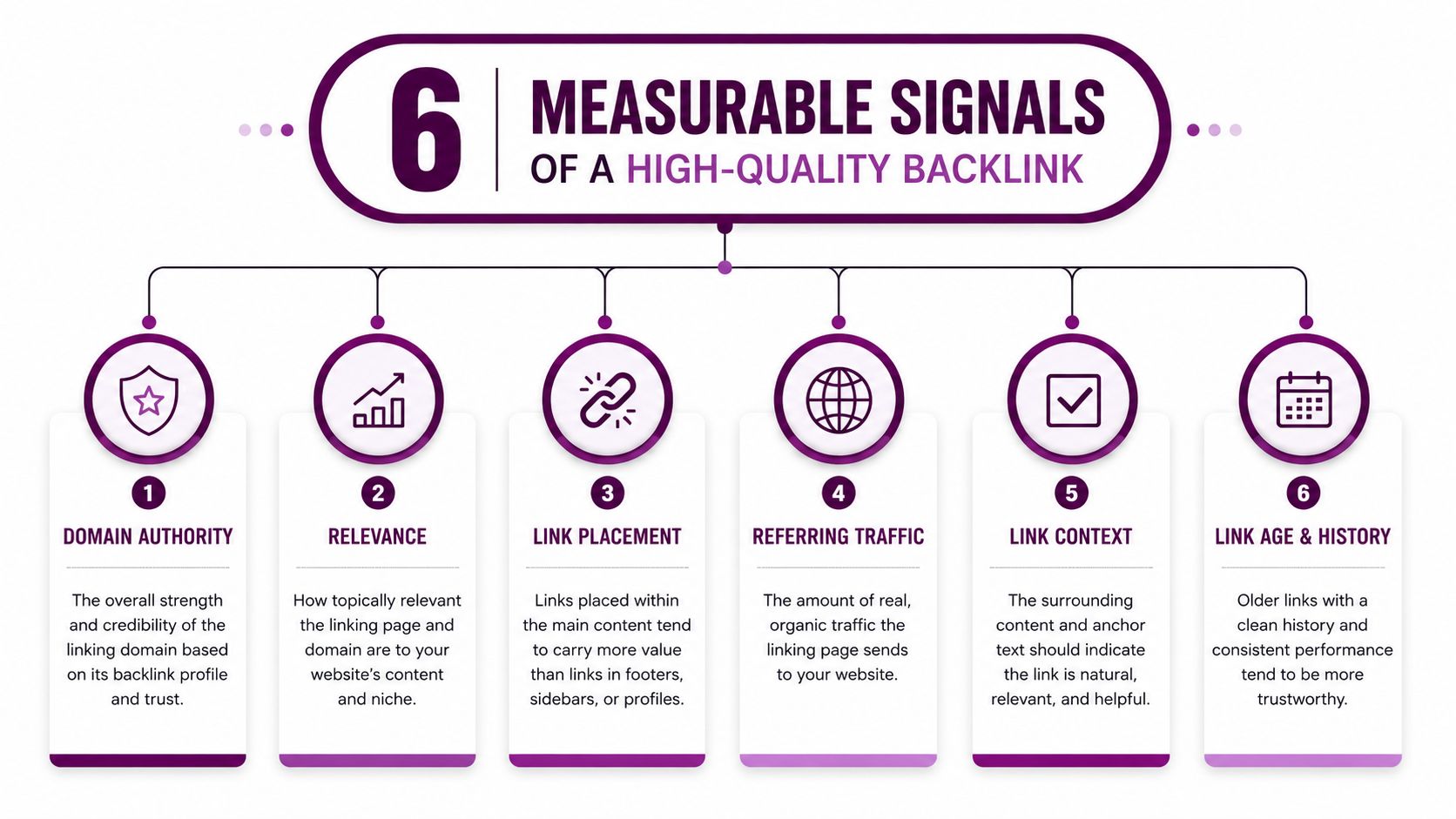
The six signals worth checking
Source authority. Examine the linking page's strength, not only the root domain. Look at its ability to attract organic visibility, its editorial standards, and whether it links out selectively. A domain with a polished metric but weak page-level evidence deserves caution.
Topical relevance. The source page should address the same problem, audience, or adjacent subject. A guide about technical SEO can naturally cite a backlink audit resource. A page about an unrelated hobby probably can't justify the same citation.
Editorial placement. Links in the main body of a useful article usually make more sense than links in a footer, author bio, template, or sitewide widget. Placement also affects whether readers can see and use the recommendation.
Anchor text context. Natural anchors vary. A brand name, descriptive phrase, URL, or sentence fragment can all work when they accurately describe the destination. Forced keyword anchors across many placements create a pattern that looks engineered rather than editorial.
Referring-page traffic. Treat visible audience activity as a quality check, not a guarantee. Review whether the page ranks, receives engagement, earns shares, or appears to be part of a functioning publication. Traffic claims from sellers should be validated against independent tools where possible.
Profile diversity. One publisher shouldn't dominate your link profile. Distinct referring domains, varied anchors, different content formats, and links earned through multiple relationships create a more credible acquisition pattern.
Ahrefs' analysis of 10,000 SERPs found a positive correlation between higher Google rankings and the number of new followed referring domains pages acquire. It also reported that most top-ranking pages gained followed backlinks from new websites at +5% to +14.5% per month. The lesson isn't to copy a monthly target. It's to evaluate sustained acquisition and referring-domain diversity rather than celebrate isolated wins. The underlying link-building statistics summary also reports reciprocal links among 43.7% of top-ranking pages and 73.6% of domains, which shows that relationships are common without proving that every relationship has equal value.
A quick inspection routine
Open the exact page, scan the paragraphs around the proposed link, check its indexing and organic visibility, inspect outbound-link patterns, and compare the destination with the page's promise. If the opportunity passes those checks, review the domain metric. Don't reverse that order.
A Practical Scoring Framework for Evaluating Any Backlink
You don't need a lengthy report for every prospect. A compact scoring model creates consistency across an agency team and makes negotiation easier when a publisher offers several placement options.
Score each signal from zero to two points, for a maximum of 10 points by combining related checks. Use authority and referring-page evidence as one category, then score relevance, placement, anchor context, and profile diversity separately.
Signal | Weight | High Score Criteria | Low Score Criteria |
|---|---|---|---|
Source authority and page evidence | 2 | Relevant page has credible editorial standards and visible search or audience activity | Domain metric is the only evidence, page appears neglected or generic |
Topical relevance | 2 | Source and destination serve closely related needs | Little or no reason for the audience to visit the destination |
Editorial placement | 2 | Link sits naturally in the main content | Footer, sidebar, author box, template, or forced insertion |
Anchor and surrounding context | 2 | Descriptive wording fits the sentence and destination | Repeated exact-match wording or awkward commercial anchor |
Profile diversity | 2 | Opportunity adds a distinct, credible referring domain | Networked sites, repeated ownership, or another near-identical placement |
A prospect scoring eight to 10 merits active pursuit. A score around the middle deserves negotiation, usually around the page, paragraph, anchor, or destination. A low score is normally a walk-away, even if the seller highlights a strong domain number.
A two-minute worked example
Suppose a digital publication offers a link from an article about content measurement. The page has related subject matter, the editor will place the link inside a section discussing attribution, and the anchor can describe your measurement guide. That earns strong scores for relevance, placement, and context.
The page has limited visible search evidence, and the publisher owns several similar sites that offer identical placements. Reduce the authority and diversity scores. The opportunity may still be worth pursuing if the audience matches your market, but the negotiated price and expected SEO value should reflect the risk.
For a second opinion, export the prospect into a backlink checker and compare the linking page, anchor, referring domain, and competing links rather than relying on one headline score.
How to Audit Your Existing Backlink Profile
A backlink audit should produce an action list, not a panic document. Many sites contain low-value links that neither help nor require intervention. The priority is to identify patterns that suggest manipulation, poor acquisition practices, or a concentration of risk.
Build a usable data set
Export links from Google Search Console and your preferred backlink crawler, then combine the files carefully. Deduplicate by linking URL and retain fields for the source page, referring domain, anchor text, link attribute, target URL, first-seen date, last-seen date, and estimated organic visibility.
Classify each link by acquisition type:
Editorial links: A publisher cites a useful page within relevant content.
Contributor links: A guest article or expert contribution includes a contextual reference.
Directory and profile links: A business listing, software profile, or professional page links to the site.
Community links: Forums, comments, Q&A pages, and user-generated resources.
Network or paid placements: Links connected to obvious exchanges, private networks, or undisclosed commercial arrangements.
The category isn't an automatic verdict. A relevant directory can support discovery, while an editorial-looking article can still be part of a manipulated network. Review the page and the pattern together.
Find patterns before removing anything
Filter for repeated exact-match anchors, unrelated sites, pages with thin content, clusters of domains sharing templates or ownership signals, and links pointing disproportionately to commercial pages. Check whether several links appeared together after a campaign or whether a large set comes from pages that have no audience purpose.
Don't remove a link because a tool labels it “toxic.” Validate the page, the acquisition history, and the wider pattern first.
Keep three action groups. Nurture links that are relevant and editorial, perhaps by building a relationship with the publisher. Monitor links that are weak but harmless. Investigate links that show manipulation, paid placement patterns, or clear network footprints.
Use Google's disavow process carefully. It's not a routine cleanup button for every directory or low-metric domain. Consider it when you have a credible history of manipulative link building or a clearly harmful pattern that you can't resolve manually. For ordinary low-value links, leaving them alone is often more sensible than escalating every imperfect placement.
Run a scheduled audit when your acquisition program changes, after a major ranking decline, following a vendor transition, or when you detect an unusual wave of new links. The backlink audit workflow from Keyword Kick can help structure a fast review, but the final decisions still require human inspection.
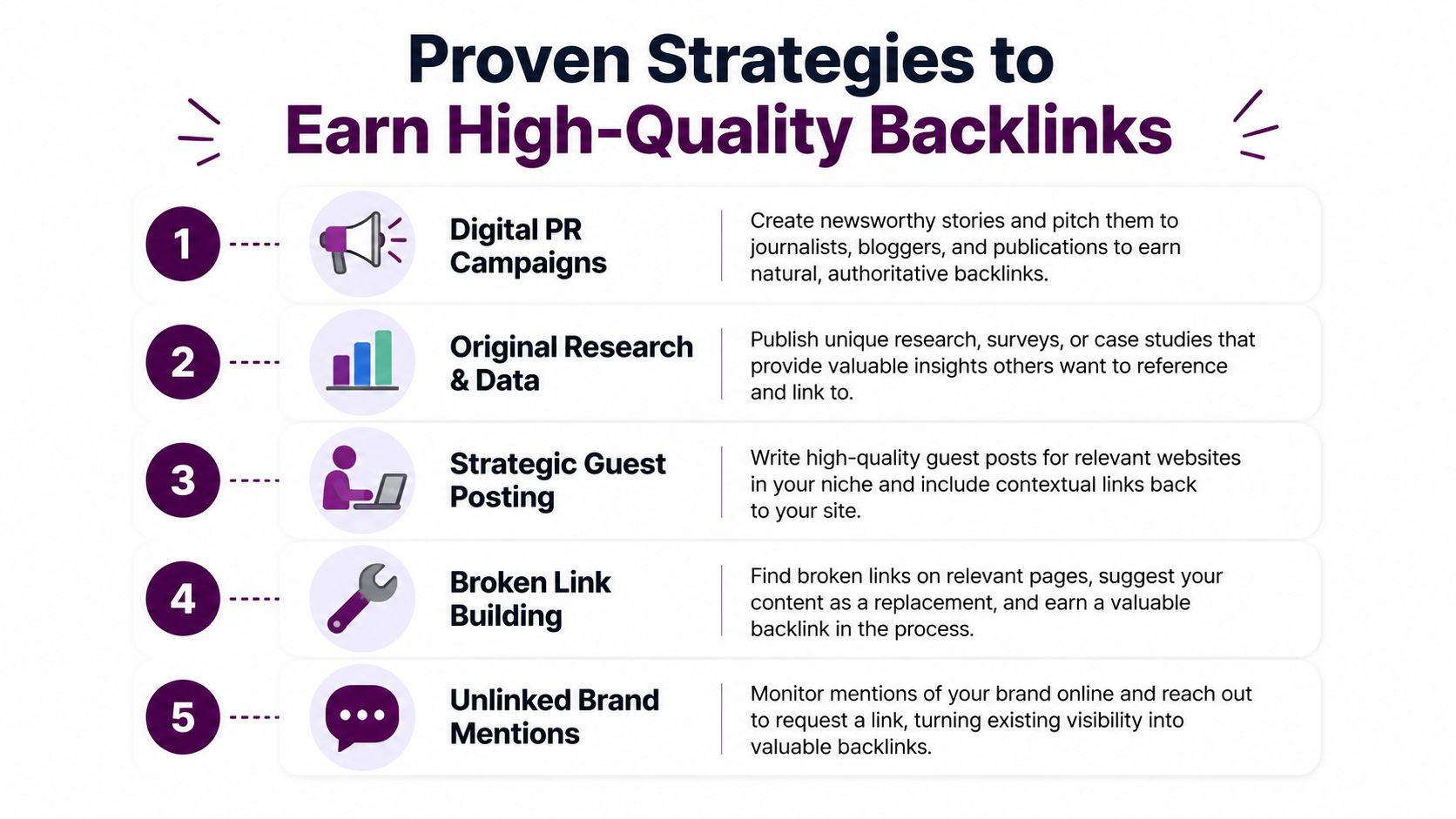
Proven Strategies to Earn High-Quality Backlinks
The best acquisition tactics create something another publisher wants to reference. That might be original data, a clear expert explanation, a useful tool, or a newsworthy point of view. Outreach works better when it follows that value instead of asking editors to place a generic link.
Build assets with a reason to cite them
Digital PR works when the story is timely, specific, and supported by evidence. Give journalists a clear finding, an expert interpretation, and a usable visual or source page. The effort is front-loaded, and publication depends on newsworthiness, but successful coverage can produce editorial links, brand mentions, and referral visits from relevant audiences.
Original research gives other writers a reason to cite your page. Publish the methodology, define the audience, explain limitations, and make the findings easy to quote. A research asset can attract links over time, while a generic opinion article usually needs repeated promotion to earn attention.
Expert commentary is more selective than mass outreach. Respond only where your experience answers the journalist's question directly. A concise, specific contribution is more useful than a templated paragraph that could have come from any marketer.
Resource outreach is effective when your page fills a real gap. Find a relevant resource page, explain exactly what your asset adds, and avoid asking for inclusion solely because the page links to other websites. Relevance and reader utility determine whether the request feels editorial.
Industry ranking-factor analysis supports combining referring-domain diversity with contextual relevance, particularly when linking domains rank for related queries or receive organic traffic. This ranking-factors discussion frames the value as more than authority transfer. Semantic proximity and genuine endorsement help explain why a link belongs.
Why mass guest posting underperforms
Guest posting can work when the publication has a real audience, accepts useful contributions, and gives editors control over links. It weakens when the same article appears across loosely related sites, every post uses commercial anchors, or the publisher exists mainly to sell placements.
The same principle applies to paid opportunities. Buying visibility is not automatically the same as earning ranking value. Review the page's editorial quality, relevance, audience, disclosure practices, and outbound-link pattern. If the publisher would never mention your company without payment, expect the commercial relationship to affect how the link should be treated.
Recent industry coverage reports that 94% of link builders say quality outweighs quantity, and that 48.6% of SEO professionals rank digital PR as the single most effective tactic. These figures come from a 2026 roundup, so treat them as industry survey claims rather than universal search-engine rules. The roundup's trend summary reflects a broader move toward editorial and PR-led acquisition.
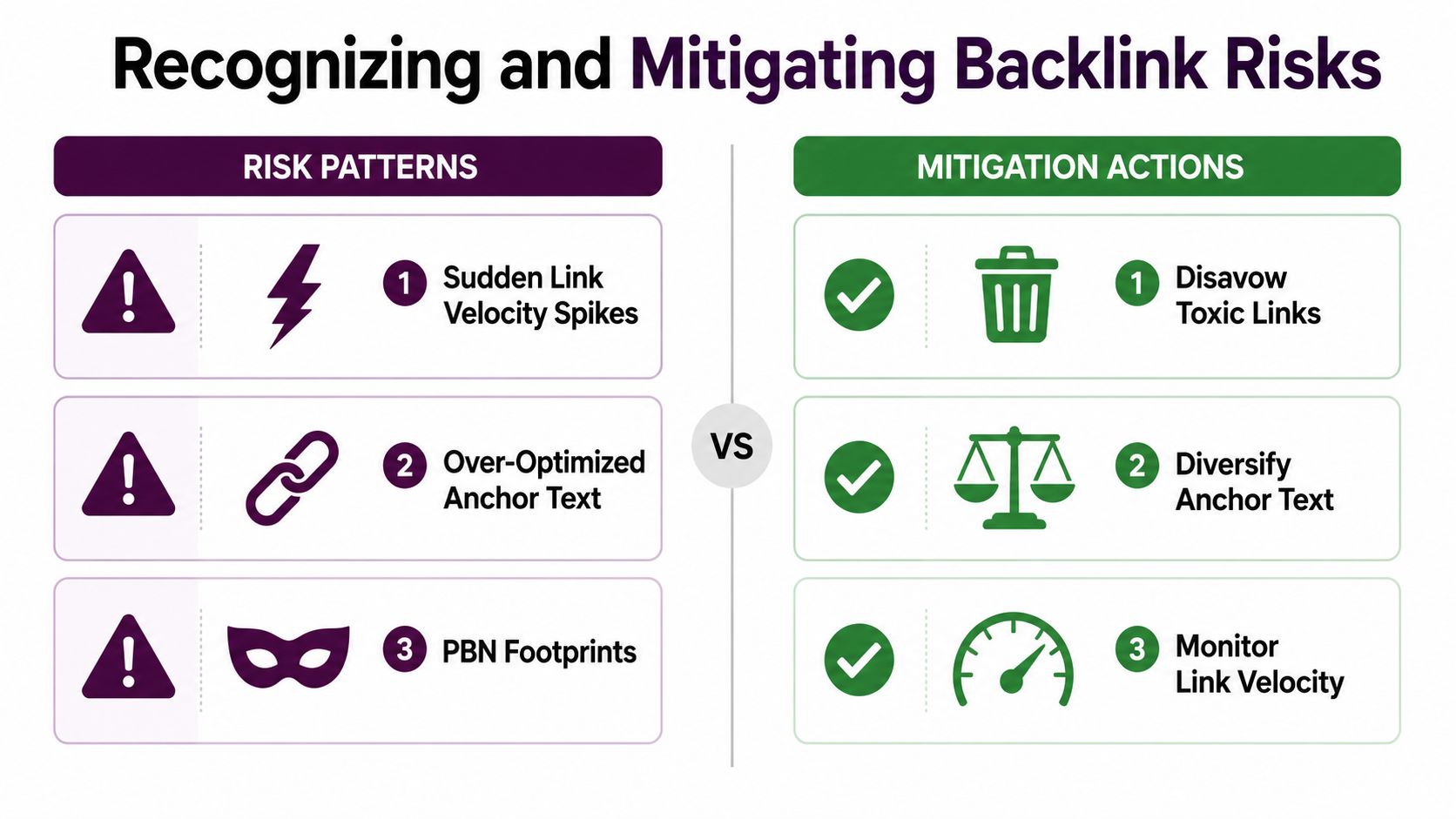
Recognizing and Mitigating Backlink Risks
Risk usually appears as a pattern, not as one unattractive link. A single irrelevant citation may have no practical impact. A coordinated group of pages with matching anchors, similar templates, and sudden acquisition timing deserves a closer review.
Patterns that deserve investigation
Sudden velocity changes: A sharp, unexplained wave can indicate a campaign, automated placement, or a vendor activity that wasn't properly controlled. Timing alone doesn't prove wrongdoing, especially after a successful launch or major news event.
Over-optimized anchors: Repeated commercial or keyword-heavy wording across unrelated sources looks less natural than a varied anchor profile that reflects how independent writers normally refer to a brand.
Private-network footprints: Similar site designs, thin editorial content, shared authorship, overlapping ownership, and dense cross-linking can indicate a network built for manipulation.
Paid link patterns: Commercial placements that pass ranking signals without appropriate handling create policy and measurement risk. Keep invoices, outreach records, and publisher terms so you know what was acquired.
Irrelevant directories: A directory can support local or industry discovery, but broad lists with no audience purpose rarely deserve priority in a quality campaign.
Disavow or leave it alone
Don't disavow every link that a crawler scores poorly. Third-party toxicity labels are useful for triage, but Google evaluates links within broader systems. A low-authority link that you didn't request and that has no obvious manipulation pattern often needs no action.
Manual removal is preferable when you can identify the source and the relationship is active. Ask the publisher to remove or correctly qualify a link when the placement was paid, inserted incorrectly, or created through a questionable vendor. Use disavow only when the evidence supports a serious, unresolved pattern and you understand the consequences of submitting the file.
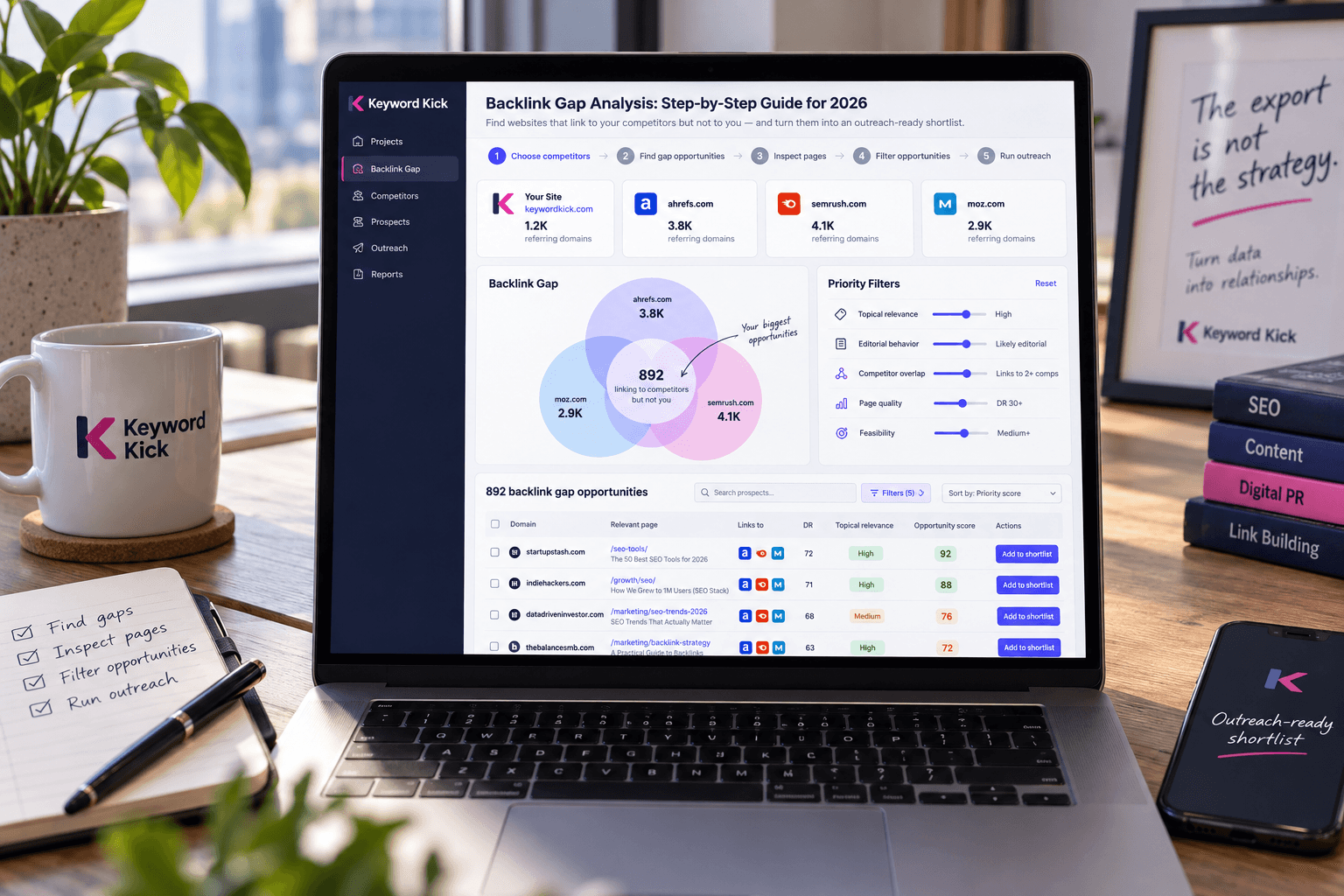
Competitor analysis needs the same restraint. A competitor's suspicious links can reveal a vendor footprint or prospecting pattern, but you can't assume those links caused their rankings. Study the pattern for intelligence, not as a shortcut to reproduce it.
The Future of Link Building Beyond Traditional Backlinks
Backlinks remain useful, but visibility increasingly depends on the full authority system around a brand. An editorial link can validate expertise, send relevant visitors, and help search systems connect an entity with a topic. A brand mention without a link can still create awareness and discovery, although it shouldn't be treated as a guaranteed substitute for a followed backlink.
Current industry coverage argues that search systems are discounting manipulative patterns while giving more attention to brand mentions, expert-led content, and digital PR. One current source claims that unlinked brand mentions can function as implied links and that brand mentions correlate more strongly with AI search visibility than traditional backlinks. Those are industry claims, not established universal ranking rules, so teams should test them against their own visibility and referral data. The 2026 commentary on hybrid authority building is useful for understanding the direction of the debate.
Allocate effort around authority, not link volume
A practical program combines several workstreams:
Editorial assets: Publish research, tools, original analysis, and useful guides that deserve citation.
Expert visibility: Make subject specialists available for interviews, commentary, podcasts, and industry discussions.
Relationship-led outreach: Build a focused list of relevant publishers instead of sending generic requests at scale.
Profile monitoring: Track new and lost links, referring-domain changes, anchor patterns, and links to important pages.
Brand measurement: Watch mentions, referral visits, branded demand, and search visibility alongside link counts.
The decision rule is straightforward. Prefer a link that fits a real editorial narrative, reaches the right audience, and strengthens your topical footprint over a placement chosen only for its domain score. When a campaign earns both links and credible mentions, it creates more durable authority than a short-lived burst of mechanically acquired URLs.
If you're reviewing your profile now, start with the latest links, score the exact pages, remove obvious acquisition noise from your pipeline, and redirect budget toward assets that publishers can use. That's how backlinks high quality become a durable part of search strategy rather than a vanity metric.
Keyword Kick brings backlink analysis, competitor link-gap detection, toxic-link identification, AI-enhanced quality scoring, and monitoring for new and lost links into one SEO workspace. Visit Keyword Kick to review your link profile and turn backlink data into prioritized actions for your team.